

Sayur lodeh is one of the most comforting dishes in the Malay and Peranakan kitchen: a mix of vegetables simmered in a light, golden coconut curry. It is the soul of lontong, where it is ladled over compressed rice cakes, but it is just as good with plain rice. This sayur lodeh recipe is written for home cooks in Singapore and uses ingredients you can find at any wet market or supermarket.
The dish is forgiving. Every family has its own version, some richer, some lighter, some with dried prawns, some fully vegetarian. Treat the quantities below as a guide and adjust to your taste.
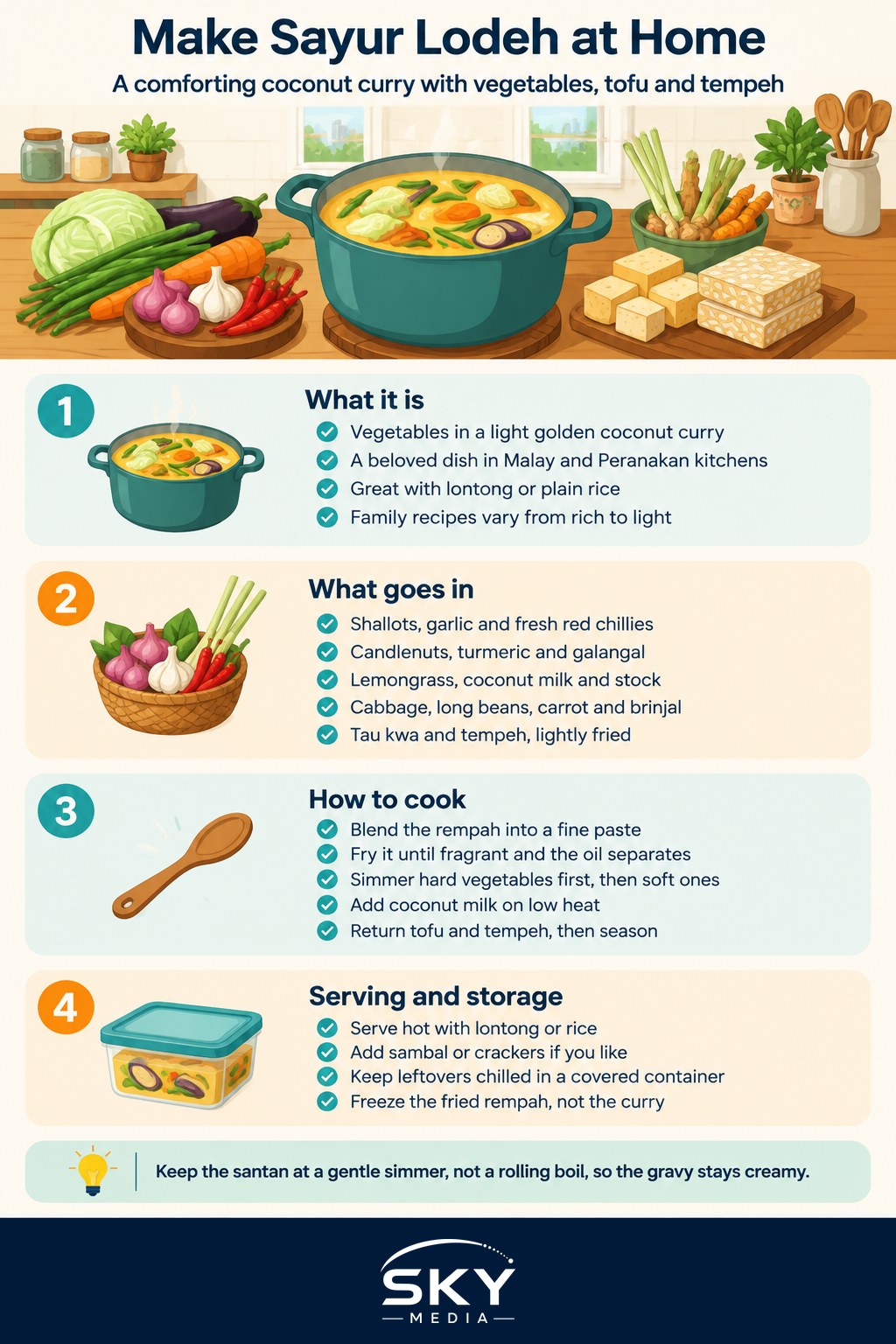
Ingredients for Sayur Lodeh
This makes about four to six servings.
For the rempah (spice paste)
- 8 to 10 shallots, peeled
- 3 cloves garlic
- 2 to 4 fresh red chillies, deseeded for less heat
- 3 to 5 dried chillies, soaked in hot water (optional, for colour and depth)
- 3 candlenuts (buah keras)
- 2 cm piece of fresh turmeric, or 1 teaspoon ground turmeric
- 2 cm piece of galangal (lengkuas)
- 1 tablespoon dried prawns (hae bee), soaked and drained (optional)
- 1 teaspoon belacan (shrimp paste), toasted (optional)
For the curry
- 2 to 3 tablespoons cooking oil
- 1 stalk lemongrass, bruised
- 2 salam leaves or a few kaffir lime leaves (optional)
- 600 to 800 ml water or light stock
- 400 ml coconut milk (santan)
- Salt and a little sugar to taste
Vegetables
- 1/4 head cabbage, cut into chunks
- 2 long beans, cut into 4 cm lengths
- 1 small carrot, sliced
- 1 medium brinjal (eggplant), cut into wedges
- 1 chayote (labu siam) or a wedge of yam bean (bangkuang), cut into batons
- 2 pieces tau kwa (firm tofu), cubed and lightly fried
- 2 pieces tempeh, cubed and lightly fried
Candlenuts thicken the curry and add a subtle richness. Galangal looks like ginger but has a sharper, citrusy flavour. Belacan is a pungent fermented shrimp paste; toast it in a dry pan or wrapped in foil until fragrant before using.
Step-by-Step Method
- Blend the rempah. Put all rempah ingredients into a blender with a little water and blend into a fine paste. A smooth paste gives a smoother gravy.
- Prepare the tofu and tempeh. Pan-fry the tau kwa and tempeh cubes in a little oil until golden on the outside. Set aside. This stops them from breaking up in the curry.
- Fry the rempah. Heat the oil in a large pot over medium-low heat. Add the rempah, lemongrass and salam or lime leaves. Stir often and cook until the paste darkens slightly, smells fragrant and the oil starts to separate. This usually takes 8 to 12 minutes. Do not rush this step; raw rempah tastes harsh.
- Add the hard vegetables. Add the carrot, chayote or yam bean, and water. Bring to a boil, then simmer for about 5 minutes.
- Add the remaining vegetables. Add the long beans, cabbage and brinjal, and simmer until the vegetables are almost tender.
- Add the coconut milk. Pour in the coconut milk, then lower the heat. Stir gently and keep it at a gentle simmer, not a rolling boil, so the santan does not split.
- Return the tofu and tempeh. Add the fried tau kwa and tempeh and simmer for a few more minutes.
- Season. Add salt and a pinch of sugar to taste. Adjust thickness with a splash of water if needed.
Sayur Lodeh Styles Compared
Recipes vary between households and communities. Here are some common versions you may come across.
| Version | Typical additions | Best served with |
|---|---|---|
| Lontong style | Thinner, generous gravy, often with dried prawns | Lontong rice cakes, sambal, serunding, hard-boiled egg |
| Everyday rice dish | Slightly thicker gravy, more vegetables | Plain white rice, fried fish or chicken |
| Peranakan style | Rich santan, belacan, sometimes rebung (bamboo shoots) | Rice and other nyonya dishes |
| Vegetarian | No belacan or dried prawns, vegetable stock | Rice or lontong, with vegetarian sambal |
If you are curious how lontong is enjoyed at hawker stalls and Hari Raya tables, the version you make at home can be served exactly the same way. Cut compressed rice cakes into cubes, place in a bowl and ladle the lodeh over generously.
Tips for the Best Sayur Lodeh
- Cut vegetables to similar sizes so they cook evenly. Add hard vegetables first and soft ones last.
- Do not boil hard after adding santan. A gentle simmer keeps the gravy creamy and smooth.
- Use fresh santan if you can. Fresh coconut milk from the wet market has a cleaner flavour. Packet coconut milk works well and is convenient; shake it before opening.
- Taste the rempah before adding liquid. If it tastes bitter or raw, keep frying.
- Control the heat. Remove chilli seeds for a mild version that children can enjoy, and serve sambal on the side for those who like it spicy.
- Turmeric stains. Wear gloves or wash your hands and chopping board quickly after handling fresh turmeric.
Swaps and Variations
Sayur lodeh is a good way to use up vegetables in the fridge. Try:
- Other vegetables: young jackfruit (nangka muda), French beans, bamboo shoots, or pumpkin for sweetness
- Protein add-ons: hard-boiled eggs, fish cake slices or prawns added near the end
- Quicker paste: a good ready-made lodeh or curry paste from the supermarket if you are short on time; taste and adjust, as brands vary in salt and spice
- Lighter version: use part coconut milk and part low-fat milk or stock, though the flavour will be less rich
If you enjoy cooking local spice-based dishes at home, try our recipe for beef rendang, which uses a similar rempah method, or a plate of sambal kangkong on the side.
Serving and Storing Sayur Lodeh
Sayur lodeh often tastes even better the next day once the flavours settle. To store it:
- Let it cool, then refrigerate in a covered container and eat within a couple of days.
- Reheat gently on the stove, adding a splash of water if the gravy has thickened.
- Coconut-based curries can separate when frozen and thawed, so freezing is not ideal. If you want to cook ahead, freeze the fried rempah instead and make the curry fresh.
Serve it hot with lontong or rice, a spoonful of sambal, and perhaps some crackers on the side. It is simple food, but a pot of sayur lodeh on the table feels like a celebration, whether it is a weeknight dinner or a festive gathering.
Frequently Asked Questions
What can I use if I cannot find candlenuts for sayur lodeh? Raw macadamia nuts or cashews are common substitutes, since they thicken the paste and add a similar richness. Blend them in with the rempah until smooth. Avoid peanuts as a swap, because they bring a stronger, different flavour, and keep in mind nut allergies when serving guests.
Why did my coconut gravy split or turn oily? Usually the heat was too high or the santan boiled hard. Add coconut milk near the end and keep it at a gentle simmer, stirring softly. If it has already split, lower the heat and whisk in a splash of water or a little more coconut milk to bring it back together.
Is sayur lodeh vegan or halal? It can be vegan if you leave out belacan and dried prawns and use vegetable stock. Halal depends on the ingredients and how they are sourced, so look for halal-certified products from MUIS-recognised sources if you need certainty, especially for belacan, stock and ready-made pastes.
How is sayur lodeh different from other vegetable curries? Sayur lodeh has a light, thin coconut gravy flavoured with turmeric, galangal and candlenuts, and is not heavily spiced like many thicker curries. It leans mild and savoury, and often comes with lontong or sambal on the side rather than being the fiery main event.
How can I make sayur lodeh lighter without losing flavour? Use part coconut milk and part stock, load up on vegetables, and fry the tofu and tempeh with less oil. The gravy will be a little less rich, but a well-fried rempah still gives plenty of flavour. Add salt carefully, since lighter gravies show seasoning faster.