
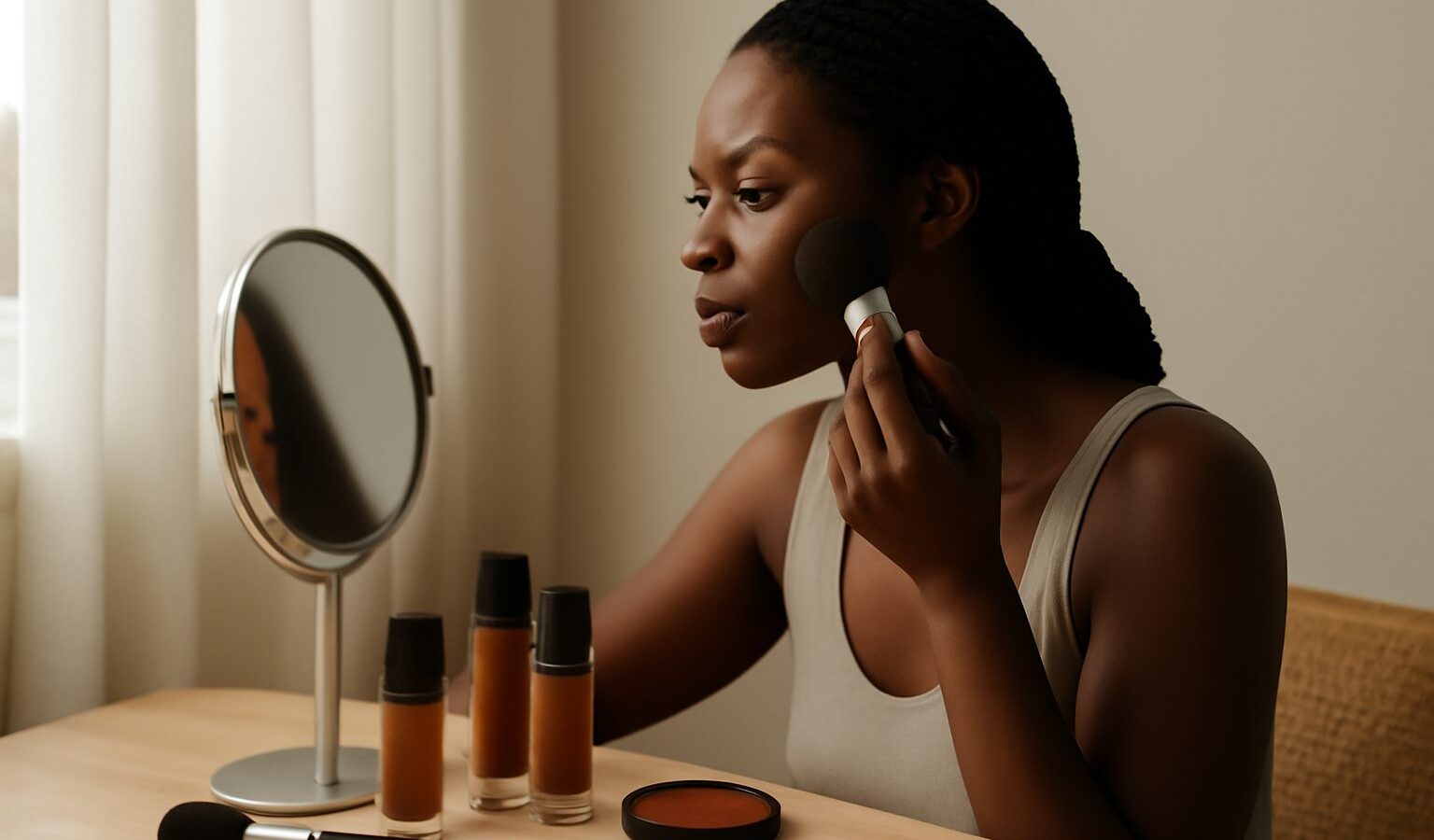
Finding products that truly celebrate rich, deep complexions has come a long way, though it can still take a little know how to shop well. This guide to makeup deeper skin tones singapore residents can use is about matching your true shade, reading your undertone, avoiding that grey or ashy cast, and choosing colours that make deeper skin glow. The focus throughout is on enhancing your natural complexion, never on lightening or changing it.
This is general beauty guidance, not medical advice. If you have a skin concern such as pigmentation changes or persistent irritation, please see a doctor or dermatologist.
Finding Your True Shade Match
The most common frustration with foundation on deeper skin is a shade that looks right in the bottle but turns grey, orange or chalky on the face. Getting the match right starts with testing properly. Swatch a few shades along your jaw and down onto your neck, not on your hand or inner arm, since those areas are often lighter or a different tone than your face. Blend a small amount and check it in natural daylight, because shop lighting hides a lot. The right shade seems to disappear into your skin rather than sitting on top as a different colour.
Deeper complexions often have more range and depth across the face than lighter ones, so one single shade may not cover everything. Many people find their forehead, cheeks and jaw are not identical. It is completely normal to blend two shades, using a slightly deeper one where the skin is richer and a lighter one on higher points, then buffing the join so there is no line. Custom mixing this way often gives a far better result than hunting for one perfect bottle.
Formula matters as much as colour in our humidity. Very matte, powdery bases can emphasise dryness and look flat or ashy on deep skin, while formulas with a natural or slightly luminous finish tend to look more alive. If you are oily, you can still get glow by choosing a satin base and controlling shine only where you need it, rather than mattifying the whole face.
Understanding Undertones and Avoiding Ashiness
Undertone is the quiet reason a shade looks right or wrong. Deep skin can be warm, with golden, red or olive undertones, cool with hints of blue or red, or neutral. A foundation matched to depth but wrong on undertone is what causes that grey, ashy, dull or oddly orange look. Warm skin wearing a cool toned base often goes grey, while cool skin in a very warm base can look muddy.
A simple way to read your undertone is to look at how your skin reacts in colour next to it and how different metals suit you, though the surest test is swatching foundations of the same depth in warm, neutral and cool versions and seeing which one melts in. The table below sums up the signs to look for.
| Undertone | Common signs | Base to look for |
|---|---|---|
| Warm | Golden or red cast, gold jewellery flatters | Warm, golden or red based shades |
| Cool | Blue or red cast, silver jewellery flatters | Cool or neutral shades, avoid overly warm |
| Neutral | A balance of both, most metals suit | Neutral shades, flexible either way |
| Olive | A subtle green or grey cast in the skin | Shades with an olive or neutral warmth |
Olive undertones deserve a special mention because they are common and often missed. If regular warm shades still look a little too orange and cool shades look grey, you may have an olive undertone that needs a base with a green or neutral balance to look natural.
To keep the ashy cast away, be careful with powder and concealer. Setting powder that is too light or too pink shows up as a chalky flash, so choose a translucent powder made for deeper skin or one that matches your depth. Under eye concealer should have enough warmth to counter darkness rather than a grey lightness that draws attention. Cream products often sit more naturally than heavy powders on rich skin.
Colour That Makes Deep Skin Glow
The best part of makeup on deeper complexions is how boldly colour can pay off. Rich skin carries vivid, saturated shades beautifully, so this is a chance to enjoy pigment rather than shy away from it.
For blush and lips, deeper berries, warm brick reds, rich plums, terracottas, bright corals and true reds tend to read gorgeously, while very pale, muted or pastel shades can disappear or look chalky. On cheeks, a pigmented cream or powder blush in a warm or berry tone brings life back to the face. A touch of bronzer or a deeper contour shade works, but it must be genuinely deeper than your skin, since a light, greyish bronzer just looks muddy.
Highlighter is where deep skin truly shines. Golden, bronze, copper and warm champagne highlights catch the light beautifully on rich complexions, whereas cool, icy white or silvery highlighters can look grey. Apply it to the high points of the cheekbones, the brow bone and a dab on the cupid’s bow for a lit from within glow.
Eyes are wonderfully versatile. Deep, warm metallics like bronze, gold and copper flatter almost everyone, while jewel tones such as emerald, sapphire and amethyst look striking against rich skin. A bold lip in a saturated shade needs little else, so you can build a whole look around one confident colour.
Shopping and Wearing It Well
A few practical habits make everything easier. Test in daylight, buy from ranges that carry a genuinely full depth of shades rather than stopping short, and do not be afraid to ask for samples so you can wear a shade for a few hours before committing. In our heat, set only where you get shiny, refresh with blotting rather than more powder, and let your natural glow show through.
Above all, the aim is to match and celebrate the skin you have. Good makeup for deeper skin tones is about finding your true colour, honouring your undertone and reaching for shades that light you up, never about looking lighter than you are. When the match is right, the makeup all but vanishes and what everyone sees is you, looking radiant.
Explore more
Choosing the Right Foundation Shade
Understanding Undertones and Colour Matching
Blush, Bronzer and Contouring in Singapore
Makeup for Beginners in Singapore