
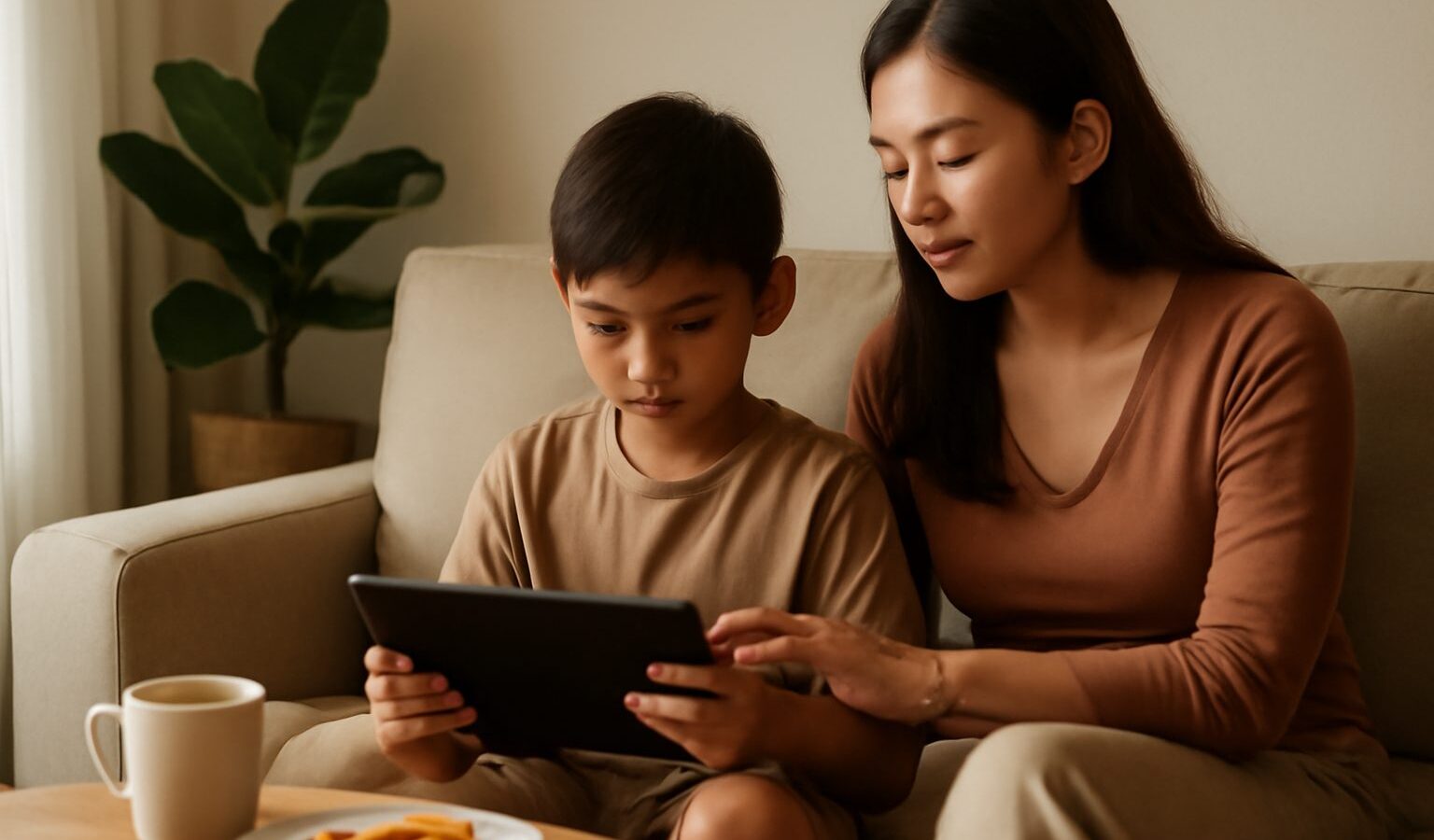
Screens are woven into everyday life in Singapore, from the SLS portal and homework apps to family group chats and games on the bus home. Managing childrens digital habits singapore parents care about is less about banning devices and more about building steady, sensible routines that help a child learn, rest, and connect. This guide offers general, supportive ideas you can adapt to your family. It is not a clinical assessment, so if you have real worries about your child’s mood, sleep, or behaviour, speak to their teacher, the school counsellor, or your doctor.

Why Digital Habits Matter
Devices are useful tools. They open up learning, keep families in touch, and let children explore interests they might never meet in a textbook. The concern is not the device itself but how it fits into the rest of a child’s day. When screen time crowds out sleep, movement, reading, or face-to-face play, the balance tips.
Younger children are still learning to manage their own attention and feelings, so a game or video that never really ends can be hard to switch off. That is normal. Part of your job as a parent is to be the “off switch” while your child slowly builds that skill for themselves. Think of it like teaching road safety: you hold their hand at the crossing for years before they cross alone.
It also helps to remember that habits form quietly. The way a family uses screens at dinner, in the car, or first thing in the morning becomes the family’s normal. Small, consistent choices matter more than one big rule announced and then forgotten.
Practical Ways to Build Healthy Habits
You do not need a complicated system. A few clear, predictable routines usually work better than strict rules that change with your mood. Here are some general approaches many families find helpful.
Set clear times and places
Agree on when screens are on and off, and stick to it as far as you reasonably can. Many families keep meals, the hour before bed, and the school-morning rush as screen-free by default. Keeping devices out of the bedroom at night protects sleep, which matters enormously for learning and concentration. If you want to go deeper on this link, our guide on sleep and learning explains why rest and memory go hand in hand.
Separate “learning” screens from “leisure” screens
Not all screen time is the same. Twenty minutes reading on SLS, watching a documentary, or practising a skill is different from endless short videos. Talk with your child about the difference so they start to notice it too. You might even let learning-focused apps sit in a different folder from games. Our list of the best apps for learning can help you fill that folder with something worthwhile.
Watch and talk, do not just monitor
Sit with your child sometimes and watch what they enjoy. Ask what they like about a game or channel. This tells you far more than any tracking app, and it keeps the door open for honest conversation. Children who feel judged tend to hide what they do online, while children who feel understood are more likely to come to you when something bothers them.
Model the behaviour you want
Children copy what they see. If phones are always out at dinner or during conversations, rules about screens will feel unfair. Putting your own device down, even for short stretches, teaches more than a lecture. It also gives you back some lovely, ordinary family moments.
Keep some healthy friction
Make good choices a little easier and mindless scrolling a little harder. Charge devices in the living room, use a simple timer, or keep the tablet in a drawer between sessions. This is not about punishment. It is about reducing the number of times a tired child has to resist temptation on their own.
Handling Bumps Along the Way
Expect some pushback, especially at first. Switching off a game can bring tears or arguments, and that does not mean you are doing it wrong. Giving a five-minute warning before screen time ends, and naming what comes next, makes transitions smoother. Stay warm but firm.
If your child seems very low, anxious, withdrawn, or unusually angry around device use, or if screens seem to be pushing out friendships, meals, or sleep in a lasting way, treat that as a sign to seek support rather than simply tightening rules. Their form teacher or the school counsellor can be a good first port of call, and your family doctor can advise on next steps. You know your child best, and trusting that instinct is part of good parenting.
It also helps to grow the “offline” side of life so screens have real competition. Board games, sport, library trips, cooking together, or simply being bored enough to invent a game all build the attention and patience that heavy screen use can chip away at. Building steady routines here connects naturally with building good study habits in children, since focus at the desk and focus away from screens grow from the same roots.
A Warm Wrap-Up
Managing your child’s digital life is a long, gentle project, not a single battle to win. There will be good weeks and messy weeks, and that is completely normal. Aim for balance rather than perfection: enough screen time to learn and enjoy, enough offline time to rest, move, and connect. Keep talking, keep modelling calm habits yourself, and lean on your child’s school or a professional whenever you feel out of your depth. With patience and consistency, most families find a rhythm that works, and your child slowly learns to manage their own devices, which is the real goal all along.