
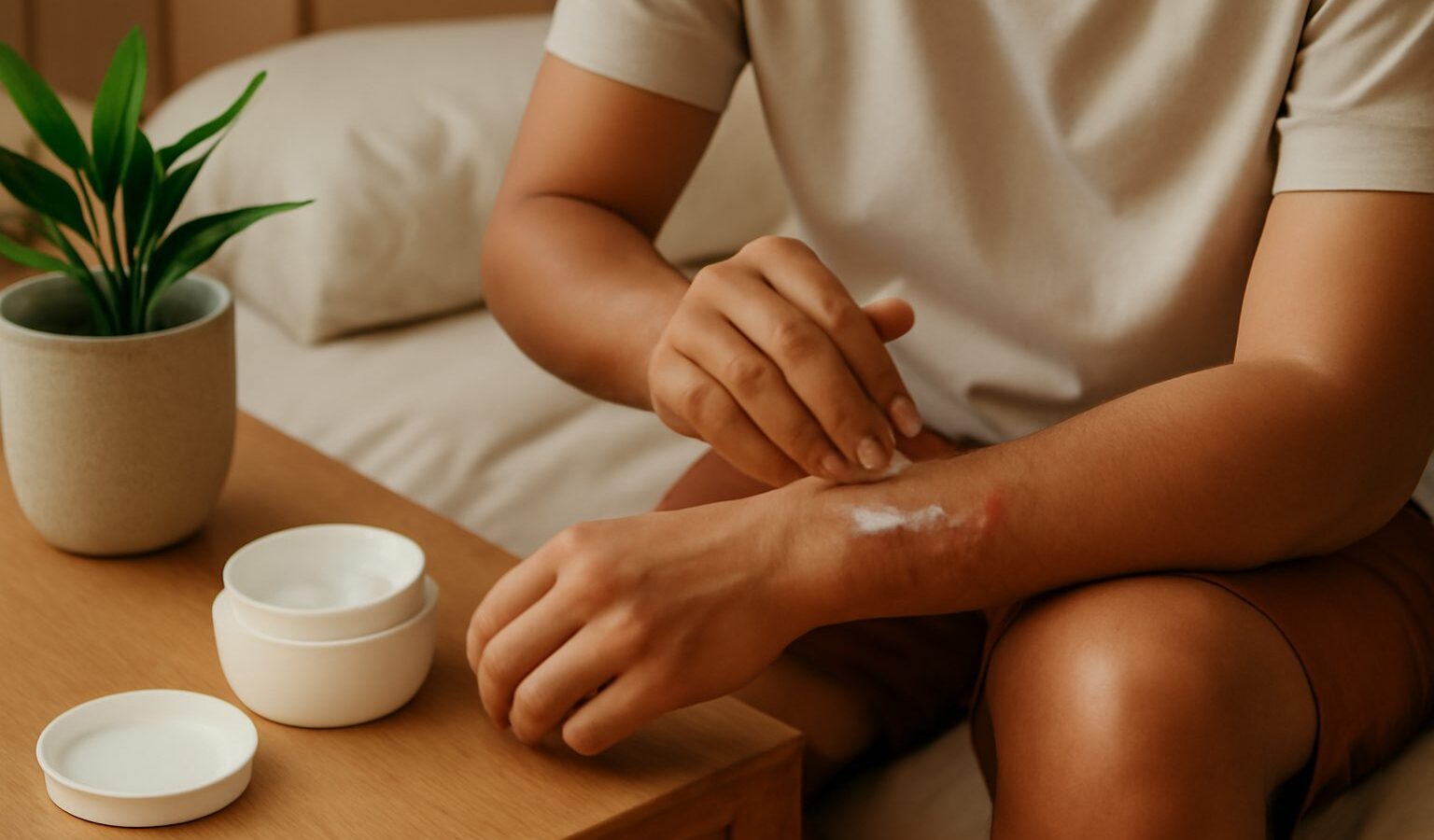
Eczema is often thought of as a childhood problem, but plenty of people first develop it, or see it flare again, well into their adult years. If you are dealing with adult eczema singapore weather can make things feel worse, with heat, sweat, humidity and the sudden chill of air-conditioning all playing a part. This guide walks through what eczema is in general terms, the everyday triggers worth watching, and gentle habits that many people find help calm irritated skin.
This is general information, not medical advice, and it is not a substitute for seeing a doctor. Only a doctor or dermatologist can diagnose eczema and tell you what is right for your skin. Please see one for a proper assessment, and go promptly if your skin is severe, spreading, weeping, painful, showing signs of infection, or simply not settling.
What eczema is, in plain terms
Eczema, also called atopic dermatitis in its most common form, is a condition where the skin barrier does not hold on to moisture and protect itself as well as it should. That leaves skin dry, itchy, and prone to inflammation. It tends to come and go in cycles, with calmer spells and then flares where patches become red, rough, or intensely itchy. In adults it often shows up on the hands, the insides of the elbows, behind the knees, the neck, and around the eyes, though it can appear almost anywhere.
Scratching is the frustrating part of the picture. Itching leads to scratching, scratching damages the skin further, and the damaged skin itches more. Breaking that itch-scratch cycle is a big part of why gentle daily care matters so much.
Eczema is not contagious, and it is not a sign of poor hygiene. It is a barrier and immune-related condition, and many people who have it also have sensitive skin, hay fever, or asthma in the family.
Common triggers in Singapore’s climate
Triggers vary a lot from person to person, so part of managing eczema is learning your own. That said, some are especially relevant here.
- Heat and sweat. Our year-round warmth and humidity mean sweat sits on the skin, which can sting and set off itching, particularly in skin folds.
- Air-conditioning. Cool, dry office and bedroom air pulls moisture out of already-thirsty skin. Moving between hot outdoors and cold indoors is a daily reality for most of us.
- Harsh cleansers. Strongly fragranced or foaming soaps and body washes can strip the skin barrier.
- Rough or heat-trapping fabrics. Some people react to wool or to tight synthetic clothing that traps sweat.
- Stress and poor sleep. Both can nudge flares along, which is one reason understanding and managing everyday stress is worth attention alongside skin care.
- Certain household products, dust, or contact irritants at work.
Keeping a simple mental note, or a short diary, of when your skin worsens can help you and your doctor spot patterns over time.
Gentle skin-care habits that often help
The general aim is to protect the skin barrier, keep moisture in, and avoid known irritants. None of this replaces medical treatment, but these are the low-risk everyday habits many people with eczema find useful.
- Moisturise generously and often. A plain, fragrance-free moisturiser applied regularly, and especially soon after showering while skin is still slightly damp, helps lock in moisture.
- Keep showers short and lukewarm. Very hot water feels good on itchy skin for a moment but tends to dry it out. Pat dry rather than rubbing.
- Choose gentle, fragrance-free cleansers. Look for mild, non-foaming options and use them sparingly.
- Dress for the heat. Loose, breathable, light cotton clothing lets sweat evaporate and reduces friction.
- Manage sweat quickly. After exercise or a hot commute, rinse off or change out of damp clothes when you can, then moisturise.
- Protect your hands. If your hands flare, be mindful with dishwashing and cleaning products, and moisturise after washing.
Sun exposure is a mixed bag for eczema and very individual, so do not treat sunlight as a treatment. In Singapore’s strong midday sun, ordinary sun-safe habits still apply. If you want to build a broader routine for sensitive skin, seeing a dermatologist for tropical skin problems is a sensible next read.
Living well alongside eczema
Flares can wear you down, especially when itching disrupts sleep. Being kind to yourself matters here, and better rest genuinely helps, so it is worth looking at building better sleep habits if scratching is keeping you up. Try to keep nails short, resist the urge to scratch when a flare hits, and have your gentle moisturiser within easy reach so soothing the skin becomes the automatic response instead.
When to see a doctor
Please see a doctor or dermatologist if your skin is not settling with gentle care, if flares are frequent or severe, if patches are weeping, crusting, spreading, or looking infected, or if the itch is badly affecting your sleep, mood, or daily life. Sudden, widespread, or rapidly worsening skin, or signs of a serious reaction, need urgent medical attention. A professional can confirm what is going on and guide you on the right approach for your skin.
The practical wrap-up
Adult eczema is common, manageable, and nothing to be embarrassed about. Protect your skin barrier with regular fragrance-free moisturiser, keep showers short and lukewarm, dress for the heat, learn your own triggers, and try to break the itch-scratch cycle with gentle care rather than harsh products. Most importantly, let a doctor or dermatologist guide diagnosis and treatment, and reach out early when a flare will not settle. Calm, consistent habits usually beat quick fixes.