
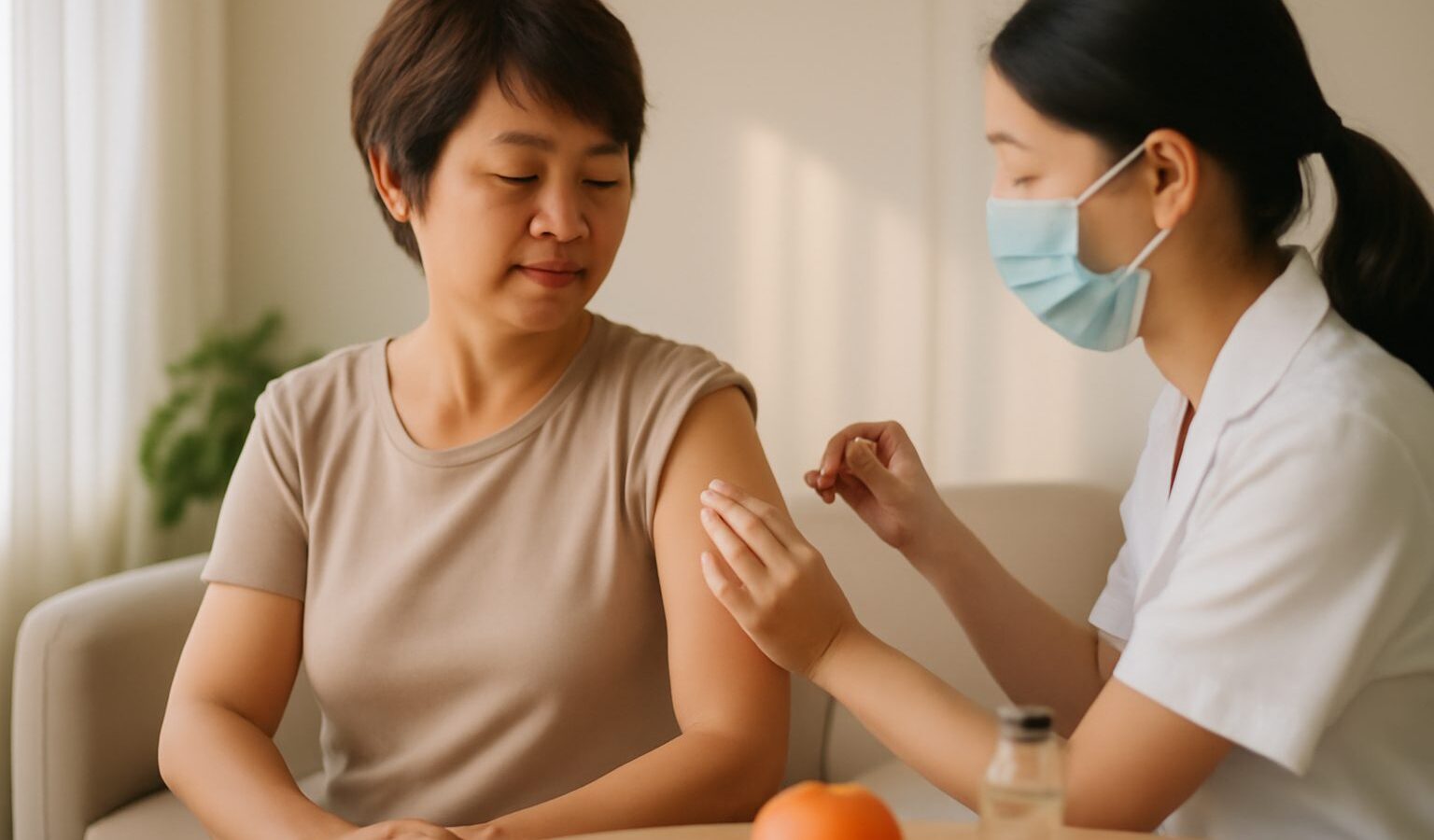
Vaccination is often thought of as something for babies and schoolchildren, but protection does not end in childhood. Adult vaccinations in Singapore help guard against illnesses that become more common, or more serious, as we age, travel, or live with certain health conditions. This is a general guide to help you understand the landscape and ask the right questions. It is information only, not medical advice, so please check what applies to you with a doctor or with official sources like HPB and HealthHub.
Immunity can fade over time, and some protection was never offered when today’s adults were young. Adding a few well-chosen vaccinations at the right life stage is a quiet, low-effort way to look after your long-term health.
Why Adult Vaccinations Still Matter
The immune system changes throughout life. As we get older it tends to respond more slowly, which is one reason some infections hit harder in later years. Certain long-term conditions, such as diabetes, heart disease, kidney disease, or a weakened immune system, can also raise the risk of complications from illnesses that a younger, healthier body might shrug off.
Vaccination is not only about protecting yourself. When more adults are protected, there is less illness circulating to pass on to babies, elderly relatives, and people who cannot be vaccinated for medical reasons. This community effect is a big part of why public health bodies encourage adults to stay up to date.
There is no single rule that fits everyone. What makes sense for you depends on your age, your medical history, your job, whether you are pregnant or planning to be, and where you travel. A doctor can look at the whole picture and suggest what is relevant, rather than you trying to work it out alone.
The Main Categories of Adult Vaccination
It helps to think of adult vaccines in broad groups rather than as one long list. The exact vaccines, timing, and eligibility can change, so treat the categories below as a way to frame your conversation with a doctor, not as a schedule to follow on your own.
- Seasonal protection. Some vaccines are offered on a regular basis to reduce common seasonal infections, such as the annual flu jab. These are often recommended more strongly for older adults and people with certain health conditions.
- Age-related protection. As you move into older age groups, some vaccines become relevant to reduce the risk of specific infections and their complications. Your doctor can tell you which ones apply to your age band.
- Condition-related protection. If you live with a chronic illness or a weakened immune system, additional vaccines may be suggested to lower your risk.
- Travel-related protection. Trips to certain regions may call for specific vaccines or boosters, sometimes weeks in advance, so plan ahead.
- Catch-up protection. If you missed doses earlier in life, or your records are unclear, a doctor can advise whether a catch-up is worthwhile.
Because eligibility and recommendations are updated from time to time, always confirm the current position with HPB, HealthHub, or a doctor before booking anything.
The National Adult Immunisation Schedule at a Glance
Singapore has a National Adult Immunisation Schedule, published as part of the country’s public health guidance, that sets out which vaccinations are recommended for adults according to age and risk factors. Think of it as an official reference point that pulls the various recommendations into one place.
Rather than trying to memorise it, use it the way it is intended: as a checklist to bring to a consultation. A doctor can compare your age, health conditions, and vaccination history against the current schedule and tell you what, if anything, is suggested for you. Some vaccinations for eligible groups may be supported under national subsidy schemes, and the details of subsidies and eligibility do change, so it is worth asking about the current arrangements when you go.
The key point is that the schedule exists, it is kept up to date by the authorities, and it is designed to make adult vaccination simpler to navigate. You do not need to interpret it alone.
Where to Get Vaccinated in Singapore
Adults have several straightforward options, and the best choice often comes down to convenience, cost, and whether you want everything under one roof with your usual doctor.
| Where | Good for | Things to note |
|---|---|---|
| Polyclinics | Routine adult vaccinations, subsidised care | Book ahead; bring identification and any records you have |
| GP clinics (private) | Convenience, travel advice, one-stop consultation | May cost more; many handle travel vaccines |
| Travel or specialised clinics | Trips needing specific or less common vaccines | Go early, as some vaccines need time before departure |
| Hospitals and specialist clinics | Adults with complex conditions | Usually via referral or existing care team |
Under Healthier SG, enrolling with a regular family doctor can make it easier to keep track of what you have had and what is due, since your doctor holds the fuller picture over time. Whichever route you choose, keeping a simple record of your vaccinations, including dates, is genuinely useful for future visits.
How to Check What Applies to You
Recommendations are reviewed and can change, so the safest habit is to verify rather than assume. HealthHub and the HPB website are good starting points for current, Singapore-specific information, and they point to the official schedule and any subsidy details.
When you see a doctor, it helps to come prepared. Consider asking:
- Based on my age and health, which vaccinations are recommended for me now?
- Are any of these subsidised, and am I eligible?
- I am travelling to a particular place; do I need anything, and how far ahead?
- I am pregnant, planning a pregnancy, or breastfeeding; does that change what is safe or advised?
- I have a chronic condition; does that make any vaccine more important for me?
Be open about your medical history, any allergies, and any past reactions to vaccines, so your doctor can weigh things properly for your situation.
A Note on Safety and Sensible Expectations
Vaccines go through testing and ongoing monitoring, and mild, short-lived effects such as a sore arm or feeling a bit under the weather for a day are common and usually settle on their own. If you ever have a reaction that worries you, or symptoms that feel severe, seek medical attention promptly rather than waiting it out.
Vaccination is one part of staying well, alongside sensible everyday habits, regular check-ups, and health screening when it is due. It is not a guarantee against ever falling ill, but it meaningfully lowers the odds of serious illness from the conditions it targets.
This article is general information and not a substitute for medical advice. For guidance on your own situation, please speak to a doctor, GP, or the relevant specialist, and confirm current recommendations with HPB or HealthHub before making decisions.
Explore more
If you are getting organised about your health, it pairs well with staying on top of routine checks in our health screening guide for Singapore. Newcomers may also find our healthcare guide for newcomers helpful for understanding polyclinics and GPs, while our overview of MediSave in Singapore explains how some healthcare costs are supported.