
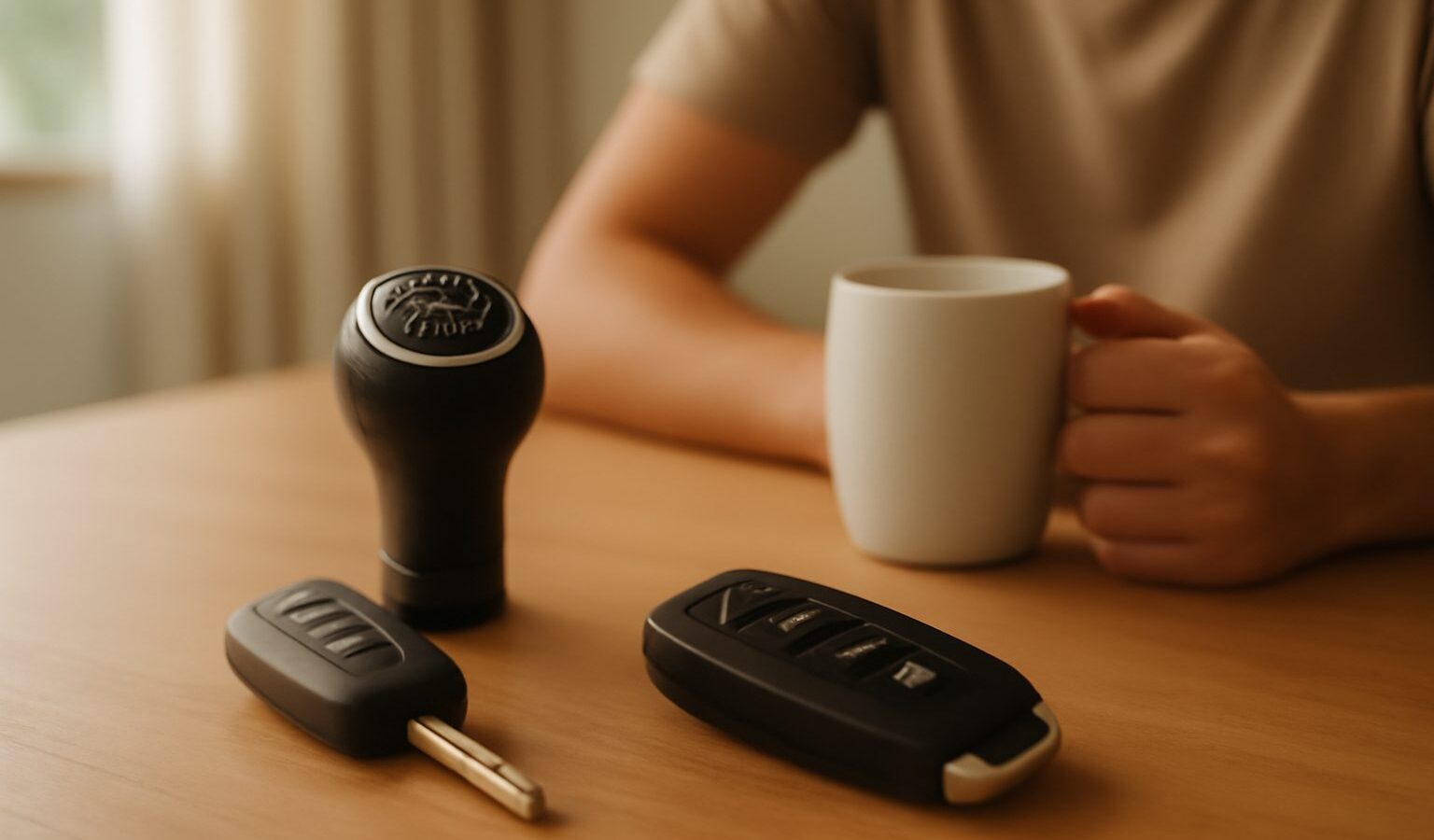
One of the first real decisions a new learner faces is the manual vs automatic licence question, and it shapes more than just your lessons. It affects what you are legally allowed to drive, how long you might spend learning, and how comfortable you feel in Singapore traffic. There is no single right answer, only the choice that fits your needs, your budget and the kind of driving you expect to do.
This guide walks through what each licence lets you drive, the honest pros and cons of learning on manual versus automatic, and how to weigh it all up before you enrol. As always, the licence classes and requirements are set by the authorities, so confirm the current details with the Traffic Police and your driving centre.
What Each Licence Lets You Drive
The core difference comes down to the gearbox. A manual car has a clutch pedal and a gearstick you operate yourself, while an automatic changes gears for you as you drive.
The practical consequence matters. In general terms, a licence obtained on a manual car allows you to drive both manual and automatic vehicles, because you have demonstrated clutch and gear control. A licence obtained on an automatic typically restricts you to automatic vehicles only. If you later want to remove that restriction, you would usually need to take further assessment on a manual.
The exact class definitions, restriction codes and conversion requirements are governed by the Traffic Police, and they can change. Before you decide, confirm precisely what each licence class permits through the official channels rather than assuming.
The Case For Learning On Manual
Learning on a manual is the more demanding path, and that is precisely where its value sits. You are mastering clutch control, biting points, hill starts and gear selection all at once, which builds a deeper feel for how a car actually behaves.
The main advantages include:
- Flexibility. With the broader entitlement, you can drive almost anything, from an older manual runabout to a modern automatic, and slot easily into most rental or borrowed cars.
- Confidence in varied conditions. Managing gears yourself teaches you to anticipate the road, choose the right gear for a slope or a bend, and stay engaged with what the vehicle is doing.
- Useful across the Causeway. If you plan to drive in Malaysia or hire cars while travelling, manual vehicles remain common in many places, so the skill travels well.
The trade-off is difficulty. Manual lessons often take longer to reach test standard because there is simply more to coordinate. That can mean more sessions, more practice, and a steeper early learning curve, particularly in stop-start traffic and at busy junctions.
The Case For Learning On Automatic
Automatic transmission removes the clutch entirely, letting you concentrate on steering, observation, positioning and hazard awareness. For many learners in dense urban driving, that focus is a genuine benefit.
The main advantages include:
- Simpler to learn. With no gear changes to juggle, many learners feel road-ready sooner and find early lessons less stressful.
- Easier in heavy traffic. On congested expressways and in crawling estate roads, not having to ride a clutch constantly is far more relaxing.
- A smoother everyday drive. If your motoring will be mostly commuting and errands around town, an automatic suits that life neatly, and the modern car market offers plenty of automatic choices.
The trade-off is the restriction. An automatic-only licence limits what you can legally drive, and if your circumstances change, converting to full manual entitlement means additional learning and assessment down the line.
Comparing The Two At A Glance
A side-by-side view makes the decision clearer. Weigh these factors against how you actually expect to drive, not just what sounds impressive.
| Factor | Manual Licence | Automatic Licence |
|---|---|---|
| What you can drive | Both manual and automatic vehicles | Automatic vehicles only |
| Learning difficulty | Steeper, more to coordinate | Gentler, fewer controls to manage |
| Time to test standard | Often longer | Often shorter |
| Everyday city comfort | Clutch work in heavy traffic | More relaxed in stop-start jams |
| Flexibility later | Broad from the start | May need conversion to add manual |
Treat this as a guide to the trade-offs. The formal entitlements and any conversion steps are defined by the Traffic Police, so verify them before committing.
How To Decide What Suits You
The best choice is the one that matches your real life, not a hypothetical one. Ask yourself a few honest questions before you enrol.
- What will you actually drive? If your household or likely future car is automatic and your driving stays local, an automatic licence may be entirely sufficient.
- Do you value flexibility? If you want the freedom to drive any car, borrow a friend’s manual, or hire vehicles while travelling, the broader entitlement is worth the extra effort.
- How do you learn best? If juggling a clutch alongside everything else feels overwhelming, starting on automatic can build confidence faster and keep lessons enjoyable.
- What is your budget and timeline? Manual lessons can take longer to reach test standard. Factor in the fees set by driving centres and be realistic about how many sessions you might need.
There is no prestige in picking the harder path if it does not serve you, and no shame in choosing automatic if that fits your driving. Many perfectly capable drivers hold an automatic licence and are entirely content with it.
Whichever way you lean, speak to your driving instructor early. They can assess how you handle the controls in your first lessons and give you a grounded view before you are locked into a full course. Combined with the official guidance on licence classes, that conversation will point you towards the choice you will be happiest living with for years to come.
Explore more
Once you have chosen your path, read passing your driving test in Singapore to see what test day involves, and common mistakes new drivers make to sidestep the usual pitfalls. If you still have theory ahead of you, the final theory test explained covers the rules you will need.
Related across Sky Media: Converting Your China Driving Licence in Singapore · Converting Your Foreign Driving Licence in Singapore