
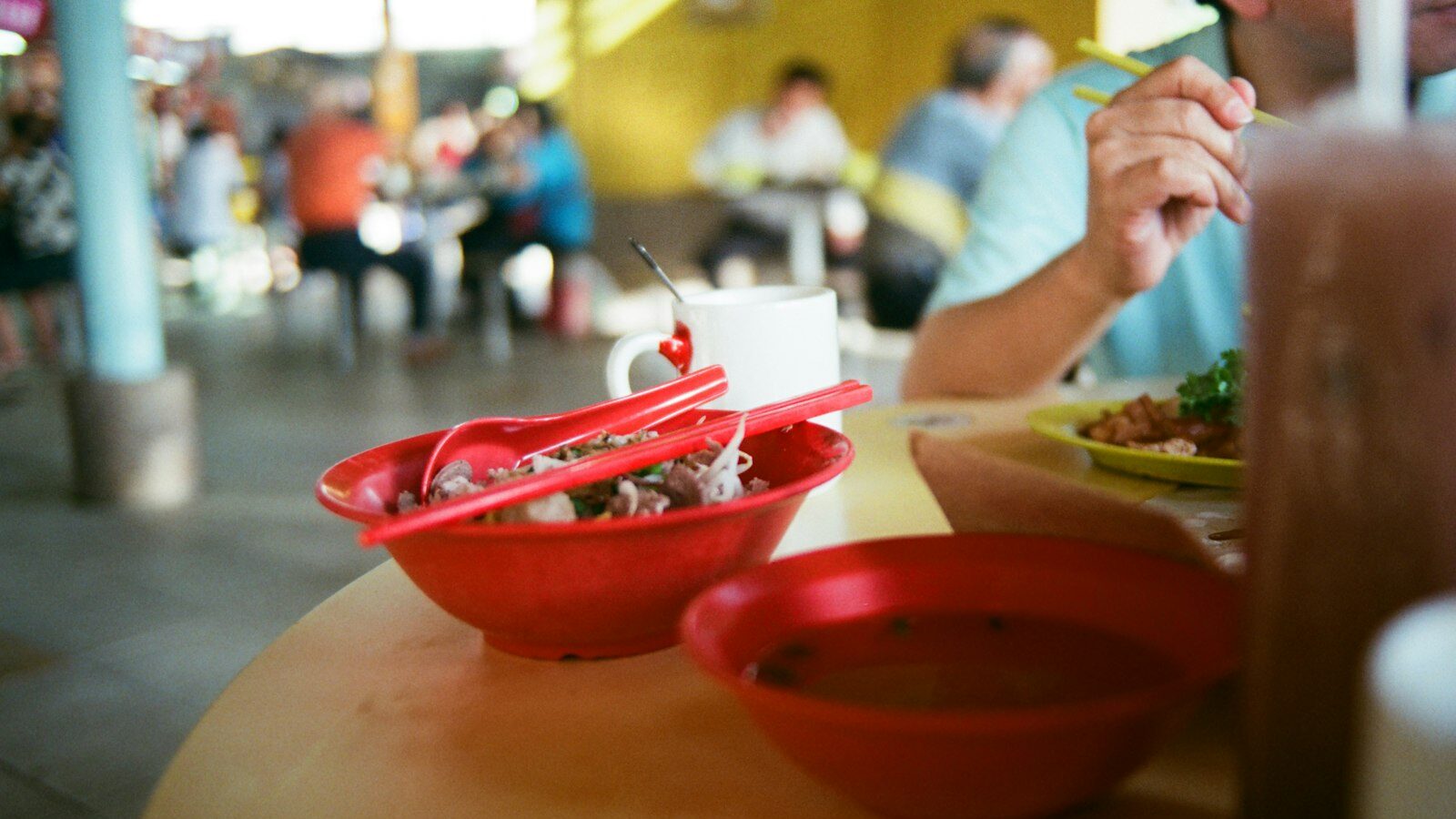
Two of the most beloved Malay noodle dishes, mee rebus and mee siam, are often found side by side at the same stalls, yet they offer quite different experiences. One is rich and savoury-sweet, the other tangy and spicy. This guide explains both dishes, their differences, and how to enjoy these hawker favourites.
Mee rebus: noodles in thick gravy
Mee rebus, meaning boiled noodles, features yellow noodles smothered in a thick, savoury-sweet gravy. The gravy is the heart of the dish, typically made from a base that may include sweet potato, giving it body and a subtly sweet, savoury depth. It is usually topped with garnishes and served with a squeeze of lime for brightness. The result is a comforting, hearty bowl where the rich gravy coats every strand. A good mee rebus has a well-balanced gravy, not too sweet nor too heavy, and the interplay of the noodles, gravy and garnishes makes it deeply satisfying.
The classic mee rebus toppings
- Hard-boiled egg, a standard, satisfying addition.
- Green chilli, for a fresh, spicy note.
- Fried tofu or tau pok, adding texture.
- Bean sprouts, for crunch.
- Lime and fried shallots, brightening and enriching the dish.
A squeeze of lime over the top is essential, cutting through the richness of the gravy and lifting the whole bowl.
Mee siam: tangy and spicy
Mee siam, whose name references Siam, is quite different: a dish of thin rice vermicelli in a tangy, spicy and slightly sweet gravy, or sometimes served drier. The flavour is characteristically sour and spicy, often with a tamarind base that gives it its signature tang, balanced with sweetness and heat. It is lighter and more zesty than mee rebus, refreshing in its brightness. Like mee rebus, it comes with garnishes and lime. A good mee siam sings with that balance of sour, spicy and sweet, making it a vibrant, appetising dish that many find addictive.
Telling them apart
| Feature | Mee rebus | Mee siam |
|---|---|---|
| Noodles | Yellow noodles | Thin rice vermicelli |
| Gravy | Thick, savoury-sweet | Tangy, spicy, slightly sweet |
| Flavour | Rich and hearty | Bright and zesty |
| Base | Often sweet potato | Often tamarind |
Though they may appear together and share some garnishes, their noodles, gravies and flavour profiles are distinct, so trying both reveals two quite different pleasures.
The shared garnishes and lime
Both dishes share a love of garnishes that add texture, freshness and brightness, and both are typically served with a wedge of lime. Squeezing the lime over the dish just before eating is a small but important step, adding acidity that balances the richness or enhances the tang. Garnishes like hard-boiled egg, tofu, bean sprouts and chilli are common to both, providing the textural contrast and freshness that make these gravy-based noodle dishes so satisfying. Mixing everything together well ensures each mouthful has the full balance of flavours.
How to enjoy them
- Try both, since they offer contrasting experiences from the same food tradition.
- Squeeze the lime, an essential finishing touch.
- Mix well, combining noodles, gravy and garnishes.
- Add chilli to taste, adjusting the heat.
- Enjoy fresh, when the textures are at their best.
Where to find them
Mee rebus and mee siam are found at hawker centres, coffee shops and Malay food stalls across Singapore, often served together at the same stall alongside other Malay favourites. Areas with a strong Malay food presence and busy food centres throughout the heartlands are good places to look. A stall specialising in these dishes, with a flavourful gravy and a steady stream of customers, is a reliable find. Because they are often sold side by side, it is easy to order both and compare these two classic noodle dishes in one sitting.
The takeaway
Mee rebus and mee siam are two beloved Malay noodle dishes that showcase the range of the cuisine: mee rebus with its thick, savoury-sweet gravy and hearty comfort, and mee siam with its bright, tangy, spicy vermicelli. Though often found together, they offer distinctly different pleasures, united by their garnishes and that all-important squeeze of lime. Try both, mix them well, and adjust the chilli to your taste. Flavourful, satisfying and full of character, these gravy noodle dishes are a delicious window into Malay hawker cooking in Singapore. Whether you gravitate towards the hearty comfort of mee rebus or the bright, appetising tang of mee siam, both reward a return visit, and many people happily alternate between the two depending on their mood.
Making them at home
While hawker versions are hard to beat, both dishes are achievable in a home kitchen if you respect the gravy, which is where most of the work lives. For mee rebus, the traditional approach builds a spiced paste (often with dried chillies, shallots, garlic and fermented soybean paste, or taucheo) before thickening it with mashed boiled sweet potato and stock. Let it simmer gently and taste as you go, because the savoury-sweet balance can tip quickly. For mee siam, soak dried tamarind in warm water and strain it to get a clean, sour liquid, then balance that tang against sugar and chilli until the gravy makes you want another spoonful.
- Blanch, do not overcook, the noodles. Yellow noodles for mee rebus and rice vermicelli for mee siam both turn soft and mushy if left too long, so a quick dip in boiling water is enough.
- Prepare garnishes ahead. Boil eggs, fry the tau pok, blanch bean sprouts and slice green chilli before you plate, since these dishes are assembled and served quickly.
- Season the gravy last. Adjust salt, sugar, lime and chilli right at the end, once the flavours have come together.
- Make extra gravy. Both gravies keep well chilled for a couple of days and often taste deeper the next day, so cooking a larger batch is efficient.
If making everything from scratch feels daunting, many supermarkets and wet market stalls in Singapore carry ready-made spice pastes and gravy mixes for both dishes, which cut the effort considerably while still letting you control the garnishes and lime at home.
Halal status, dietary notes and pairings
Both dishes come from the Malay culinary tradition, so stalls run by Malay-Muslim hawkers are generally halal, though you should always look for the stall’s own halal certification or signage rather than assume. Vegetarians and those avoiding shellfish should ask before ordering, as some gravies use dried prawns, prawn stock or belacan for depth, and garnishes vary from stall to stall. If you are watching sodium or sugar for health reasons, note that these gravies can be rich, so you may prefer to go lighter on added chilli sauce and lean on the fresh lime instead; for specific dietary or nutritional guidance, check with a healthcare professional or refer to the Health Promotion Board.
As for what to drink alongside, a cup of teh or kopi from the same coffee shop is a natural match, while something cold like sugarcane juice or iced lime juice pairs especially well with the spicier mee siam. If you are ordering for a group, these noodle dishes also sit comfortably next to other Malay stall favourites, making it easy to build a shared table and let everyone taste a little of each.
Explore more: Mee goreng and Indian-Muslim favourites · Nasi lemak guide · Sambal and chilli: a local flavour guide