
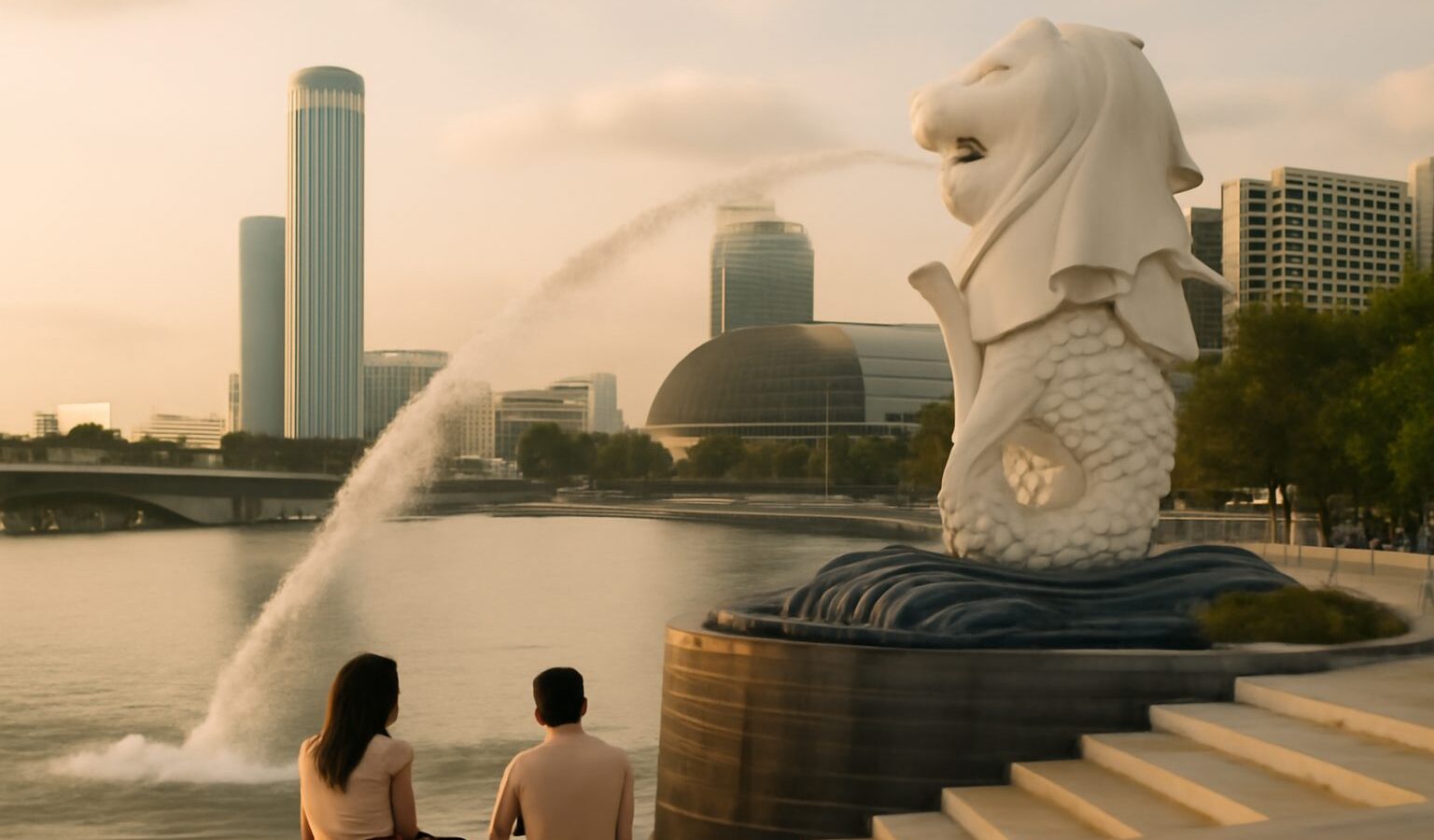
Few sights say Singapore quite like the half lion, half fish statue spouting water into the bay, and merlion park singapore is where you meet it face to face. This free public waterfront spot sits at the mouth of the Singapore River with sweeping views across Marina Bay, making it one of the most photographed places in the country. This guide explains what the Merlion means, when to visit for the best experience, and how to enjoy the area comfortably while capturing that classic Singapore skyline shot.
The Merlion and what it means
The Merlion is Singapore’s national symbol, a mythical creature with the head of a lion and the body of a fish. Each half carries meaning. The lion’s head nods to the old name Singapura, often translated as Lion City, drawn from the legend of a prince who is said to have spotted a lion like creature on the island. The fish body represents Singapore’s origins as a humble fishing village and its deep, enduring relationship with the sea. Together, they tell the story of a place that grew from modest maritime beginnings into a thriving modern city.
At merlion park singapore, the main statue stands tall by the water, continuously spouting from its mouth into the bay, a detail that gives the scene its life and movement. It has become a beloved emblem that appears on souvenirs, in photographs and in the memories of visitors from around the world. Standing before it, with the water, the river and the skyline framing the moment, you get a real sense of why this creature was chosen to represent the nation.
The park itself is compact and open, designed for people to gather, take photos and soak up the views. It is a free, public space, so you can simply turn up, and it stays a firm favourite for both first time visitors ticking off a bucket list sight and locals bringing friends and family from overseas.
The views and the setting
Part of what makes merlion park singapore so special is not just the statue but everything around it. Standing at the water’s edge, you look out across Marina Bay towards a skyline that has become world famous, with the sweeping form of Marina Bay Sands, the distinctive dome of a nearby museum and the gleaming towers of the financial district all in view. On a clear evening, the whole scene lights up, and the water reflects the glow beautifully.
The location at the meeting point of the river and the bay means you are surrounded by other landmarks too. The Esplanade with its spiky, durian like domes sits across the water, the Marina Bay waterfront promenade curves invitingly nearby, and boat rides pass by on the river. This concentration of sights makes the park an ideal anchor point for exploring the whole downtown bay area on foot.
When to visit and photography tips
Timing matters a great deal here. Early morning is peaceful and cool, with softer light and far fewer people, making it lovely for relaxed photos and a calm start to the day. Sunset and the blue hour just after are spectacular, as the sky shifts colour and the skyline lights switch on, though this is also the busiest and most crowded time. Late evening can be quieter again while the buildings stay beautifully lit.
For the classic shots, a few tips help. The most famous photo trick is a forced perspective image where you line yourself up to look as though you are catching or drinking the water from the Merlion’s mouth, which is always good fun in a group. For skyline photos, frame the statue in the foreground with Marina Bay Sands behind it for that quintessential Singapore composition. Keep your phone or camera charged, arrive a little early for popular times to find a good spot, and be patient and considerate, since many people want the same angles. Take your shots efficiently and let others have their turn.
Here is a quick comparison to help you choose your timing.
| Time of day | What to expect | Best for |
|---|---|---|
| Early morning | Cool, calm, soft light, few people | Relaxed photos and a quiet visit |
| Midday | Bright, hot, busier | A quick stop between other sights |
| Sunset and blue hour | Stunning colours, skyline lights, crowds | Dramatic skyline photography |
| Late evening | Lit up buildings, calmer again | Night shots without peak crowds |
Staying comfortable in the heat
Merlion Park is largely open and exposed, with limited shade, so Singapore’s sun and humidity can be intense, especially in the middle of the day. Carry water and sip regularly, wear a hat and light clothing, and use sun protection. If you are visiting midday, take breaks in nearby shaded or air conditioned spots to cool down, since the area around the bay has plenty of options. Comfortable shoes make a difference too, as the best way to enjoy the bay is on foot.
Because the park is right by the water, keep an eye on young children near the edges and hold hands in busier moments. It is a family friendly place, but the crowds at peak times and the open waterfront mean a little supervision goes a long way. Prams and wheelchairs can generally move around the open promenade, though it is always worth planning your route for comfort.
Nearby spots to round out your visit
The beauty of merlion park singapore is how it sits at the heart of one of the most walkable, sight packed parts of the city. From here you can stroll around the bay to the waterfront promenade, cross towards the Esplanade for its theatres and views, or continue along to the wider Marina Bay attractions. The area is dotted with dining, riverside bars and spots to rest, so a quick photo stop easily grows into a leisurely half day of wandering.
Think of the Merlion as your starting point. Snap your photos, take in the symbolism and the skyline, then let the promenade guide you onward to the rest of the bay. Since it is a free public space, you can visit any time, but for the best light and mood, aim for early morning or the golden glow of sunset. However you plan it, standing before Singapore’s lion fish guardian with the skyline behind you is a moment that stays with you long after you leave.
Explore more
Marina Bay Guide
ArtScience Museum
Marina Bay Sands Guide
Singapore River Walk Guide