
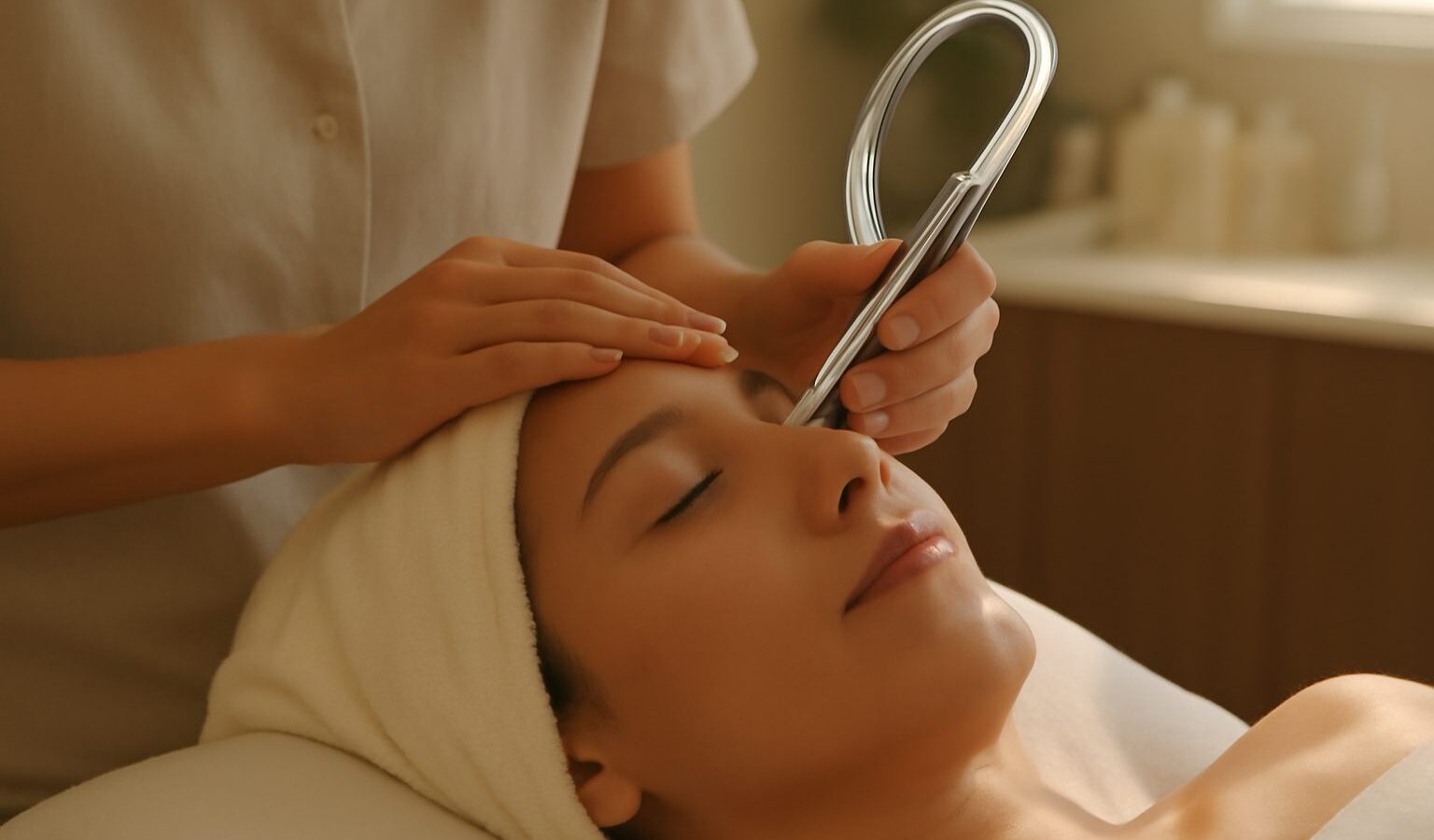
Dull, rough-feeling skin is a common complaint in Singapore’s heat, where sweat, sunscreen and city grime sit on the surface all day. Microdermabrasion is one of the treatments people reach for when a normal cleanser is not cutting through that build-up. In plain terms, it is a professional, mechanical exfoliation that buffs away the outermost layer of dead skin to reveal the fresher skin underneath. This guide explains what microdermabrasion actually does, how it differs from the harsh scrubs in your bathroom, and how to look after your skin afterwards in a hot, sunny climate. It is general information, not medical advice, so treat it as a starting point rather than the last word.
What Microdermabrasion Actually Does
Microdermabrasion is a surface-level treatment. A trained therapist uses a device that either sprays fine crystals across the skin or passes a diamond-tipped wand over it, while gentle suction lifts away the loosened dead cells. Because it works only on the very top layer, the stratum corneum, it is considered a light resurfacing treatment rather than a deep one.
The idea is simple: by clearing off that tired outer layer, skin can look brighter and feel smoother, make-up sits better, and your serums and moisturisers absorb more easily. People often try it for a dull complexion, mildly rough texture, clogged-looking pores or general lack of glow before an event.
What it does not do is just as important. Microdermabrasion is not a treatment for deep acne scars, active or cystic acne, deep lines or pigment that sits lower in the skin. Those concerns need different, often medical, approaches. Being honest about this up front saves you money and disappointment.
Microdermabrasion Versus Harsh At-Home Scrubs
Many people assume a gritty face scrub does the same job. It does not, and the difference matters for your skin barrier. A professional treatment is controlled: the operator adjusts the intensity, keeps the pressure even, and works with a consistent particle size or a smooth diamond tip. A cheap scrub with large, jagged particles dragged across the face by hand can cause micro-tears, redness and a damaged barrier, which in our humidity can lead to more breakouts and sensitivity, not less.
The table below sets out the broad differences. Treat it as a general guide, not a rule for your specific skin.
| Feature | Professional microdermabrasion | Harsh at-home scrub |
|---|---|---|
| Who performs it | Trained therapist at a clinic or med-spa | You, without training |
| Control of intensity | Adjustable, even and monitored | Uneven, easy to overdo |
| Particle or surface | Fine crystals or smooth diamond tip | Often large, jagged grains |
| Barrier risk | Lower when done correctly | Higher, micro-tears common |
| Best used | Occasionally, spaced out | Sparingly, gentle formulas only |
If you prefer to exfoliate at home, choose a gentle chemical exfoliant or a soft, fine-grained product, use it sparingly, and stop if your skin stings or looks red. Gentle and consistent beats aggressive and occasional.
Who Should Be Cautious or Skip It
Microdermabrasion suits many people, but it is not for everyone, and this is where seeing a professional matters. You should be cautious, or avoid it entirely, if you have active acne, rosacea, eczema, very sensitive or reactive skin, cold sores that are flaring, or any open or broken skin. It is also generally not advised soon after certain other treatments, or while using strong actives such as retinoids or acid exfoliants, because your skin may already be more delicate.
If you are pregnant or breastfeeding, or you take medication that affects your skin, check with your own doctor before booking anything. People with deeper skin tones should also raise this at consultation, because overly aggressive exfoliation on any tone can occasionally trigger changes in pigment, and a good practitioner will tailor the treatment accordingly.
A proper consultation should include questions about your skin history, current products and goals, and a patch or test pass if there is any doubt. If a provider promises dramatic, permanent results from a single surface treatment, be sceptical.
Aftercare in Singapore’s Sun
This is the part people skip, and it is the most important. Freshly exfoliated skin has lost part of its protective outer layer, so it is temporarily more sensitive and, crucially, more vulnerable to the sun. In Singapore, where ultraviolet levels are high all year, this matters every single day, not just when it looks bright outside.
A sensible aftercare routine usually looks like this:
- Wear a broad-spectrum sunscreen daily and reapply through the day, especially if you are outdoors or sweating.
- Keep the routine simple for a few days: a gentle cleanser and a fragrance-free moisturiser to support the barrier.
- Pause strong actives such as retinoids and acid exfoliants until skin feels normal again, or as your provider advises.
- Skip additional scrubbing, hot saunas and vigorous workouts immediately after if your skin feels tender.
- Do not pick at any flaking; let it settle naturally.
Mild redness or a tight feeling for a short while can be normal. If you get lasting redness, stinging, swelling, blistering or any sign of a reaction, contact the clinic and see a doctor. Follow the specific instructions your provider gives you, as they know exactly what device and settings were used.
Getting Results and Managing Expectations
Microdermabrasion is best understood as maintenance, not transformation. Any glow from a single session is often subtle and short-lived, because the skin naturally renews itself and the dead layer returns. People who like it usually treat it as an occasional pick-me-up spaced out over time, rather than a one-off fix. How often is safe for you depends on your skin, so let a professional guide the spacing instead of overdoing it.
For it to help at all, the basics still have to be in place: daily sunscreen, gentle cleansing, enough hydration and a moisturiser suited to humid weather. No surface treatment can outrun sun damage or a neglected routine.
If your real concern is deeper, textured acne scarring, stubborn pigment, or lines, microdermabrasion is probably the wrong tool, and a qualified, MOH-registered doctor can talk you through more suitable options. Choose a reputable, licensed provider, avoid unusually cheap or unregulated deals, and remember that this article is general information only. For any skin condition, persistent concern, or before starting a new treatment or active, see a doctor, dermatologist or a qualified professional, and always patch-test new products.