
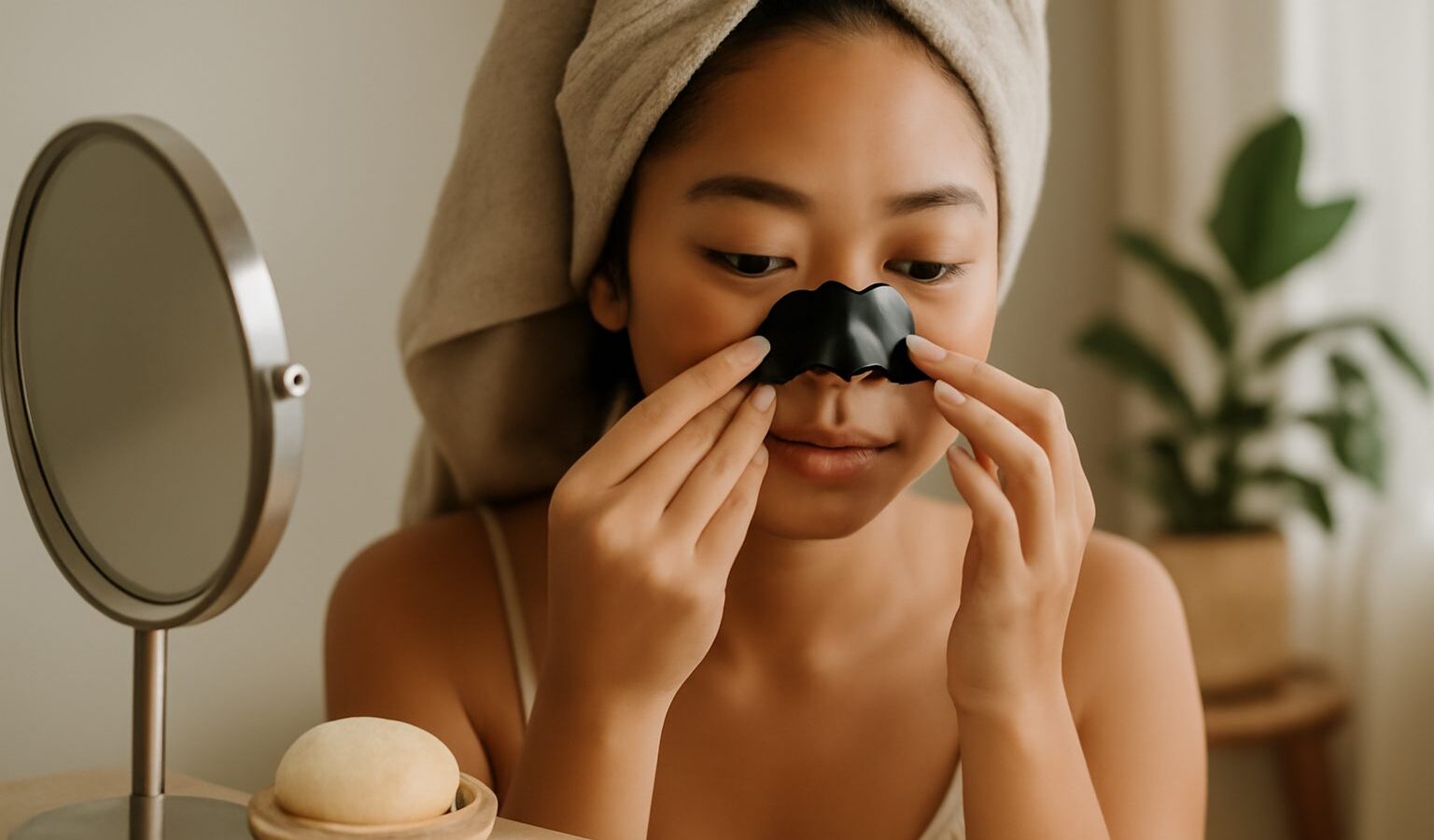
Few skin concerns are as common, or as frustrating, as blackheads and large pores. In Singapore’s heat and humidity, oil glands stay busy all year, so the nose, chin and inner cheeks can look speckled and rough no matter how often you wash your face. The good news is that a calm, consistent routine helps a lot. The realistic part is that patience beats aggression: scrubbing harder and squeezing more tend to make things worse, not better. This guide explains what is actually happening in your skin and how to manage blackheads and large pores sensibly in a tropical climate.
What Blackheads and Large Pores Really Are
A pore is simply the opening of a hair follicle, and each one is linked to an oil gland. When that oil, called sebum, mixes with dead skin cells and clogs the opening, it forms a plug. If the plug stays trapped under the surface, you get a whitehead. If it sits at the opening and is exposed to air, it oxidises and darkens, which is a blackhead. The dark colour is not trapped dirt, so washing more aggressively will not scrub it away.
Pore size is largely down to genetics, along with how much oil you produce and how skin changes with age. Heat and humidity make oil flow more freely, which is why pores can look more obvious here than in a cool, dry climate. You cannot permanently shrink a pore, but you can keep it clear, which makes it look smaller and smoother. That distinction matters, because chasing the idea of erasing pores altogether leads to over-treating and irritation.
A Gentle Routine That Actually Works
The aim is to keep pores clear and oil balanced without stripping your skin. Ironically, harsh routines often trigger more oil, so gentleness is the strategy, not the compromise.
- Cleanse twice a day. A gentle cleanser suited to oily or combination skin, used morning and night, removes the day’s oil, sweat and sunscreen. In this climate an evening double cleanse, an oil-based or micellar step followed by your usual wash, helps lift sunscreen and grime thoroughly.
- Exfoliate with a chemical, not a scrub. A leave-on exfoliant with a BHA such as salicylic acid is well suited to blackheads because it is oil-soluble and can work inside the pore. Start two to three times a week, not daily.
- Moisturise anyway. Even oily skin needs hydration. A light gel moisturiser keeps skin balanced so it does not overproduce oil.
- Wear sunscreen daily. Broad-spectrum sunscreen protects skin every day and is especially important when you use exfoliating acids, which can make skin more sun-sensitive. Choose a non-comedogenic formula so it does not add to congestion.
Introduce one new product at a time and patch test it on your inner forearm for a couple of days first, particularly with active ingredients. If your skin stings, peels or reddens, ease off the frequency.
Ingredients and Tools Compared
It helps to know which options are gentle and effective, and which tend to disappoint or irritate. Here is a quick comparison for managing blackheads and large pores.
| Approach | How it helps | Best used | Watch out for |
|---|---|---|---|
| Salicylic acid (BHA) | Clears oil and debris inside pores | 2 to 3 times a week, leave-on | Overuse can dry and irritate |
| Niacinamide | Balances oil, supports skin barrier | Daily, well tolerated | Little downside; simple addition |
| Retinoids | Speeds cell turnover, keeps pores clear | At night, build up slowly | Sun sensitivity; go gradual |
| Clay masks | Absorb surface oil temporarily | Once or twice a week | Do not overdo; can overdry |
| Physical scrubs | Buff surface texture only | Rarely, if at all | Can worsen irritation and pores |
| Pore strips | Pull out some surface plugs | Occasional cosmetic fix | No lasting effect; can irritate |
A retinoid can be a worthwhile long-term addition because it helps keep pores from clogging, but it needs a slow, patient introduction and diligent sunscreen. If you are pregnant or breastfeeding, retinoids are commonly approached with caution, so confirm any active ingredient with your own doctor before using it. This is general information, not a ruling on what is safe for you.
Habits That Make a Difference
Beyond products, everyday habits shape how your pores look, and several are especially relevant in Singapore’s humidity.
- Rinse off sweat. After a hot commute or a workout, cleanse or at least rinse so sweat and oil do not sit on the skin and settle into pores.
- Choose non-comedogenic products. Look for that word on moisturisers, sunscreens and make-up so your daily products are less likely to clog.
- Do not over-wash. More than twice a day, or with a squeaky-clean harsh cleanser, can strip skin and prompt more oil.
- Resist squeezing. Picking and hard squeezing can push debris deeper, cause inflammation and lead to marks or scarring.
- Keep make-up light and remove it fully. Heavy, long-wear make-up in the heat can contribute to congestion, so cleanse thoroughly at night.
- Be consistent, not intense. A steady routine over weeks beats an aggressive blitz that leaves skin raw.
Give any new routine six to eight weeks before you judge it. Skin turns over slowly, and real improvement is gradual rather than overnight.
When to See a Professional
Most blackheads and mildly enlarged pores respond well to patient home care. Some situations, though, are worth expert help.
- Persistent, painful or spreading breakouts that home care is not settling.
- Deep, stubborn congestion or cystic spots, which may need proper medical treatment.
- Scarring or marks you would like assessed.
For these, a doctor, dermatologist or pharmacist can guide you on suitable options, and any in-clinic extraction or treatment should be done by an accredited, trained practitioner at a MOH-licensed clinic after a proper consultation. Avoid at-home tools that promise dramatic results; they often cause more harm than good. Managing blackheads and large pores is a long game, and steady, gentle care is what keeps skin looking clear and smooth over time.
Explore more
Clearing pores starts with the basics, so it helps to read about choosing a cleanser for your skin type and how skin cycling can space out exfoliation without overloading your skin. If your concern leans more towards breakouts than plugs, our guide on fungal acne versus regular acne explains why telling them apart matters before you treat.