

Two of the most recognisable garments in Singapore’s wardrobe are the cheongsam and baju kurung, and both are very much alive rather than museum pieces. You will see them at weddings and festive gatherings, in the office, at family reunions, and increasingly in everyday, modern forms. The cheongsam and baju kurung carry real cultural and personal meaning for many people, and they have also kept evolving, with contemporary cuts and fabrics sitting comfortably alongside the classic versions. This guide describes how these garments are worn today, offers ideas for styling them, and notes throughout that customs vary by community, family and occasion, so it is always worth asking your host or the people who wear them if you are unsure.
Understanding the Two Garments
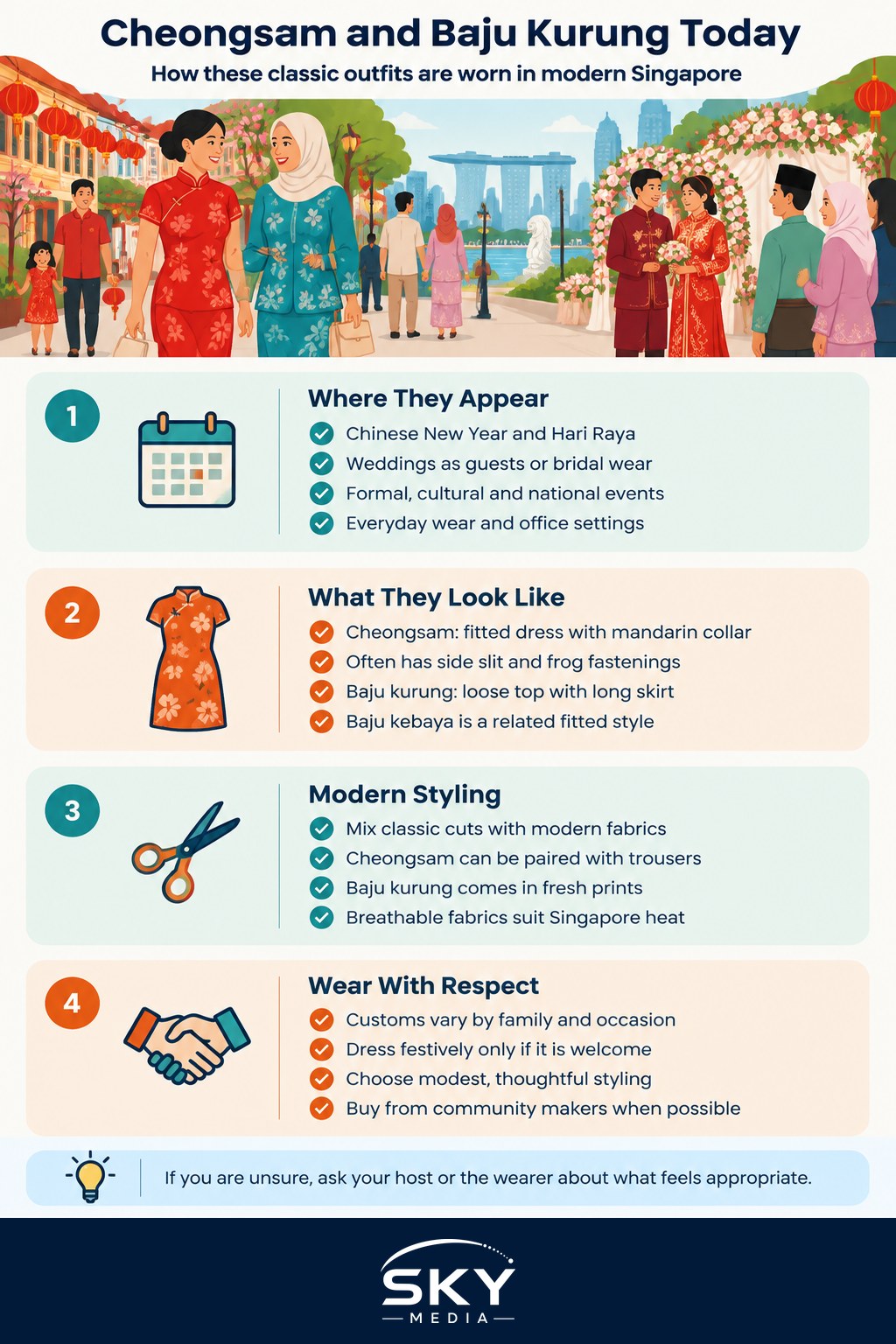
The cheongsam, also widely known by the Cantonese name and as the qipao in Mandarin, is a fitted dress with a distinctive mandarin collar and often a side slit and knotted or frog fastenings. It grew into its familiar form in early twentieth-century Shanghai and has since taken many shapes, from full-length formal gowns to shorter, everyday cuts. For many in the Chinese community it is festive dress worn at Chinese New Year, weddings and special occasions, while some wear more relaxed versions day to day.
The baju kurung is a traditional Malay outfit, typically a loose, knee-length or longer top worn over a long skirt, or kain. It is prized for being graceful, modest and comfortable in the heat, and it is worn by many Malay women both for daily life and for occasions such as Hari Raya, weddings and formal events. A related style, the baju kebaya, features a more fitted, often sheer top. Both garments hold cultural and, for many wearers, religious significance, and the way they are worn reflects personal, family and community preferences that differ from one household to the next.
How They Are Worn in Singapore Today
Neither garment is frozen in time. Today you will find the cheongsam and baju kurung across a wide spectrum, from strictly traditional to boldly contemporary, and all of it is valid. Some people wear heritage pieces passed down in the family; others commission tailored versions or buy modern ready-to-wear takes.
Common settings where you will see them include:
- Festive periods such as Chinese New Year and Hari Raya, when families often coordinate colours.
- Weddings, both as bridal wear and as guest attire, sometimes with several changes of outfit.
- Formal and cultural events, national celebrations and performances.
- Everyday and workplace wear, especially in softer, more relaxed modern cuts.
Modern makers have expanded what these garments can be. Cheongsam tops are paired with trousers or worn as a blouse, while some designs use stretch fabrics and hidden zips for ease of movement. Baju kurung appears in fresh prints, adjustable cuts and breathable modern fabrics, and many wearers style it in ways that suit contemporary life while keeping its essential modest, flowing silhouette. These evolutions come largely from within the communities that wear them, which is part of why they feel current rather than costume.
Modern Takes and Styling Ideas
If you wear the cheongsam or baju kurung yourself, styling today is a happy mix of tradition and personal taste. The aim is to feel comfortable and confident in a garment that means something to you.
| Element | Classic approach | A modern take |
|---|---|---|
| Cheongsam fabric | Silk or brocade in rich tones | Cotton, linen or jersey for daily ease |
| Cheongsam length | Full length for formal events | Knee-length or a cheongsam-style top |
| Baju kurung cut | Loose, floor-skimming, traditional prints | Tailored lines, contemporary patterns |
| Footwear | Heels or embellished flats | Comfortable block heels or clean flats |
| Accessories | Heirloom jewellery, brooches | Minimal modern pieces, a simple clutch |
A few practical notes help either garment sit well. Choose breathable fabrics for Singapore’s heat, especially for long festive days that move between outdoor visits and cold, air-conditioned halls, and keep a light shawl handy for the temperature swing. Tailoring makes an enormous difference; a piece adjusted to your own body simply feels better and moves better, whatever your shape or size. Above all, wear it in the way that feels right to you, since there is no single correct modern version.
Colour and print are part of the fun, and they often carry meaning. Bright, celebratory tones are common at festive gatherings, and many families like to coordinate a shade for a reunion or a wedding, so it is worth a quick check before you shop. Prints range from classic florals and songket-inspired weaves to modern graphic patterns, and mixing a traditional cut with a contemporary print, or the reverse, is a popular way to make an outfit feel personal. If you are having a piece made, bringing a reference photo to the tailor and talking through the length, sleeve and fit will help you end up with something you will wear for years rather than just once.
Wearing Cultural Dress With Respect
For anyone who does not come from these communities but admires the garments, the kind and simple guidance is to approach them with respect and context. These are living cultural clothes, not props or a theme, and norms around who wears what, and when, genuinely vary from family to family and event to event.
A few thoughtful pointers:
- If you are invited to a wedding, Hari Raya open house or Chinese New Year gathering, it is often warmly welcomed to dress festively, but ask your host what is appropriate rather than assuming.
- When in doubt, dress conservatively and let the people hosting you guide the details, including colours to embrace or avoid.
- Buy from makers and shops within the community where you can, and treat the garment and its meaning with care.
- Avoid turning sacred or deeply traditional pieces into a costume; context and intention matter.
Because customs differ so much across communities, families and occasions, the most respectful move is always to ask and to listen. Worn thoughtfully, the cheongsam and baju kurung are a beautiful part of everyday and festive life in Singapore, and there is room for both cherished tradition and modern reinvention side by side.
Explore more
Festive dressing is about the whole look. For comfortable footwear on a long celebration day, see our guide to choosing comfortable heels, and for a versatile Western staple to round out your wardrobe, read about building outfits with a little black dress.
Further reading: Getting Baju Raya Tailored: When to Order and What It Costs · Styling a Modern Cheongsam in Singapore · How to Wear a Saree: A Beginner Friendly Guide