

Plenty of careers in Singapore start with a fixed-term contract. It is a common way to get a foot in the door, prove yourself, and get paid while you learn. The natural next question is how to turn that temporary role into something lasting. Moving from contract to permanent work is very possible, but it rarely happens automatically. It usually takes good performance, sensible timing, and a clear, well-timed conversation. This guide explains how conversion tends to work and how to give yourself the best shot.
As with anything touching employment terms, this is general information, not legal advice. Your actual rights come from your signed contract, the Employment Act and current MOM rules. When something is unclear or disputed, read your contract closely and check with the Ministry of Manpower (MOM) or a lawyer.
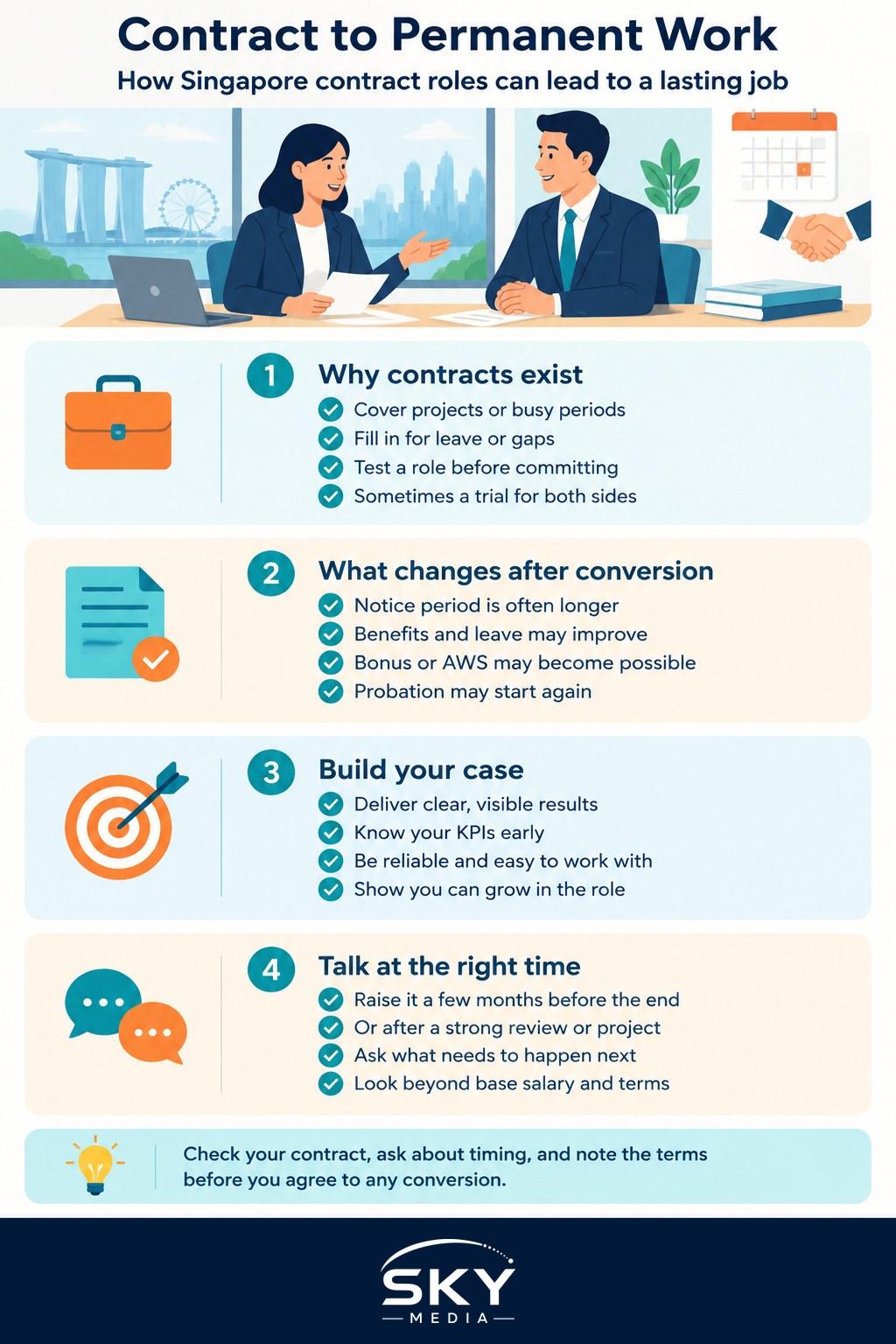
Why Contract Roles Exist in the First Place
Employers use fixed-term contracts for practical reasons, and understanding them helps you read your own situation. A company might hire on contract to cover a specific project, manage a busy period, fill in for someone on long leave, or test a role before committing to a permanent headcount. Sometimes a contract is genuinely temporary; sometimes it is a trial that both sides hope will become permanent.
Knowing which one you are in changes your strategy. If the work is tied to a project with a hard end date, conversion may depend on new funding or a new project rather than your performance alone. If the contract is effectively a long audition for an ongoing need, then delivering well and being easy to work with is most of the battle. If you are still deciding whether contract work suits you, our overview of employment types in Singapore sets out the trade-offs.
What Usually Changes When You Convert
Going permanent is not only about job security. Several practical terms often shift, and you should know what to look for.
- Notice period: Permanent roles frequently carry a longer notice period than a short contract. This cuts both ways, giving you more stability but less freedom to leave quickly.
- Benefits and leave: Permanent staff may receive fuller benefits, such as more annual leave, insurance or a bonus scheme, than a contract allowed.
- Bonus and AWS eligibility: You may become eligible for the Annual Wage Supplement (the 13th month) or a performance bonus if the company offers one. Nothing is automatic; check the wording.
- CPF continues: As an employee, you and your employer keep contributing CPF whether you are on contract or permanent, so this is not usually the thing that changes. Confirm current rates on the CPF Board website.
- Probation may reset: Some conversions come with a fresh probation period. Ask whether it applies and how long it runs.
Because company policies and statutory figures change, verify the specifics on MOM and CPF Board rather than assuming your new terms match someone else’s.
Contract Versus Permanent: A Quick Comparison
The table below lays out the typical differences so you can weigh what conversion actually buys you. Your real terms come from your contract and current rules, so treat this as a general guide.
| Aspect | Fixed-term contract | Permanent role |
|---|---|---|
| Job security | Ends on a set date unless renewed | Open-ended, ends only with notice |
| Notice period | Often shorter | Often longer |
| Benefits | Basic or per contract | Usually fuller |
| Bonus and AWS | Sometimes, if stated | More commonly eligible |
| Best for | Getting in, gaining experience | Stability and progression |
Building the Case for Conversion
Employers convert people they already trust and would hate to lose. Your job during the contract is to become exactly that person, and to make the decision easy for your manager.
- Deliver visibly. Do the core role well and keep a simple record of what you have shipped, improved or saved. Concrete results are far more persuasive than a general sense that you have been busy.
- Understand KPIs early. Know how your performance is measured from the start; our guide to understanding KPIs and appraisals helps you set the right targets.
- Be easy to work with. Reliability, clear communication and a good attitude weigh heavily when a manager decides who is worth a permanent seat.
- Learn the wider role. Show you can grow beyond the narrow task you were hired for, so keeping you looks like an investment rather than a cost.
- Signal your interest early. Let your manager know, well before the contract ends, that you would love to stay permanently. Do not assume they can read your mind.
Keeping your options open is sensible too. There is nothing disloyal about staying aware of the market while you angle for conversion; our piece on job searching while still employed covers how to do that discreetly.
Timing the Conversation and What to Ask
When you raise conversion matters almost as much as how. Too early and there may be nothing to decide; too late and the budget or headcount may already be locked. A good window is often a couple of months before the contract ends, or right after a strong review or a completed project, when your value is fresh in everyone’s mind.
Keep the conversation warm and specific. Say that you have enjoyed the work, that you would like to stay on permanently, and ask what would need to happen for that to be possible. Then listen. The answer tells you whether it is about performance, budget, or timing.
When an offer does come, do not just look at the base salary. Ask about the things that quietly matter:
- The new notice period and whether probation resets.
- Leave, bonus, AWS eligibility and any insurance or benefits that change.
- The salary itself, and how it compares with the market for a permanent version of your role.
- Any restrictive clauses, since permanent contracts sometimes add non-compete or confidentiality terms; our guide to non-compete and confidentiality clauses explains what to check.
If you receive a formal offer, weigh it properly rather than accepting on the spot. Our guides to comparing and choosing between job offers and accepting or declining a job offer walk through how to respond well.
If Conversion Is Not on the Table
Sometimes the honest answer is no, at least for now, and that is not the end of the road. If the block is budget rather than performance, ask whether a renewal or a future review is realistic, and get a sense of the timeline. Use a strong contract stint as a genuine achievement: you have real experience, references and results to show the next employer.
If you decide to move on, do it cleanly. Serve your notice, hand over your work well, and stay on good terms, since Singapore’s industries are small and people remember how you left. A contract that does not convert is still a win if it leaves you more skilled, better connected and clearer about what you want next. When you are unsure about your terms or feel something is unfair, check MOM and TAFEP for fair-employment guidance, and get proper advice rather than acting on assumptions.
Frequently Asked Questions
How many times can a fixed-term contract be renewed? There is no fixed number that applies to every case, so it depends on your contract and your employer’s policy. Repeated renewals can signal either a genuine temporary need or reluctance to commit. If you are unclear, ask your manager directly and check MOM’s guidance.
What happens to my unused leave if my contract is not renewed? This depends on your contract and the Employment Act. Check what your terms say about unused leave at the end of employment, and ask HR how it will be treated. Confirm in writing, and contact MOM if there is a dispute.
Should I accept a permanent offer if the salary is lower than my contract pay? Compare the full package rather than the headline figure. Contract rates may not include leave, bonus or insurance, so a lower base can still be worth it. Weigh stability, benefits, notice period and growth, and ask whether the salary is negotiable.
Can I negotiate for permanent status before my contract starts? You can ask during the offer stage whether the role may convert, and under what conditions. Get anything promised in writing, because verbal assurances are not part of the contract. Do not assume conversion is automatic.
Is it worth taking a contract job hoping it becomes permanent? It can be, if you value the experience and understand the risk. Ask why the role is on contract, whether conversions have happened before and what would be needed. Treat conversion as a possible bonus, not a guarantee, and keep other options open.
Official sources: Ministry of Manpower (MOM)