
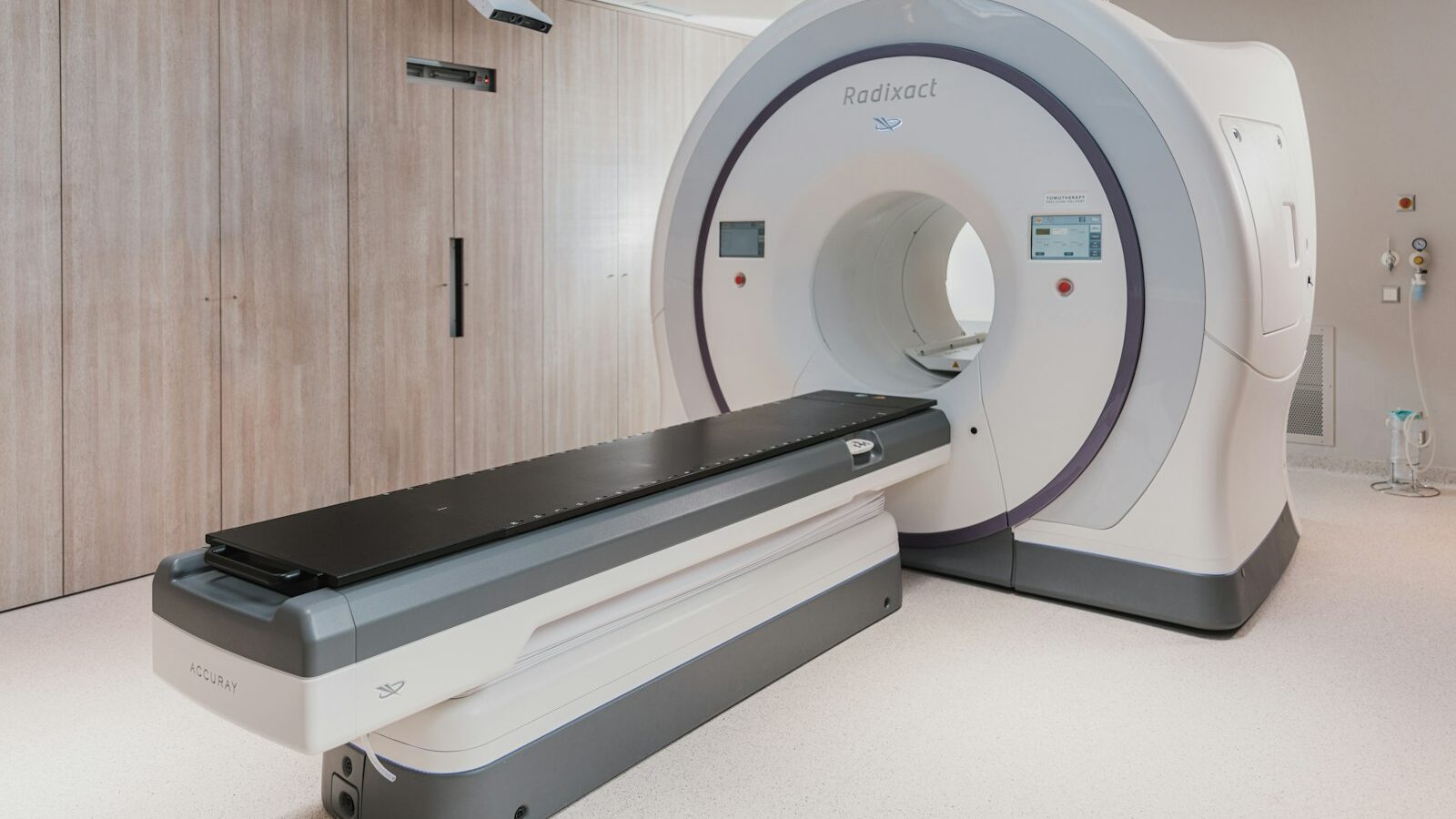
If your doctor says you need “a scan”, the next questions are usually which kind, how long the wait is and how much it will cost. MRI cost in Singapore is the most common worry, because MRI tends to be the priciest of the everyday imaging tests. But MRI, CT and X-ray are not interchangeable. Each one sees the body differently, and your doctor chooses based on what they need to find. This guide explains how the three scans differ, how referrals work, and why the same scan can cost very different amounts depending on where and how you get it.
This is general information, not medical advice. Your doctor decides which scan, if any, is appropriate for you.
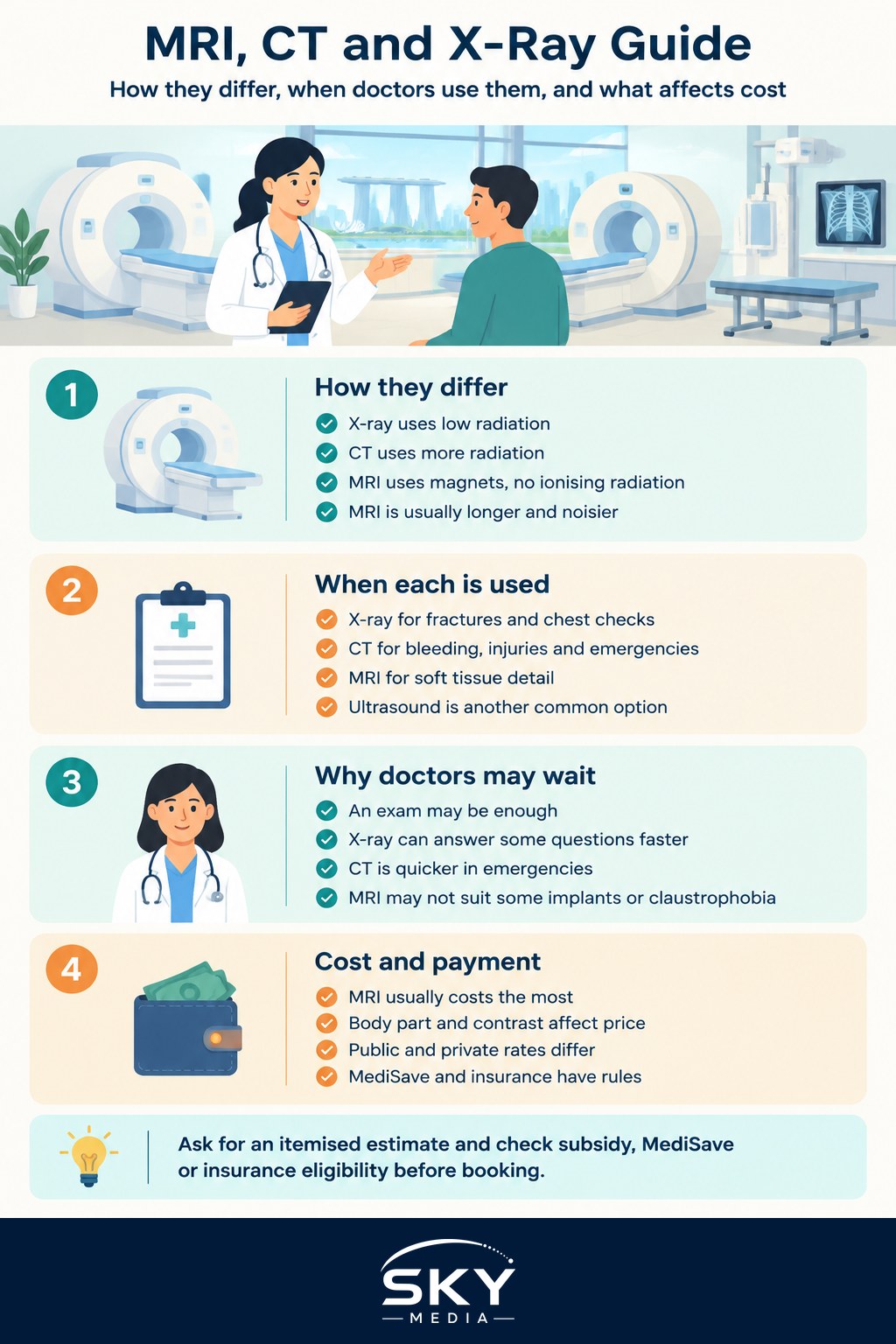
How MRI, CT and X-Ray Differ
All three create images of the inside of the body, but they use different technology and suit different problems.
| Scan | How it works | Typically used for | Radiation | Time on the table |
|---|---|---|---|---|
| X-ray | A small dose of radiation passes through the body to create a flat image | Bones, fractures, chest checks, some joint and dental problems | Low | Usually minutes |
| CT (computed tomography) | Many X-ray images taken from different angles, combined by computer into cross-sections | Detailed views of organs, bleeding, injuries, the chest and abdomen, some emergencies | Higher than a plain X-ray | Often short |
| MRI (magnetic resonance imaging) | Strong magnets and radio waves, no ionising radiation | Soft tissues: brain, spine, nerves, ligaments, cartilage, muscles and many organs | None | Often longer, and the machine is noisy |
A few practical points:
- X-ray is often the first step for suspected fractures or chest problems because it is quick, widely available and relatively low cost.
- CT is fast and very good at showing detailed structure, which is why it is used heavily in emergencies.
- MRI shows soft tissue in fine detail without radiation, so it is often used for sports injuries, back problems with nerve symptoms, and many brain and spine conditions.
- Ultrasound, which uses sound waves, is another common option, especially for pregnancy, the abdomen and some soft tissue problems. A bone density scan (DEXA) is different again and is used specifically for osteoporosis.
Some scans use a contrast agent, a dye injected or swallowed to make certain tissues show up more clearly. If contrast is needed, you will usually be asked about kidney function, allergies and medications beforehand.
Why Your Doctor Might Not Order an MRI Straight Away
Many people assume an MRI is “the best scan” and want one immediately. In practice, doctors follow established clinical pathways for good reasons:
- A physical examination may be enough. Many back strains and minor sports injuries improve with time and treatment, and a scan may not change what happens next.
- X-ray answers some questions faster. A suspected fracture is often confirmed with an X-ray.
- CT is quicker in emergencies. For suspected bleeding in the brain after a fall, for example, speed matters.
- MRI is not suitable for everyone. People with certain implants, pacemakers or metal fragments may not be able to have an MRI, and some people find the enclosed machine difficult because of claustrophobia.
- Incidental findings. Scans sometimes pick up harmless things that lead to more tests and worry.
If you feel your symptoms are not being taken seriously, ask your doctor to explain their reasoning, or seek a second opinion.
Referrals: Subsidised and Private Routes
How you get referred has a big effect on what you pay.
The subsidised route
- See a doctor at a polyclinic or a GP clinic, including a CHAS GP. CHAS (Community Health Assist Scheme) helps eligible Singaporeans with costs at participating private clinics.
- If needed, the doctor refers you to a specialist outpatient clinic (SOC) at a public hospital. Referrals from a polyclinic or CHAS GP can qualify for subsidised rates if you are a Singapore Citizen or Permanent Resident and meet the conditions.
- The specialist decides whether a scan is needed and orders it. Scans ordered as part of subsidised specialist care are charged at subsidised rates, which are lower for citizens than for PRs.
- Some X-rays and basic tests can be done directly at polyclinics.
The trade-off is waiting time. Subsidised specialist appointments and non-urgent scans may involve a wait, which varies by hospital and specialty.
The private route
- Private GPs, private specialists and private imaging centres can order and perform scans, often with shorter waiting times.
- Private imaging centres usually still require a doctor’s referral for MRI and CT, because the scan must be clinically justified and interpreted by a radiologist.
- You pay private rates, which are typically higher than subsidised public rates.
Foreigners, including Employment Pass and Dependant’s Pass holders, are generally not eligible for government subsidies and pay private or unsubsidised rates at public hospitals.
What Affects the Cost of a Scan
The price of an MRI, CT or X-ray in Singapore depends on several factors, and the same body part can be priced quite differently across providers.
- Type of scan. X-rays usually cost the least, CT more, and MRI typically the most.
- Body part and complexity. Scanning one knee is different from scanning the whole spine.
- Contrast. Scans with contrast usually cost more than those without.
- Subsidy status. Citizens, PRs and foreigners pay different rates at public institutions.
- Public or private. Private imaging centres and hospitals set their own fees.
- Consultation and reporting fees. The scan fee may not include the specialist consultation that follows.
Because fees change and differ widely, we do not list prices here. To compare, ask the clinic or hospital for an itemised estimate. MOH publishes fee benchmarks and hospital bill information that can help you judge whether a quote is reasonable; check the MOH website for the latest information.
Paying With MediSave and Insurance
Several funding sources may help, but each has its own rules.
- MediSave can be used for certain approved medical expenses, including some scans under specific conditions. Check the current rules with your hospital or on the CPF Board and MOH websites before assuming a scan is claimable.
- MediShield Life mainly covers large hospital bills and certain costly outpatient treatments. Whether a scan is covered depends on the circumstances.
- Integrated Shield Plans and riders often cover scans done as part of a hospital admission or as pre- and post-hospitalisation care within a set period. Read your policy wording and check with your insurer.
- Employer group insurance may cover outpatient specialist visits and scans. Check your benefits with HR.
If you are reviewing your coverage, our guide to how much insurance you need in Singapore explains the layers.
Preparing for Your Scan
- Tell the staff about implants, pacemakers, metal fragments, pregnancy or possible pregnancy, as well as allergies and kidney problems.
- Follow fasting instructions if any are given, usually for scans with contrast or of the abdomen.
- Wear comfortable clothes without metal, and leave jewellery at home.
- Mention claustrophobia before an MRI. Staff can explain the process and discuss options with your doctor.
- Ask when and how you will receive results. The radiologist’s report usually goes to your referring doctor, who will explain it.
Scans are also used in screening for some conditions, though not every screening test involves imaging. Our guide on cancer screening in Singapore explains which screenings are recommended and how to access them. When in doubt, speak to your doctor about whether a scan is truly needed and which route makes sense for your situation.
Official sources: HealthHub