
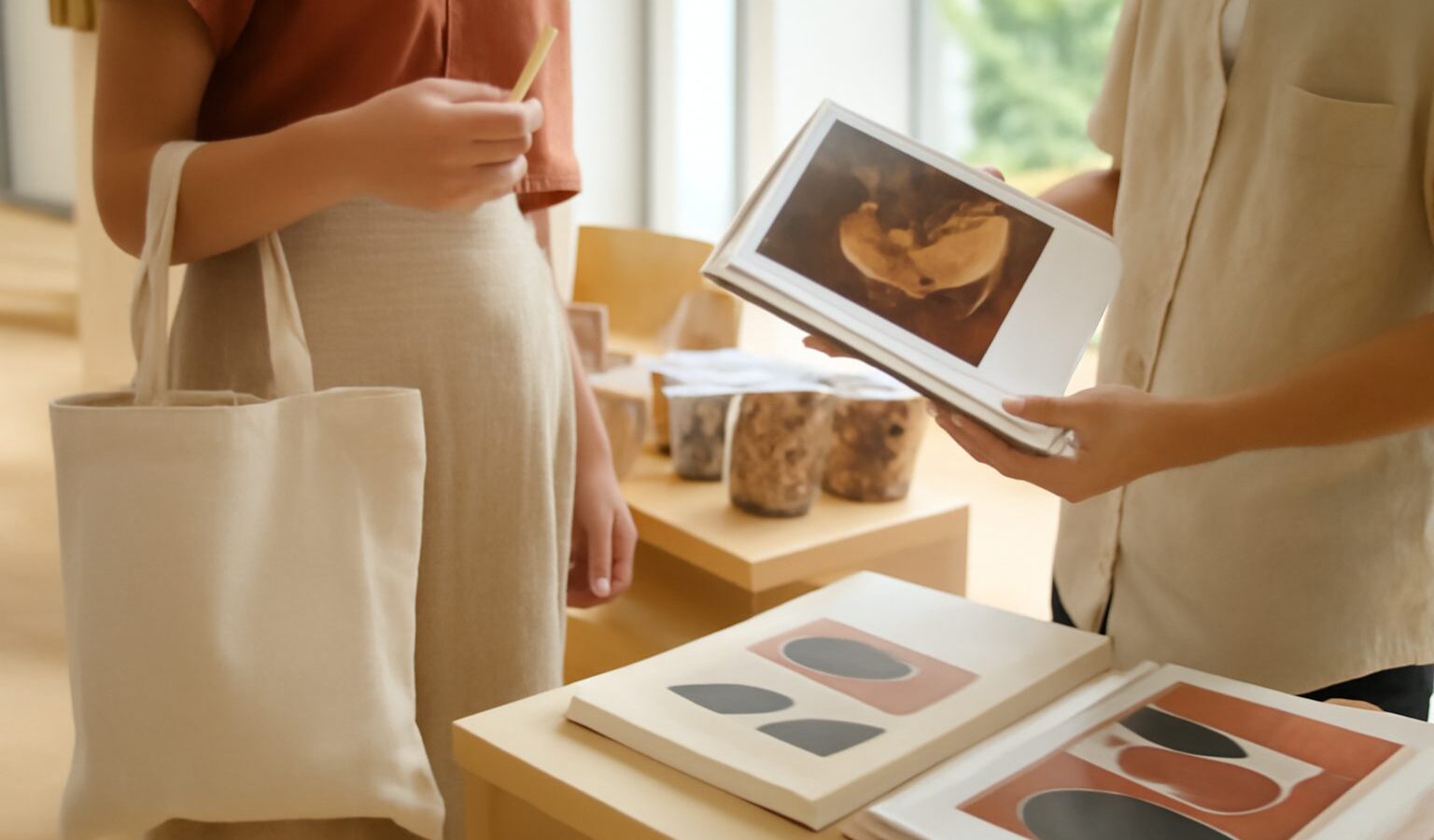
Museum gift shops in Singapore are some of the best places in the city to find thoughtful, locally made gifts. Beyond postcards and fridge magnets, many stock books on Singapore history, prints by local artists, Peranakan-inspired homeware, design objects and children’s activity kits linked to current exhibitions. Shopping them well takes a little planning, though. Prices vary, stock changes with exhibitions, and it is easy to grab something on the way out that you later regret.
This guide takes a practical shopping angle: how to plan a visit, what tends to be worth buying, and how to choose gifts that people will actually keep. It does not name specific products or prices, since ranges change often. Check each museum’s website for current shop details.
Why Museum Shops Are Worth a Visit on Their Own
Singapore’s museums, including the National Museum of Singapore, the Asian Civilisations Museum, the Peranakan Museum, National Gallery Singapore and the Singapore Art Museum, each reflect their collections in their shops. That gives every shop a distinct character. A museum focused on Asian trade and faith may lean towards ceramics, textiles and scholarly books, while an art museum may favour prints, catalogues and design pieces by contemporary artists.
Many museum shops also work with local designers and small brands, so buying there can support Singapore’s creative community. Several shops are located near the entrance or in public areas, and some can be visited without a paid exhibition ticket, though this varies. Check with the museum before you go if you only want to shop.
Plan Your Visit Around the Shop
A little forward thinking makes the shop part of the trip rather than a rushed final stop.
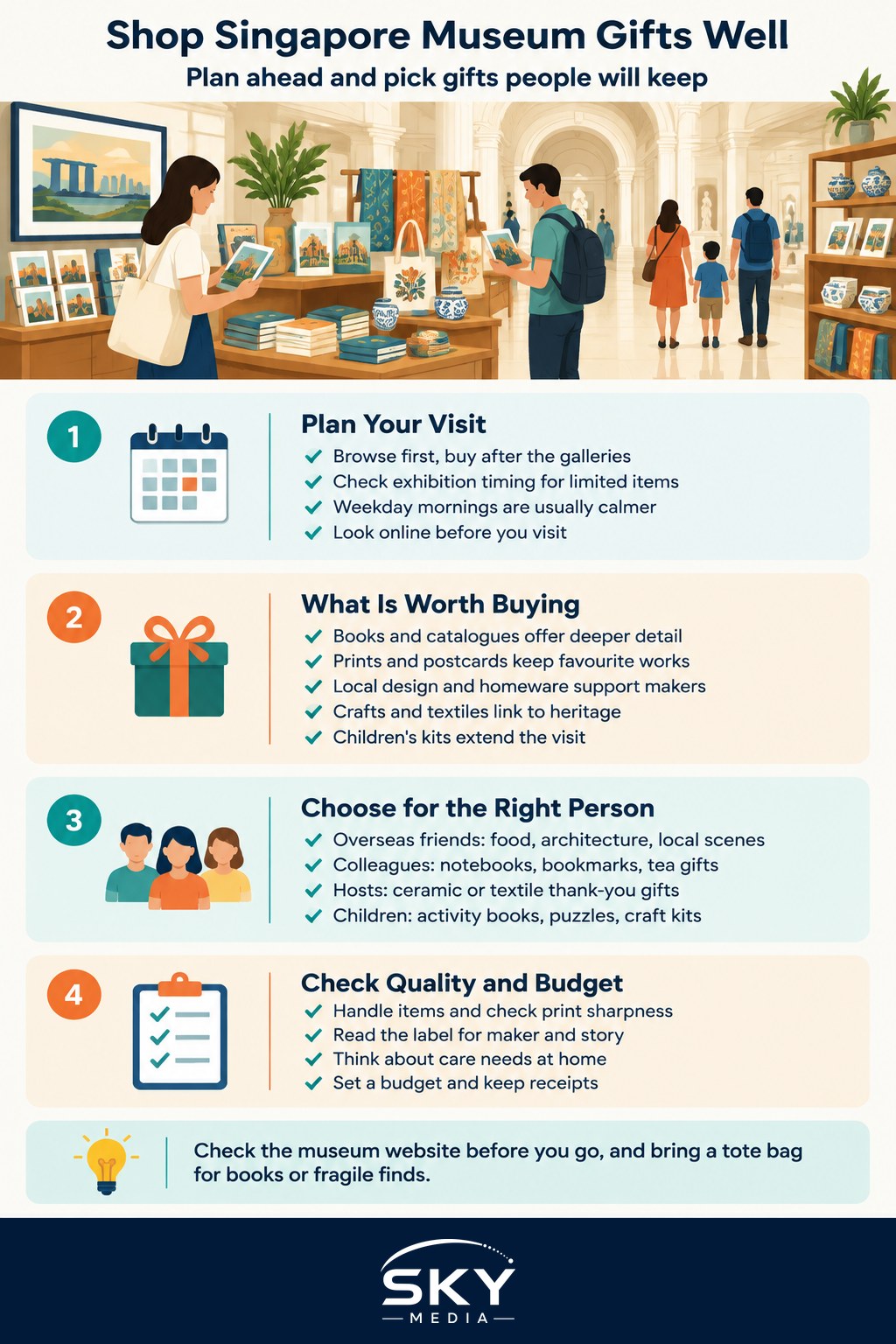
- Browse first, buy last. Have a quick look on arrival to see what is there, then return after the galleries once you know which artworks or objects you connected with.
- Check exhibition timing. Special exhibitions often come with limited merchandise, such as catalogues, prints or collaborations, that may only be sold while the show runs.
- Avoid peak hours. Weekends, school holidays and free-entry days can be crowded. Weekday mornings are usually calmer.
- Look online. Some museums run online shops or post new items on social media. This lets you compare before visiting.
- Bring a tote bag. Many shops charge for or limit bags, and you may be carrying books or fragile items around the galleries.
For tips on getting more from the galleries themselves before you reach the shop, see our guide on how to enjoy a museum visit and actually remember it.
What Tends to Be Worth Buying
Not everything in a museum shop is equally good value. Look for items that connect to the collection, are well made, or are hard to find elsewhere.
| Item type | Why it can be worth it | What to check |
|---|---|---|
| Exhibition catalogues and books | Detailed research and images you cannot find online | Weight for travel, language, whether a softcover exists |
| Art prints and postcards | Affordable way to keep a favourite work | Print quality, paper, standard frame sizes |
| Local design and homeware | Supports Singapore makers, distinctive gifts | Materials, care instructions, packaging |
| Crafts and textiles | Links to heritage traditions | Who made it, how it was produced |
| Children’s kits and books | Extends learning after the visit | Age suitability, reading level |
Generic items with only a logo, such as basic keychains or mass-produced pens, are usually less memorable. If you want a souvenir that sparks a conversation, choose something that tells a story about the place or the art.
Choosing Gifts for Different People
Museum shops are especially useful when you need a gift that feels personal. A few ideas by recipient:
- Overseas friends and family. Books on Singapore food or architecture, Peranakan-style tiles or coasters, and prints of local scenes travel well and explain where you live.
- Colleagues. Small, useful items such as notebooks, bookmarks or tea-related gifts with a local twist.
- Hosts. A beautifully packaged object, such as a ceramic piece or textile, makes a good thank-you gift.
- Children. Activity books, puzzles or craft kits linked to what they saw keep the experience going at home.
- Yourself. One meaningful print or book often brings more lasting pleasure than a bag of small trinkets.
If the gift is for someone from a particular cultural background, a little care helps. Our guide to gift-giving etiquette in Singapore covers common customs around colours, numbers and presentation.
Spotting Quality and Avoiding Regret Buys
A calm checklist at the counter saves you from impulse purchases you will not use.
- Handle it first. Feel the weight of ceramics, check stitching on textiles and look closely at print sharpness.
- Read the label. Good museum shops usually explain who designed or made an item and how it links to the collection.
- Think about where it will live. If you cannot picture the object in your home or the recipient’s, it may end up in a drawer.
- Check care needs. Some textiles need hand washing, and some ceramics are not dishwasher or microwave safe.
Budget and Practical Tips
Museum shop prices can range from very affordable postcards to costly design objects and limited editions. To shop sensibly:
- Set a rough budget before you walk in. It is easy to overspend after an inspiring exhibition.
- Ask about member or friends’ discounts. Some museums offer shop discounts to members. Check the current terms with the museum.
- Compare with the maker’s own shop. Some local designers sell the same items through their own channels.
- Check for tourist refund eligibility. Overseas visitors may be able to claim GST refunds under the Tourist Refund Scheme for qualifying purchases. Ask the shop whether it participates and check current conditions on the IRAS website.
- Keep receipts. These help with exchanges and refunds, and with any tourist refund claim.
For travellers, consider luggage. Large books, framed prints and ceramics are heavy and fragile. Ask whether the shop can wrap items securely, or choose unframed prints rolled in a tube.
Combining Shop Visits on a Museum Day
Several museums sit close together in the Civic District and Bras Basah area, which makes it possible to visit more than one shop in a day. You might pair a gallery visit with a shop stop at a nearby museum, then finish with lunch. If you are planning such a day, our Asian Civilisations Museum guide helps you plan the gallery part of the trip.
Done well, a museum shop visit is more than an afterthought. It is a chance to take home a small, well-made reminder of Singapore’s art and heritage, and to support the people who design and make it.