

Falling sick in a new country is stressful, and knowing where to go before it happens saves a lot of worry. This guide to singapore hospitals and polyclinics for a newcomer walks you through how the healthcare system is set up, who to see for what, and where to check current fees and subsidies. It is general information to help you find your feet, not medical advice. For any diagnosis, treatment, or current cost, always defer to a qualified professional and to official sources such as MOH and HealthHub.
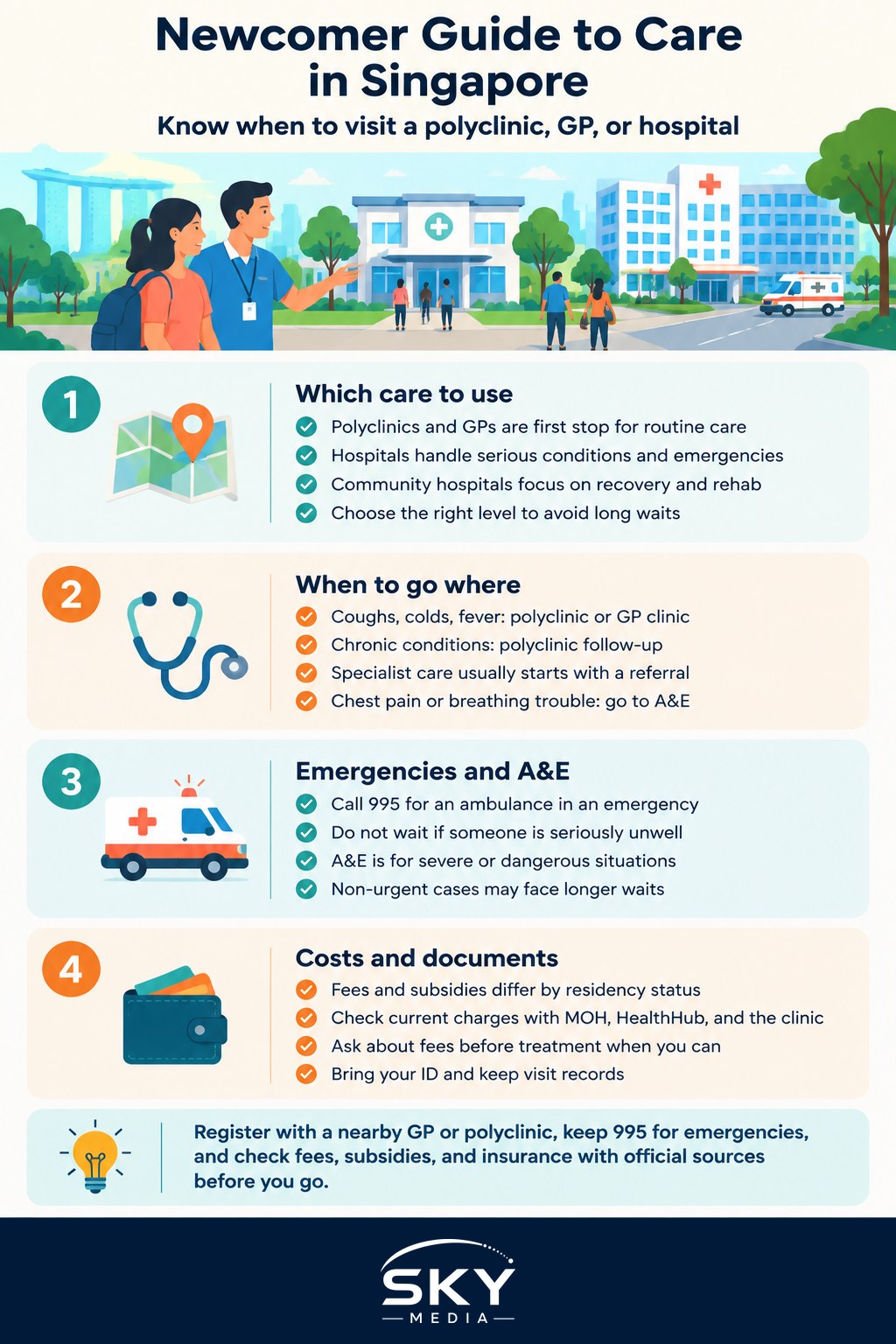
How the Singapore healthcare system is structured
Singapore runs a mixed system with strong public and private options that work side by side. In broad terms, you will meet a few main types of care providers, and knowing the difference helps you pick the right door.
Primary care is your everyday first stop. This includes polyclinics, which are large government-subsidised clinics that handle common illnesses, chronic disease follow-ups, vaccinations, health screening, and referrals. It also includes private general practitioner (GP) clinics, the neighbourhood doctors you will see in most housing estates and malls. GPs are usually quick to visit and are open in the evenings and on weekends more often than polyclinics.
Hospitals sit at the next level. Public (also called restructured) hospitals handle more serious conditions, surgery, specialist care, and emergencies through their Accident and Emergency (A&E) departments. Private hospitals offer similar services with shorter waits and higher fees. Community hospitals focus on recovery and rehabilitation after a hospital stay.
For newcomers, the simple rule of thumb is this: minor and routine issues go to a polyclinic or GP, and true emergencies go to A&E or an ambulance. Keeping that split clear will spare you long waits and unnecessary bills.
Polyclinics, GPs, and hospitals: when to use each
Choosing the right level of care is the single most useful skill for a newcomer. Here is a quick comparison to keep in mind.
| Situation | Where to go | Notes |
|---|---|---|
| Cough, cold, fever, minor infections | Polyclinic or GP clinic | GPs often faster and open later; polyclinics may be busier |
| Chronic conditions (diabetes, high blood pressure) | Polyclinic | Structured follow-up and subsidised chronic care programmes |
| Vaccinations, health screening | Polyclinic or GP | Check what is offered before you go |
| Need to see a specialist | Referral from GP or polyclinic to a hospital | A referral often affects your subsidy and wait time |
| Serious injury, chest pain, difficulty breathing | Hospital A&E | Call 995 for an ambulance in an emergency |
Polyclinics are excellent value because they are subsidised, but they can be crowded, so many people book slots in advance where possible and go early. GPs cost more per visit but are convenient and personal, and a good GP who knows your history is worth building a relationship with. For anything a GP or polyclinic cannot handle, they will refer you onward to a hospital specialist, and that referral matters because it can affect both your waiting time and how your care is subsidised.
Emergencies: what to do and who to call
In a genuine emergency, do not drive around looking for the nearest clinic. Call 995 for an ambulance, which is the emergency medical number in Singapore. Use A&E for conditions such as severe chest pain, difficulty breathing, heavy bleeding, sudden weakness or slurred speech, a serious fall, or any situation where waiting could be dangerous.
A&E is not the place for a mild cough or a prescription refill. Non-urgent cases are seen after true emergencies and may face long waits, and the fees are higher than a polyclinic visit. Save it for when it is really needed.
If you are unsure whether something is urgent, it is reasonable to call your GP, visit a polyclinic, or check HealthHub for guidance, but never delay calling 995 when someone looks seriously unwell.
Costs, subsidies, and insurance for newcomers
This is where newcomers most often get caught out, so read carefully. Fees and subsidies in Singapore are not the same for everyone. Citizens, Permanent Residents, and foreigners are charged differently, subsidies vary by residency status and sometimes by income, and these figures change over time. For that reason, this guide will not quote prices. Instead, check the current fees and subsidy details directly with MOH, HealthHub, and the specific clinic or hospital you plan to visit.
A few practical habits help:
- Ask about the fee before treatment when you can, especially at a hospital or specialist clinic.
- Bring your identification and any pass or residency document, since this can affect what you are charged.
- Keep records and receipts of your visits, which you may need for claims or follow-ups.
- Understand your insurance early. Employer coverage, private health insurance, and the national schemes have different rules, and knowing what you are covered for before you fall sick avoids nasty surprises. Our overview of health insurance in Singapore is a useful starting point.
Newcomers often juggle several new systems at once, from banking to payroll. If you are still settling in, our guides on understanding your Singapore payslip and CPF and income tax filing for newcomers in Singapore round out the essentials, and for day to day life our roundup of free things to do in Singapore helps you enjoy the city while you adjust.
Settling in with confidence
Healthcare feels far less intimidating once you know the map. Register with a GP or polyclinic you can reach easily, keep 995 in mind for emergencies, and confirm any fee or subsidy through MOH, HealthHub, and the institution itself rather than relying on hearsay. Sort out your insurance early and keep your documents handy. With those basics in place, you can focus on staying well and enjoying your new home, knowing exactly where to turn if the day comes that you need care.
Official sources: Ministry of Health (MOH) · HealthHub
Further reading: Simei Neighbourhood Guide: Condos, Eastpoint and Life Near Changi General Hospital · How to Request a Medical Report From a Singapore Hospital · Hospital Visiting Etiquette in Singapore: A Gentle Guide