
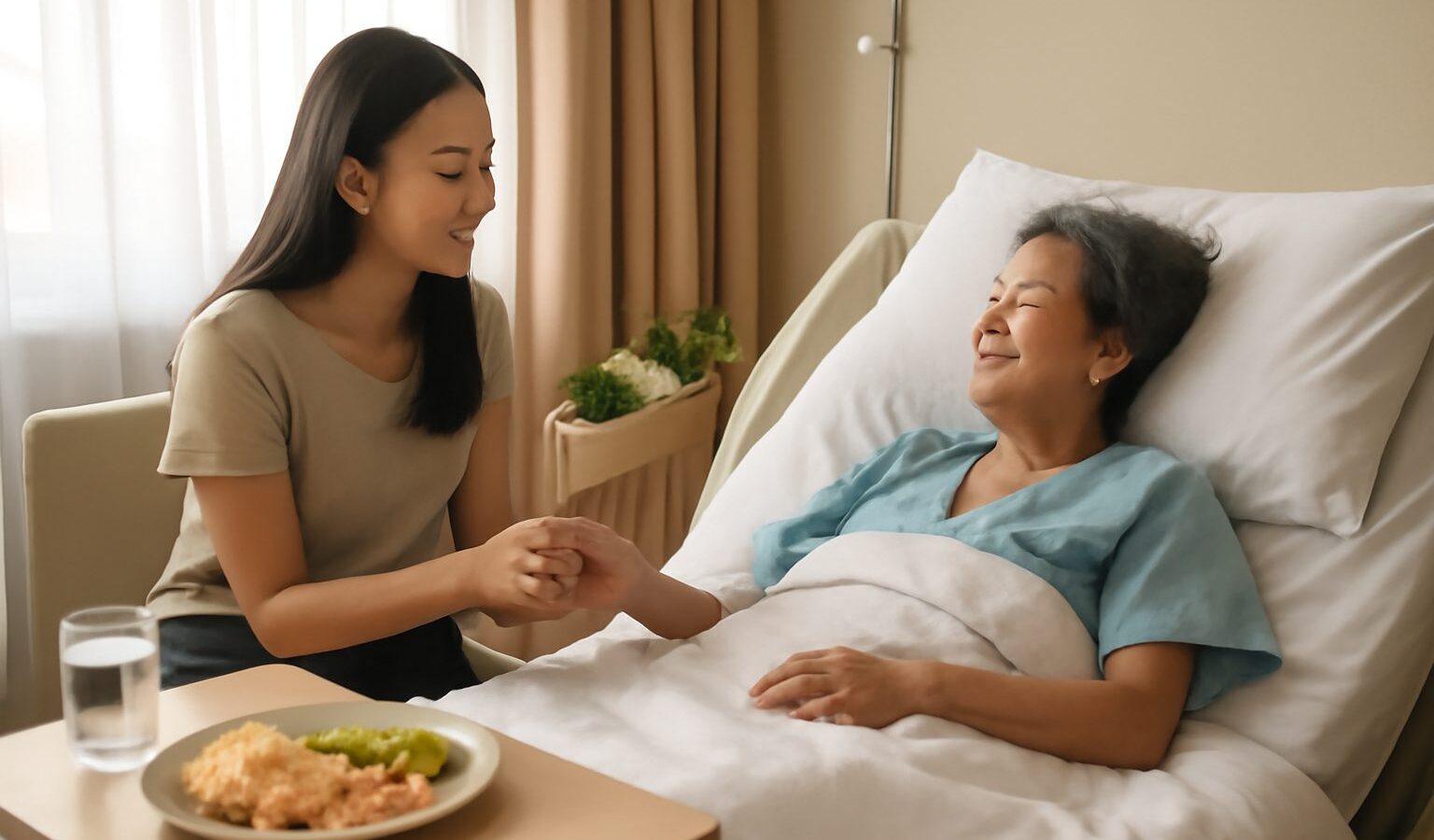
When someone you care about is unwell, a good visit can lift their spirits more than any gift. Good hospital visiting etiquette in Singapore is really about kindness, timing, and reading the room. This guide walks you through the practical parts so you can turn up feeling calm and considerate.
Check the ward rules before you go
Every hospital sets its own visiting arrangements, and these can change with the seasons or during a public health advisory. Before you make the trip, look up the hospital’s website or call the ward directly. Ask about the current visiting hours, how many visitors are allowed at the bedside at once, and whether you need to register or show identification at the entrance.
Rules differ between public and private hospitals, and even between wards in the same building. An intensive care unit, a maternity ward, and a general ward will each have their own limits. Isolation rooms may only allow one visitor, or none at all. Checking first saves you a wasted journey and spares the nurses from having to turn you away.
If the patient is sharing a room, remember that the rules protect the other people resting nearby too. Keep to your allocated bed space and avoid wandering through the ward.
Visiting hours and timing
Most Singapore hospitals split visiting hours into an afternoon and an evening block, though some now allow more flexible timings. Aim to arrive within these windows rather than assuming you can pop by whenever suits you.
Think about the patient’s day as well as the clock. Mornings are often busy with doctors’ rounds, blood tests, and washing. Meal times can be awkward for someone who is struggling to eat. If you are unsure, ask a family member or the nurse when a quiet moment might be.
Keep visits short unless the patient clearly wants you to stay. Twenty to thirty minutes is plenty for someone who is tired or in pain. It is far better to leave while they still have energy than to overstay and wear them out.
A quick word on numbers
Turning up as a large group feels loving, but it can overwhelm both the patient and the ward. If many people want to visit, take turns across different days, or send two or three at a time and let the others send messages instead.
What to bring, and what to leave at home
A thoughtful small gift is welcome, but check for restrictions first. Some wards limit flowers because of allergies or infection control, and fresh flowers are often not allowed in intensive care. Strong perfumes and large bouquets can also bother a patient who feels queasy.
Food seems kind, but ask before bringing any. Many patients are on controlled diets, are fasting for tests, or cannot eat certain textures. A well meant packet of your favourite laksa could cause real trouble.
Here is a simple guide to help you decide.
| Usually welcome | Check first | Best avoided |
|---|---|---|
| A short handwritten card | Food and drinks | Strong perfume or scent |
| A soft book or magazine | Fresh flowers | Large or noisy groups |
| Phone charger or earphones | Balloons | Anything with a strong smell |
| Kind words and company | Home cooked meals | Loud or negative talk |
When in doubt, your presence and a warm, quiet chat are worth more than any parcel.
Hygiene matters more than you think
Hospitals work hard to keep infections out, and you play a part in that. If you feel unwell yourself, with a cough, fever, sore throat, or an upset stomach, please stay home and send your good wishes another way. A visit is never worth passing an illness to someone whose body is already fighting.
Wash your hands or use the alcohol hand rub as you enter and leave the ward. Most wards keep dispensers at the door and by the bed. Avoid sitting on the patient’s bed, as this can spread germs and disturb dressings or drips. Use the chair provided.
If you have young children with you, keep a close eye on them. Some wards do not allow young visitors at all, so this is another point to check in advance.
Be sensitive to how they feel
The kindest thing you can bring is your attention. Follow the patient’s lead. If they want to talk, listen. If they are tired, let silence be comfortable. You do not need to fill every pause with chatter.
Steer clear of alarming stories about other people’s illnesses, worrying predictions, or a running commentary on how pale or thin they look. Avoid pressing for medical details they may not want to share. A simple “I am glad to see you, take your time to rest” often means the most.
Keep your voice low and your phone on silent. If you must take a call, step out of the ward. Be mindful of the other patients nearby, who deserve their peace too.
Supporting the family
Sometimes the family carers are as worn out as the patient. A practical offer can help more than words. You might bring a flask of coffee for the person keeping vigil, offer to sit with the patient so a carer can rest, or arrange a meal for the household. Ask what would genuinely help rather than assuming.
When you cannot visit in person
Not everyone can get to the ward, and that is fine. A voice note, a video call at a time the patient is up to it, or a card sent to the ward all carry warmth. You can also coordinate with the family so your message arrives when it is most welcome.
If distance or the ward rules keep you away, ask a relative to pass on a hug and let the patient know you are thinking of them. It truly does reach them.
Leaving well
When it is time to go, keep your goodbye light and hopeful. Avoid long, tearful farewells that can leave the patient feeling worse. A gentle “I will see you soon, rest well” is enough. Wash your hands on the way out, thank the nursing staff if you pass them, and leave the ward as quietly as you found it.
A closing thought
Good hospital visiting etiquette comes down to care, patience, and respect for the person in the bed and everyone around them. Check the rules, keep it short and gentle, mind your hygiene, and let the patient set the pace. Do that, and your visit will be exactly the comfort you hoped to give.
Explore more: Building a social life in Singapore · Giving back in Singapore · Community centres in Singapore