
Preparing for a baby can feel overwhelming, with endless products marketed to anxious new parents. The truth is a newborn needs surprisingly little, and focusing on the genuine essentials saves money and clutter. This practical checklist covers what you really need for a newborn in Singapore.
Focus on what you actually need
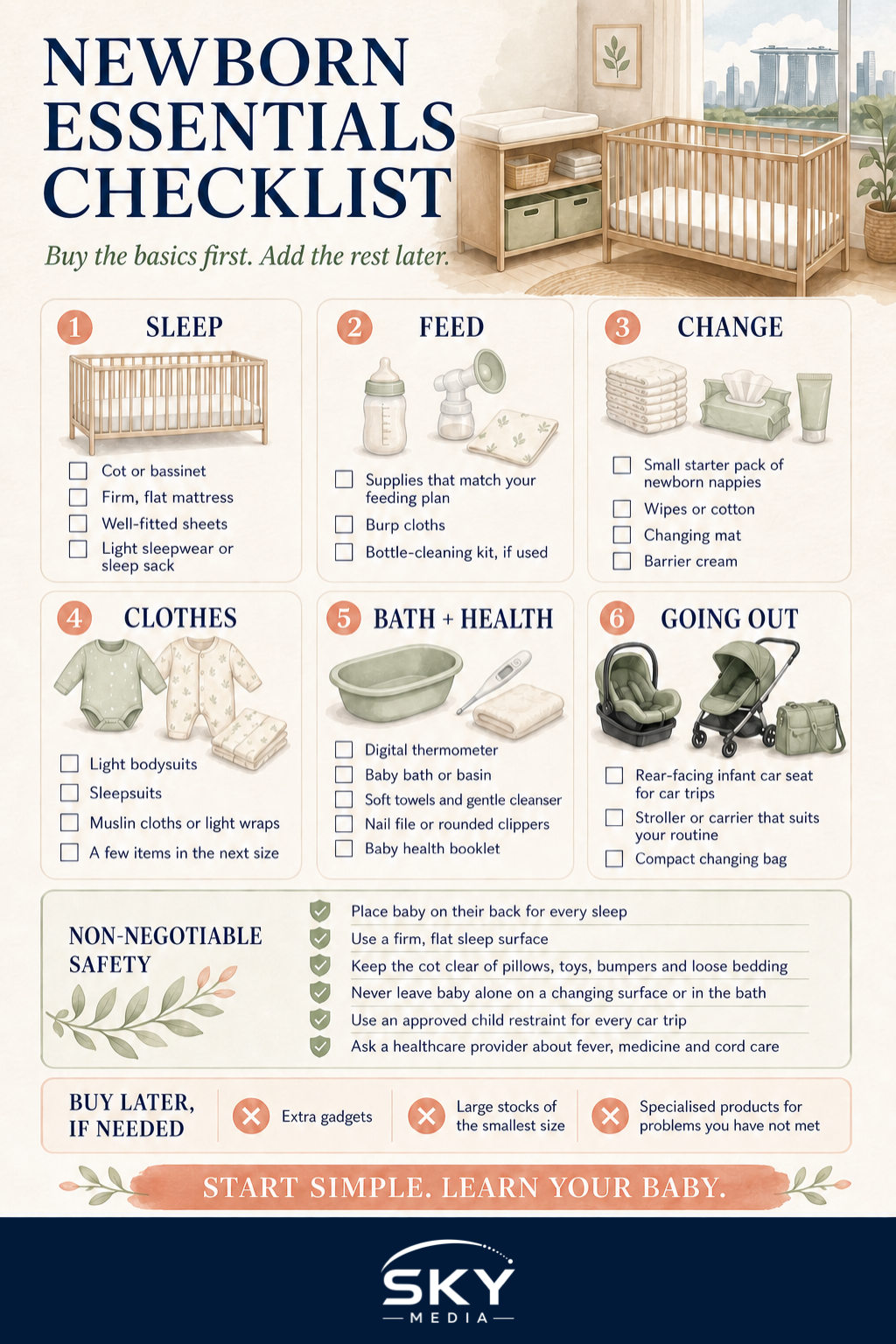
The baby industry offers an enormous array of products, but newborns have simple needs: to be fed, kept clean, kept comfortable, and kept safe. Focusing on the genuine essentials, rather than every gadget marketed to new parents, keeps costs and clutter down, which matters in compact homes. It is also wise not to over-buy before the baby arrives, since you will learn what works and what your baby prefers once they are here, and many items can be bought as needed. Start with the basics, and add specific items based on real experience rather than anxious anticipation.
Feeding essentials
| Item | Notes |
|---|---|
| Feeding supplies | Bottles and related items, plus support for breastfeeding if chosen |
| Burp cloths | Plenty, as they are used constantly |
| Steriliser | For keeping feeding equipment clean |
| Feeding pillow | Optional, but helpful for comfort |
Feeding is central in the early weeks. Whether breastfeeding, bottle-feeding or both, prepare the relevant supplies, and stock up on burp cloths since they are used constantly. A steriliser helps keep feeding equipment hygienic. Beyond these basics, add items based on how feeding actually goes, since needs vary from baby to baby and parent to parent.
Sleeping and changing
For sleep, a safe sleeping space such as a cot with a suitable firm mattress and fitted sheets is essential, along with appropriate swaddles or sleep items for the climate. Keep the sleep setup simple and safe. For changing, you will need plenty of nappies in newborn sizes, wipes, a changing mat, and nappy rash cream. These are used many times a day, so stock up, but avoid over-buying the smallest nappy size since babies grow quickly. A comfortable, practical changing setup makes the countless daily changes easier.
Clothing and going out
- Basic clothing, in newborn and slightly larger sizes, kept simple and suited to the warm climate.
- A few swaddles or wraps, versatile and useful.
- A baby carrier or sling, handy for getting around.
- A stroller or pram, chosen to suit your lifestyle and storage.
- A car seat, essential if you travel by car.
For clothing, keep it simple and climate-appropriate, and do not buy too much in the smallest size. For going out, a carrier and a suitable stroller cover most needs, and a car seat is essential for car journeys. Choose these bigger items based on your lifestyle, home storage and how you get around.
What you can skip or delay
Many heavily marketed products are not essential and can be skipped or bought later if needed. Elaborate gadgets, excessive clothing, and specialised items that address specific situations can often wait until you know whether you need them. It is easy to be swept up in buying everything, but much of it goes unused. Borrowing or buying second-hand for some items, especially those used briefly, is also sensible and economical. Being selective, and adding items based on real need once the baby arrives, saves money and avoids a home overflowing with baby products you never use.
The takeaway
Preparing for a newborn is much simpler than the baby industry suggests: focus on the genuine essentials for feeding, sleeping, changing, clothing and getting out, and resist over-buying before the baby arrives. Stock up on the things used constantly, like nappies and burp cloths, keep the sleep setup safe and simple, and choose bigger items like strollers and carriers to suit your lifestyle. Skip or delay the many non-essential gadgets, and add items based on real experience once your baby is here. With a practical, essentials-first approach, you will be well prepared without unnecessary expense or clutter, ready to focus on what matters most: your new arrival.
Health, hygiene and grooming basics
One category new parents often overlook is the small kit of health and grooming items you will reach for in the first weeks. None of these are glamorous, but having them ready at home saves a stressful late-night dash to the pharmacy. Keep them together in one spot, such as a small basket near the changing area, so everything is within reach during a fussy moment.
- A digital thermometer, so you can check your baby’s temperature accurately. Knowing what counts as a fever helps you decide when to call the clinic, and you can ask your paediatrician or polyclinic what reading warrants a visit.
- Baby nail care, such as rounded scissors or a file, since newborn nails grow quickly and babies can scratch their own faces.
- Gentle bathing supplies, including a fragrance-free wash, soft towels and a small basin or baby bath, plus cotton and cooled boiled water for cleaning the eyes and umbilical stump as advised.
- A basic first aid and comfort kit, with items like saline drops and any medicine your doctor recommends, rather than self-medicating a newborn.
- A soft brush and comb, useful for cradle cap and general grooming.
Always follow your healthcare provider’s guidance on infant fever, medication and cord care rather than online advice, and keep the KKH or your nearest clinic’s contact details handy. In Singapore, your baby’s health booklet also sets out the immunisation schedule, so read it early and note the appointments.
Common mistakes and how to time your buying
The most frequent mistake is buying too much, too early. It is tempting to complete the whole nursery before the due date, but babies arrive with their own preferences, and a bottle or swaddle that works beautifully for one baby is rejected by another. Buy the true basics before the birth, then top up specific items once you know what your baby actually likes. A second common pitfall is over-stocking the smallest nappy and clothing sizes, which many babies outgrow within weeks.
Shopping smart also means spacing out your spending. Big-ticket items like a cot, stroller or car seat can be researched calmly before the birth, while consumables such as nappies and wipes can be replenished as you go, including through home delivery, which spares you heavy trips out with a newborn. Hand-me-downs and quality second-hand items are sensible for things used only briefly, though for safety-critical purchases like car seats and mattresses, check that they meet current standards and have not been recalled or heavily worn. If you are planning around a confinement period, sort the essentials before your confinement nanny or family support begins, so the early weeks stay calm. Setting a rough budget, and giving yourself permission to add items later, keeps both your finances and your home in good order.
Explore more: Having a baby in Singapore · Confinement nanny: what to know · Baby Bonus and the CDA explained