
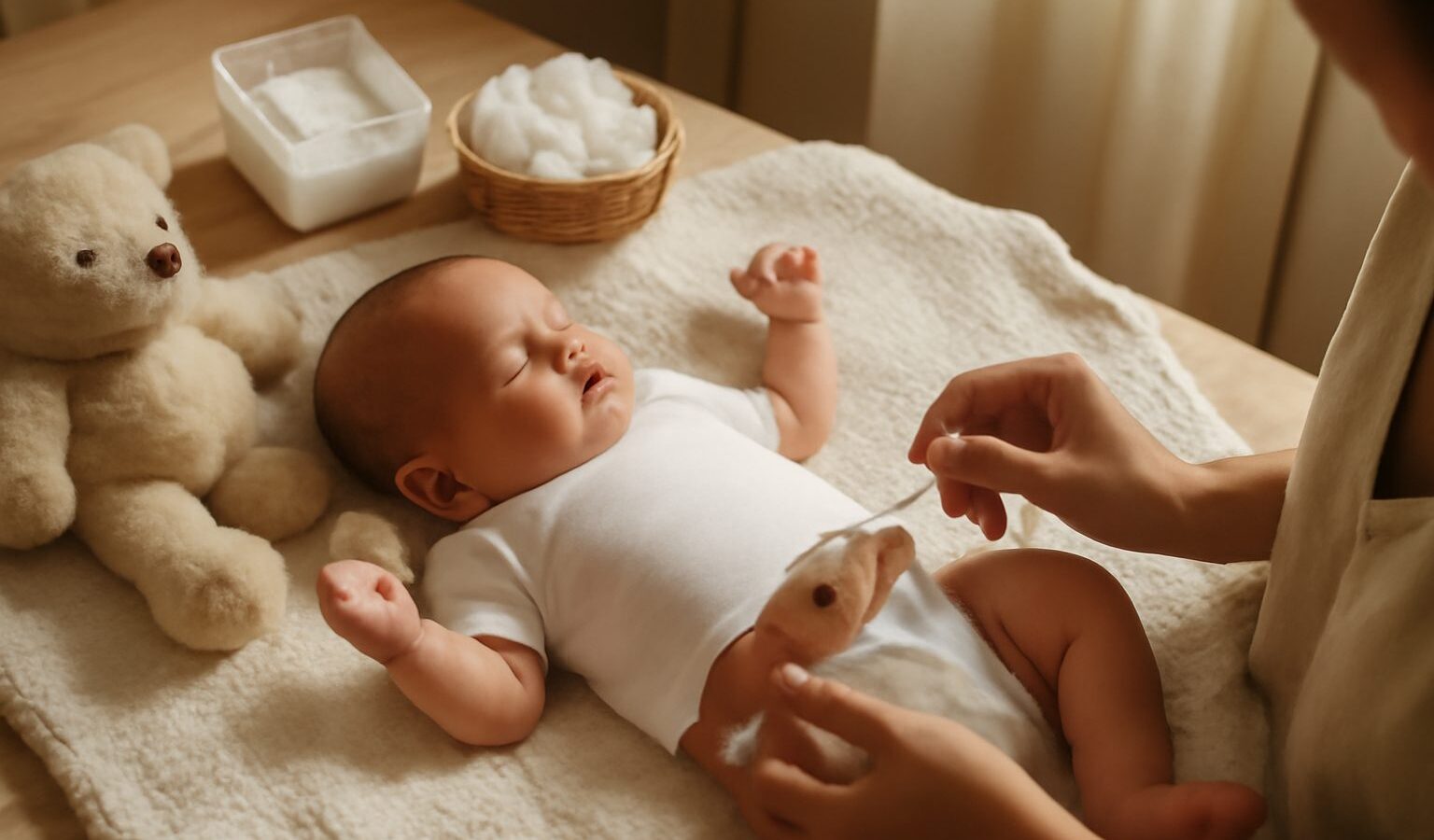
In the first days at home, that little stump on your baby’s tummy can look surprising, and you may worry about touching it. The good news is that umbilical cord care singapore parents need to do is usually very simple. Keep it clean and dry, leave it alone as much as possible, and let nature do the rest. This is general information and not medical advice, so if anything looks or smells wrong, or you are simply unsure, please see your doctor or paediatrician.
The umbilical cord was your baby’s lifeline in the womb, carrying nourishment and oxygen. After birth it is clamped and cut, leaving a small stump about two to three centimetres long. Over the next one to three weeks this stump dries out, changes colour, and drops off on its own, leaving a healed belly button. Your job is mostly to keep the area comfortable while that happens.
The Basics: Clean and Dry
Modern guidance for healthy, full-term babies is often called dry cord care. In most cases you do not need to apply any lotions, powders, or antiseptics, and you should not pull or twist the stump. Just keep it clean and let plenty of air reach it.
Here are the everyday habits that help:
- Wash your hands before touching the area, especially in the early days.
- Keep the stump dry. If it gets soiled with wee or a little poo, clean gently with cool boiled water and a soft cloth or cotton, then pat dry.
- Let it breathe. Loose clothing and a little air time help the stump dry out.
- Fold the nappy down below the stump so it is not covered or rubbed. Some newborn nappies have a small cut-out for this.
- Avoid soaking the stump. Until it falls off, sponge baths or quick, careful washes are usually best, so the area does not stay wet.
Choose light, breathable cotton clothing, which suits our warm climate and helps keep the tummy cool and dry.
What Is Normal as It Heals
It can be a little alarming to watch the stump change, so knowing what is normal helps. The stump usually turns from yellowish to brown, then black, as it dries. It may look shrivelled or hard. A few spots of dried blood or a small amount of sticky discharge around the base when it is about to separate can be normal. A mild, slightly musty smell as it dries is common too.
When the stump finally drops off, you might see a small raw or moist patch underneath, and sometimes a little spotting of blood. This usually heals within a few days. Keep the area clean and dry, and it should settle on its own.
Signs of Infection: When to See a Doctor
This is the part to read carefully. Infections of the cord area are uncommon but can be serious, so it is worth knowing the warning signs. See a doctor promptly if you notice any of the following.
| Sign to watch for | What it may look or feel like |
|---|---|
| Redness | Skin around the base looks red or the redness is spreading onto the tummy |
| Swelling | The area looks puffy, swollen, or tender |
| Pus or discharge | Yellow or green ooze, or a thick sticky discharge |
| Bad smell | A foul or strong unpleasant odour from the stump |
| Bleeding | More than a few spots, or bleeding that does not stop |
| Pain | Your baby cries or flinches when the area is touched |
| Fever or unwell baby | A temperature, poor feeding, unusual sleepiness, or floppiness |
If your baby has a fever, is feeding poorly, is very hard to wake, or seems generally unwell, do not wait. Seek medical care the same day. A newborn who is unwell needs to be checked quickly, so trust your instincts and get help early.
Gentle Bathing While the Stump Heals
You do not need to give a full bath every day, and in the first week or two many families prefer top-and-tail cleaning, which means a gentle wipe of the face, neck, hands, and nappy area with cool boiled water. This keeps your baby fresh without soaking the cord.
When you do bath your baby, keep it short and make sure the stump is dried afterwards. There is no need to scrub around it. Once the stump has fallen off and the belly button has healed, you can enjoy longer, more relaxed baths together.
Common Worries, Gently Answered
Many parents ask whether they can accidentally knock the stump off during a nappy change. A gentle, careful touch will not cause harm, but avoid tugging or pulling it, and let it separate naturally. If it comes away a bit earlier or later than you expected, that is usually still within the normal range.
You may also wonder about a small pink lump that sometimes appears after the stump falls off, called a granuloma. It is a little bit of extra healing tissue and is not dangerous, but it can weep or bleed slightly. Mention it to your doctor at a routine check, as it is easily treated if needed.
If the stump has not dropped off after about three weeks, or you feel something is not right, it is reasonable to have it reviewed. Getting reassurance is part of good care.
Looking After Yourself Too
The early newborn days can be tiring, and it is easy to feel anxious about every little thing. Be kind to yourself. Cord care is one small task in a big new routine, and you will grow more confident with each day. Line up help where you can, rest when your baby rests, and remember that asking questions is exactly what good parents do.
Keep the area clean and dry, watch for the warning signs above, and reach out to a doctor whenever you are worried. When in doubt, get it checked, because peace of mind matters as much as anything.
Explore more
Newborn Essentials Checklist
Common Baby Illnesses and When to Worry
Arranging Help for a Newborn
Baby Massage and Bonding