
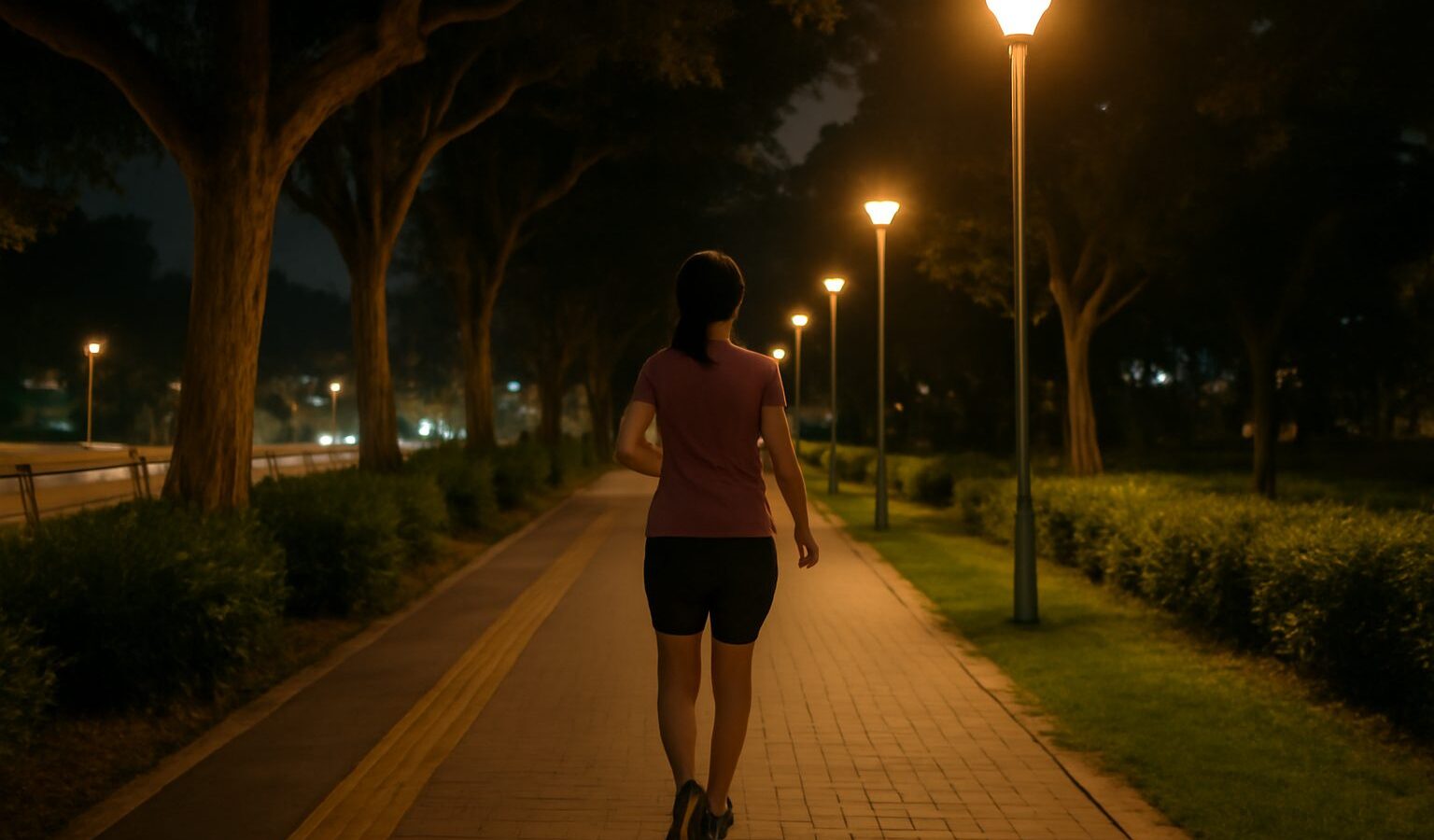
For many people in Singapore, the evening is the only part of the day cool enough, and free enough, to exercise outdoors. After work and dinner, the sun has set, the heat has eased a little and estates come alive with walkers, joggers and families. A night walk in Singapore can be a relaxing way to clear your head and build fitness, especially if you go alone. Singapore is generally considered a safe city, but walking after dark still calls for some planning around route choice, visibility, hydration and personal safety. This guide covers the practical side so you can walk with confidence.
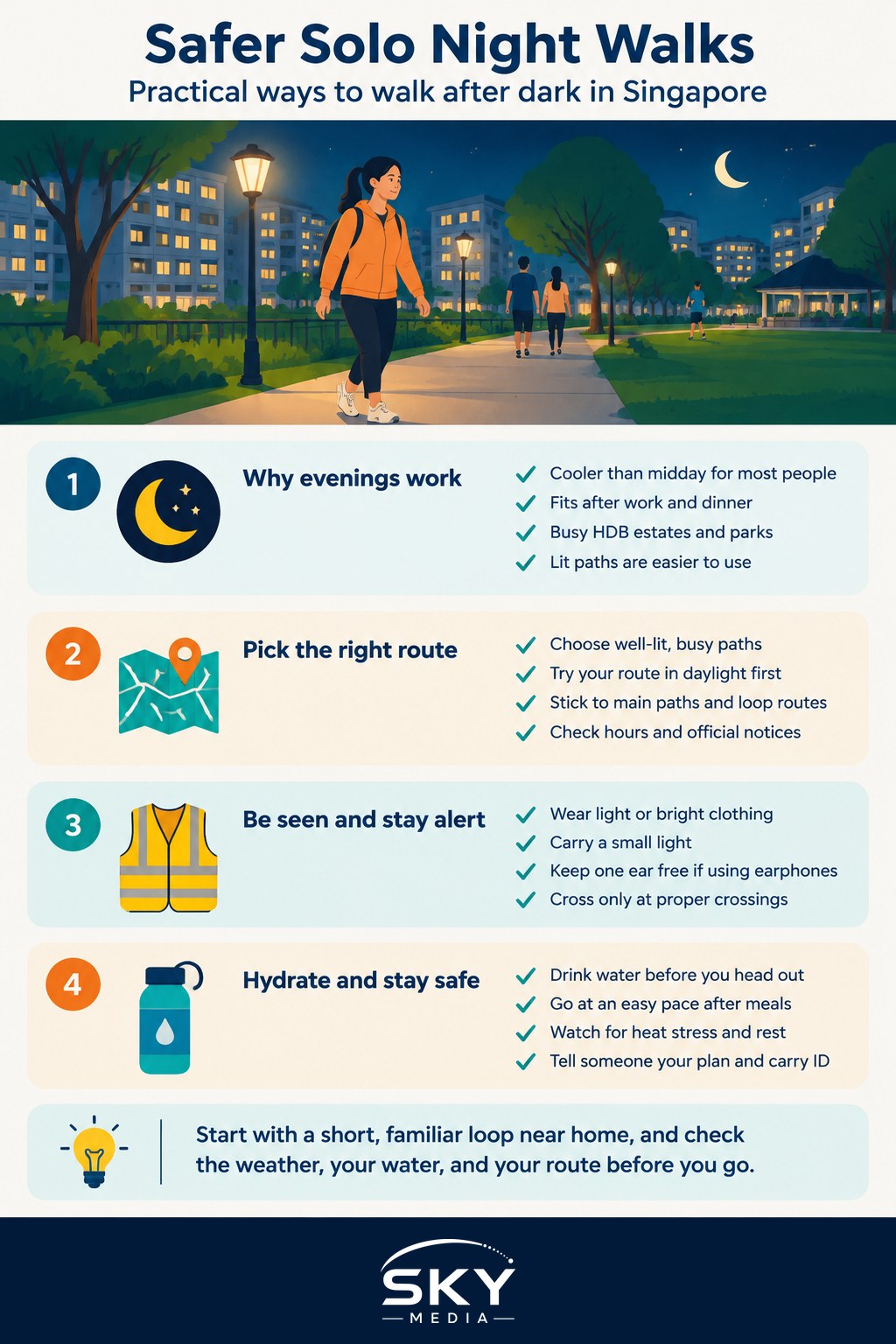
Why Evening Walks Work Well Here
Singapore’s daytime heat and strong sun make midday walking uncomfortable for many people. Evenings offer:
- Lower temperatures and no direct sun, though humidity often stays high.
- Time that fits around work and family, with no need to wake up early.
- Lit, busy neighbourhoods, since many HDB estates, parks and park connectors are well used after dark.
Night walking does bring its own considerations, from reduced visibility on shared paths to fewer people around in quieter areas, so it helps to think ahead.
Choosing a Well-Lit, Busy Route
Your route matters more at night than in the day. Look for paths that are lit, have people around, and are near places you could go for help.
| Route type | Why it can suit a night walk | What to watch out for |
|---|---|---|
| Your HDB estate or neighbourhood loop | Familiar, usually lit, plenty of residents and shops nearby | Cars at junctions and car park entrances, uneven kerbs |
| Park connectors | Long, continuous paths linking parks and neighbourhoods | Shared with cyclists and personal mobility devices; some stretches may be dimmer or quieter |
| Larger parks and reservoir parks | Pleasant scenery, often popular with evening walkers | Some areas are unlit or close at night; check signs and NParks or PUB notices |
| Stadium or school-style running tracks open to the public | Flat, measured, enclosed and easy to loop | Access hours vary, so check before you go |
| Nature reserves and forest trails | Generally better for daytime visits | Dark, uneven, wildlife and easy to get lost; avoid walking these alone at night |
Tips for picking your route:
- Walk it in daylight first if it is new to you, so you know where the dark patches, steps and exits are.
- Stick to main paths rather than shortcuts through unlit areas or back lanes.
- Choose a loop near home for your first few night walks, so you can cut it short easily.
- Check opening hours and notices. Parks managed by NParks (the National Parks Board) and reservoirs managed by PUB may have areas that close or are not lit at night. Rules and access can change, so check the official websites.
If you also enjoy taking pictures on your walks, our guide to photography walks in Singapore suggests ways to combine the two, though for safety solo night walks are best kept simple.
Staying Visible on Shared Paths
Many park connectors and pavements are shared with cyclists and users of personal mobility aids or devices. At night, being seen matters as much as seeing.
- Wear light or bright clothing, ideally with reflective strips. A reflective vest, armband or ankle band is light and cheap to add.
- Carry a small light. A clip-on light or headlamp helps others see you and lights up uneven ground.
- Keep to the walking side where paths are marked, and stay alert at bends and junctions.
- Keep one ear free or the volume low if you use earphones, so you can hear bells, footsteps and traffic.
- Cross roads at proper crossings, even if the road looks empty.
Hydration and Heat After Dark
It is easy to assume you will not get dehydrated at night, but Singapore’s humidity means you still sweat a lot, even without the sun.
- Drink water before you head out, and carry a bottle on longer walks.
- Start at an easy pace, especially after a meal.
- Wear breathable, quick-drying clothing, and skip the cap at night so heat can escape more easily.
- Watch for signs of heat stress, such as dizziness, headache, nausea or unusual tiredness. If you notice these, stop, rest somewhere cool and drink water. Seek medical help if symptoms do not improve.
If you have a heart condition, diabetes or another health concern, or are starting exercise after a long break, check with your doctor first. This is general information, not medical advice.
Personal Safety for Solo Walkers
Walking alone is part of the appeal for many people. A few habits make it safer:
- Tell someone your plan. Let a family member or flatmate know your route and roughly when you will be back. Location sharing on your phone is another option.
- Carry a charged phone and some identification. A small pouch or running belt keeps both hands free.
- Vary your routine occasionally, rather than walking the same isolated stretch at exactly the same time every night.
- Trust your instincts. If a path feels too dark or quiet, or someone makes you uncomfortable, turn back towards busier areas, a shop or a lit void deck.
- Know the emergency numbers. In Singapore, call 999 for the police and 995 for an ambulance or fire. Save them in your phone.
Many of the same principles apply when exploring alone overseas, which our solo female travel safety tips cover in more detail.
Weather, Wildlife and Other Night Hazards
A few local factors are worth keeping in mind:
- Thunderstorms and lightning. Storms can arrive quickly, including in the evening. Check the weather forecast on the NEA (National Environment Agency) app or website before heading out, and get indoors if you hear thunder or see lightning, rather than sheltering under trees.
- Mosquitoes. Evening is a common time for mosquito bites, and dengue is a known concern in Singapore. Consider insect repellent, especially near greenery or water.
- Wildlife. In some areas you may see monitor lizards, otters, wild boars or snakes. Keep your distance, do not feed or touch them, and give them space to move away.
- Slippery and uneven ground. After rain, paths and drain covers can be slippery. Good walking shoes with grip help.
Making Night Walks a Regular Habit
Consistency matters more than distance. Start with a short loop a few evenings a week, and build up time or pace gradually. Some people like to walk with a friend on some nights and alone on others, which keeps things social while still giving you time to unwind.
Enjoying time on your own is a skill in itself, and our guide to enjoying solo activities has more ideas. With a well-lit route, visible clothing, water and a plan, a regular night walk in Singapore can become one of the most refreshing parts of your week.