

Many older adults get up once a night to use the toilet. But when it becomes two, three or more trips, sleep suffers, daytime energy drops and, most worryingly, each walk to the bathroom in the dark becomes a fall risk. Doctors call this nocturia. Nocturia in the elderly is common, but it is not something you simply have to accept as “old age”. It is a symptom with causes that can often be found and eased.
This guide explains why seniors wake up to pee at night, how to make those trips safer, and what a doctor is likely to check. It is general information only, not medical advice. Please see a GP, polyclinic doctor or specialist about your own situation.
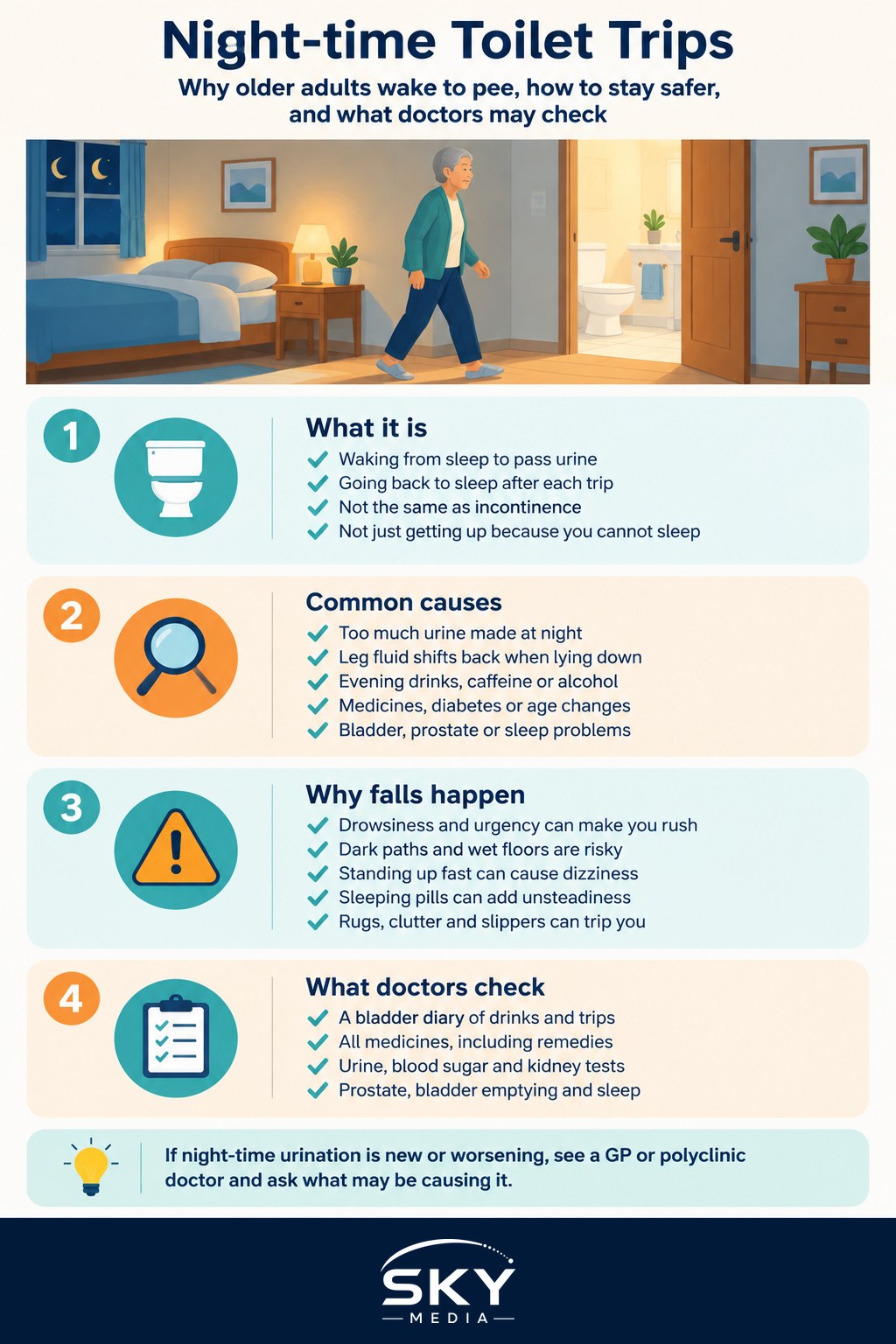
What Counts as Nocturia
Nocturia means waking from sleep because you need to pass urine, with each trip followed by going back to sleep. It is different from:
- Getting up because you cannot sleep and then deciding to use the toilet while you are awake.
- Incontinence, where urine leaks without control. The two can overlap, but they are not the same problem.
- Frequent urination in the day, which may or may not come with night-time trips.
Doctors usually start to take it seriously when someone wakes two or more times a night regularly, or when even one trip is badly disrupting sleep or causing near-falls. The key point is that it is a sign of something else going on, and finding that “something else” is what helps.
Common Causes of Night-Time Urination in Older Adults
Nocturia often has more than one cause at the same time. Broadly, the body is either making too much urine at night, the bladder cannot hold as much as before, or sleep is so light that small bladder signals wake the person up.
The body makes more urine at night
- Fluid shifting from the legs. People with swollen ankles from heart failure, vein problems or sitting for long hours during the day often store fluid in their legs. When they lie down, that fluid returns to the bloodstream and the kidneys turn it into urine. If heart failure is part of the picture, our guide to living with heart failure in older age covers this in more detail.
- Evening drinks. Large amounts of water, tea, kopi, soup or alcohol in the hours before bed add up. Caffeine and alcohol also make the kidneys produce more urine.
- Medicines. Some medicines, such as certain “water pills” (diuretics), increase urine output. Timing can matter, but never change when or how you take a medicine without checking with your doctor or pharmacist.
- High blood sugar. Poorly controlled diabetes can cause the body to pass more urine, day and night.
- Changes in hormones with age that normally reduce urine production at night.
The bladder holds less or is irritated
- An enlarged prostate in older men can stop the bladder emptying fully, so it fills again sooner.
- Overactive bladder, where the bladder muscle squeezes before it is full.
- Urinary tract infections, which can cause sudden urgency and, in older adults, sometimes confusion.
- Constipation, which can press on the bladder.
Sleep is lighter or broken
- Sleep apnoea, where breathing repeatedly pauses during sleep, is linked to nocturia and is often missed.
- Pain, anxiety, low mood or restless legs that disturb sleep.
Why Night-Time Toilet Trips Raise Fall Risk
For many families, the biggest worry is not the lost sleep but a fall on the way to or from the toilet. Several things combine at night:
- The person is drowsy and may rush because of urgency.
- Lighting is poor and floors may be wet in the bathroom.
- Standing up quickly from lying down can cause a drop in blood pressure, leading to dizziness.
- Some sleeping pills and other medicines cause unsteadiness.
- Slippers, rugs and clutter become trip hazards.
Falls can lead to fractures, head injuries and lost confidence, so making the route safer is worthwhile while the cause is being looked into.
Do’s and Don’ts for Safer Night Trips
| Do | Don’t |
|---|---|
| Sit on the edge of the bed for a short while before standing | Jump straight out of bed and rush |
| Use motion-sensor night lights from bed to toilet | Walk in the dark to avoid waking others |
| Keep the path clear of rugs, cables and clutter | Leave slippers, bags or laundry on the floor |
| Wear non-slip footwear and dry the bathroom floor | Walk barefoot on wet tiles |
| Install grab bars near the toilet and in the shower | Hold on to towel rails or basins for support |
| Consider a bedside commode or urinal if trips are frequent | Cut fluids drastically all day to avoid trips |
A few more tips:
- Men who feel dizzy at night may find it safer to sit down to urinate.
- Keep a phone or alarm within reach of the bed and the toilet.
- For families caring for a parent who also has leakage, a well-fitted night product can reduce urgency-driven rushing. Our guide to choosing an adult diaper for elderly parents explains the options.
- Ask about home safety assessments and subsidies for home modifications through official channels such as HDB or AIC (the Agency for Integrated Care), and check current eligibility with them directly.
Gentle Habits That Often Help
These are general measures many doctors suggest. Check with your doctor first, especially if you have heart or kidney problems or are on fluid restrictions.
- Shift drinks earlier. Drink enough during the day, then taper off in the two to three hours before bed, rather than cutting fluids overall. Dehydration has its own risks, including constipation and confusion.
- Cut evening caffeine and alcohol. That includes coffee, tea and some soft drinks.
- Raise the legs in the afternoon. For people with ankle swelling, resting with the legs up for a while in the late afternoon may let some fluid return to the bloodstream and be passed before bedtime. Compression stockings are sometimes advised, but only on a doctor’s recommendation.
- Empty the bladder just before bed, and again if you are still awake later.
What Doctors Check
Seeing a GP or polyclinic doctor is a sensible first step. They may refer to a geriatrician, urologist or other specialist if needed. Our guide on how to find a geriatrician in Singapore explains how that route usually works.
To prepare, keep a bladder diary (also called a frequency-volume chart) for a few days. Note:
- What and how much you drink, and when.
- What time you pass urine and, if you can, roughly how much (a measuring jug helps).
- How many times you wake at night, and any leaks or urgency.
A doctor may then:
- Review all your medicines, including supplements and traditional remedies.
- Ask about snoring, daytime sleepiness and sleep quality.
- Check blood pressure, ankle swelling and heart symptoms.
- Arrange a urine test to look for infection, sugar or blood.
- Order blood tests for blood sugar and kidney function.
- In men, examine the prostate or arrange related tests.
- Check how well the bladder empties, sometimes with a simple scan.
Treatment depends on the cause. It may involve adjusting medicine timing, treating diabetes or heart failure better, managing prostate or bladder conditions, or treating sleep apnoea. Only your doctor can decide what is right.
When to See a Doctor Promptly
Book an appointment soon if night-time urination is new or getting worse, and seek urgent care if there is:
- Blood in the urine.
- Pain or burning when passing urine, or fever.
- Sudden confusion in an older person.
- Being unable to pass urine at all.
- Breathlessness when lying flat or rapidly worsening leg swelling.
- A fall, especially with a head knock or pain on standing.
Nocturia is common, but it is worth raising. Better nights and fewer falls are realistic goals once the cause is understood.
Frequently Asked Questions
Is waking up twice a night to pee normal for older adults? It is common, but not something to simply accept as age. Doctors start to take it seriously when it happens two or more times a night regularly, or when even one trip badly disrupts sleep or causes near-falls. A GP or polyclinic doctor is a sensible first step.
Should my elderly father cut down on water to avoid night trips? Not drastically. Drinking enough during the day and tapering off in the two to three hours before bed is gentler than cutting fluids overall, since dehydration brings constipation and confusion. Check with his doctor first, especially with heart or kidney problems.
Can sleep apnoea cause frequent night-time urination? Yes, sleep apnoea is linked to nocturia and is often missed. If a person snores loudly, has breathing pauses or is sleepy during the day, mention it to the doctor, who may look at sleep quality as part of the assessment.
What should I record in a bladder diary before the doctor’s visit? Note what and how much is drunk and when, what times urine is passed and roughly how much, how many times sleep is broken, and any leaks or urgency. A few days of notes helps the doctor see the pattern.
Where can families get help making the home safer for an elderly parent? Ask about home safety assessments and subsidies for home modifications through official channels such as HDB or AIC, and check current eligibility with them directly. Grab bars, night lights and a clear path are practical places to start.
Official sources: HealthHub
Further reading: Overactive Bladder and Incontinence