

Low blood sugar, or hypoglycaemia, is one of the most common and most overlooked risks for older people with diabetes. In seniors, hypoglycaemia can look like confusion, unsteadiness or simply “not being themselves”, so it is easily mistaken for tiredness, a stroke or early dementia. For families and caregivers, knowing how hypoglycaemia in the elderly shows up, and what to do about it, can prevent falls, hospital visits and frightening night-time episodes.
This guide is general information, not medical advice. Every person’s treatment plan is different, so follow the instructions from their doctor, polyclinic or diabetes nurse, and check HealthHub for reliable Singapore health information.
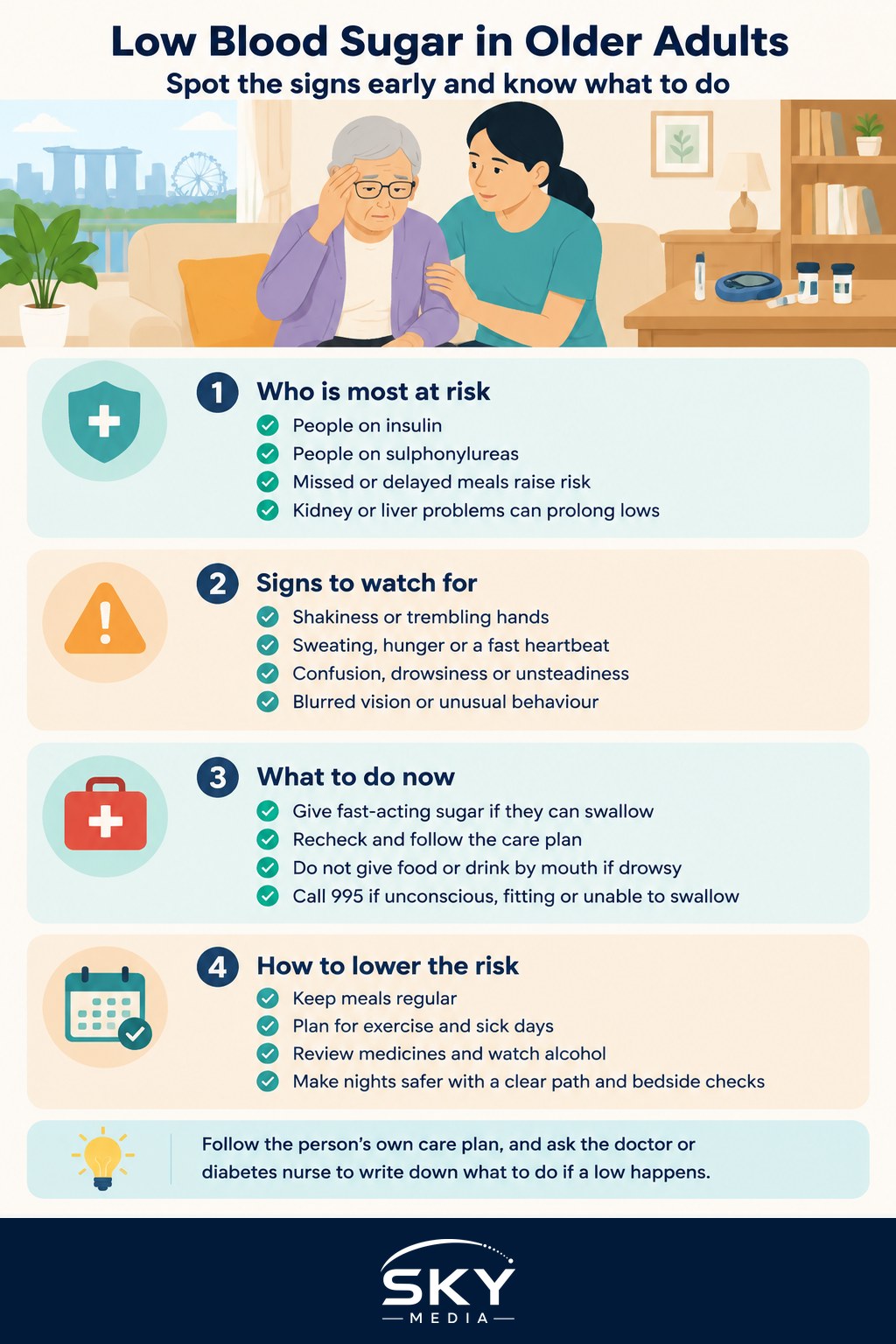
Who Is Most at Risk
Hypoglycaemia mainly affects people whose diabetes medicines actively push blood sugar down. The two groups doctors watch most closely are:
- People on insulin. Any type of insulin can cause lows, especially if a dose is taken but a meal is missed or delayed.
- People on sulphonylureas. These tablets stimulate the body to release more insulin. Your doctor or pharmacist can tell you whether a specific medicine belongs to this group.
Older adults face extra risks on top of this:
- Reduced kidney or liver function can make some medicines stay in the body longer.
- Smaller or irregular appetites, dental problems or illness can mean meals are skipped.
- Living alone means nobody may notice early warning signs.
- Several medicines taken together may interact.
- Some people lose the usual early warning symptoms over time, a condition sometimes called hypoglycaemia unawareness.
If someone you care for is on insulin or a sulphonylurea, ask their doctor directly: “What is their risk of low blood sugar, and what should we do if it happens?”
Signs of Low Blood Sugar in Seniors
Classic early symptoms come from the body’s alarm response, but in older adults the brain-related signs can be more noticeable than the classic ones.
Common early signs:
– Shakiness, trembling hands
– Sweating, clamminess
– Sudden hunger
– A fast or pounding heartbeat
– Feeling anxious or irritable
Signs that are easy to miss in older adults:
– Confusion, muddled speech or difficulty following a conversation
– Unusual drowsiness or slowness
– Unsteadiness, dizziness or a fall
– Blurred vision
– Behaviour that seems “out of character”, including agitation
Severe signs (emergency):
– Unable to swallow safely or respond properly
– Seizure (fit)
– Loss of consciousness
Because confusion and weakness can also signal a stroke, check blood sugar with a glucose meter if one is available whenever these signs appear in someone with diabetes. If in doubt, seek medical help.
What to Do in the Moment
The general approach taught to patients and caregivers is often called “treat, wait, recheck”. The exact numbers and amounts should come from the person’s own care team, so ask them to write down a plan for you. The table below shows the general logic.
| Situation | General action | Why it matters |
|---|---|---|
| Alert, able to swallow, signs of a low | Give a fast-acting sugar source the care team has recommended, such as glucose tablets or a sweet drink | Raises blood sugar quickly |
| Symptoms ease after a short wait | Recheck if possible, then have a snack or the next meal as advised | Prevents blood sugar dropping again |
| Symptoms do not improve | Repeat treatment as the care plan advises and call the doctor | Some medicines cause prolonged lows |
| Drowsy, unable to swallow, fitting or unconscious | Do not give food or drink by mouth; call 995 for an emergency ambulance | Risk of choking and a medical emergency |
A few points families often ask about:
- Chocolate and high-fat snacks work more slowly than simple sugars, because the fat slows absorption. Check with the care team which options suit the person.
- Lows caused by sulphonylureas and some insulins can last longer or come back after initial recovery. Do not leave the person alone straight after an episode.
- Write down the time, what happened and what was given, and share it with the doctor at the next visit or sooner.
Keep a small hypoglycaemia kit at home, in a bag and by the bed: a glucose meter, the recommended fast-acting sugar, and a card listing medicines and emergency contacts.
Preventing Night-Time Lows
Night-time hypoglycaemia is especially worrying because the person is asleep and alone, and it can lead to falls on the way to the toilet. Warning signs that lows may be happening overnight include:
- Nightmares, restless sleep or crying out
- Waking with damp sheets or night sweats
- Morning headaches, unusual tiredness or confusion on waking
Practical steps to discuss with the doctor or diabetes nurse:
- Review the evening routine. Ask whether the timing or dose of evening medicine needs adjusting. Never change doses on your own.
- Do not skip dinner. If appetite is poor, ask what to do on days when only a small meal is eaten.
- Bedtime checks. The care team may suggest checking blood sugar before bed or occasionally during the night.
- Watch alcohol. Alcohol can lower blood sugar for hours afterwards, particularly on an empty stomach.
- Consider monitoring technology. Continuous glucose monitors can alert to lows; ask the doctor whether one is suitable and what it costs.
- Make the bedroom safe. A night light and a clear path to the toilet reduce fall risk if they wake feeling unwell. Our guide to waking up to pee at night has more tips on safer night-time toilet trips.
Everyday Habits That Lower the Risk
- Regular meals. Eat at roughly the same times each day, with steady amounts of carbohydrate. Our explainer on carbohydrates and blood sugar explains why this matters.
- Plan for exercise. Activity lowers blood sugar. Ask whether a snack is needed before longer walks or exercise classes.
- Sick days. Illness, vomiting or poor eating can upset the balance. Ask the doctor for a sick-day plan in advance.
- Medicine reviews. Bring every medicine, including supplements, to appointments so the doctor can check for duplicates and interactions.
- Tell people. Let family, neighbours, domestic helpers and activity centre staff know the person has diabetes and how to recognise a low.
When to Speak to the Doctor
Contact the doctor or polyclinic promptly if lows are happening more than occasionally, if the person needed help from someone else to recover, if they have had a fall linked to a low, or if lows are happening at night. In older adults, doctors often aim for blood sugar targets that are less strict than for younger people, precisely to reduce the risk of hypoglycaemia. A review of targets and medicines may be all that is needed.
If they are also living with other conditions such as atrial fibrillation, make sure every doctor involved knows about the hypoglycaemia episodes, as treatments for one condition can affect another.
Official sources: HealthHub
Further reading: Exercising With Type 2 Diabetes: Managing Blood Sugar Around Workouts · CNY Goodies and Diabetes: Portion Tips for Older Adults