
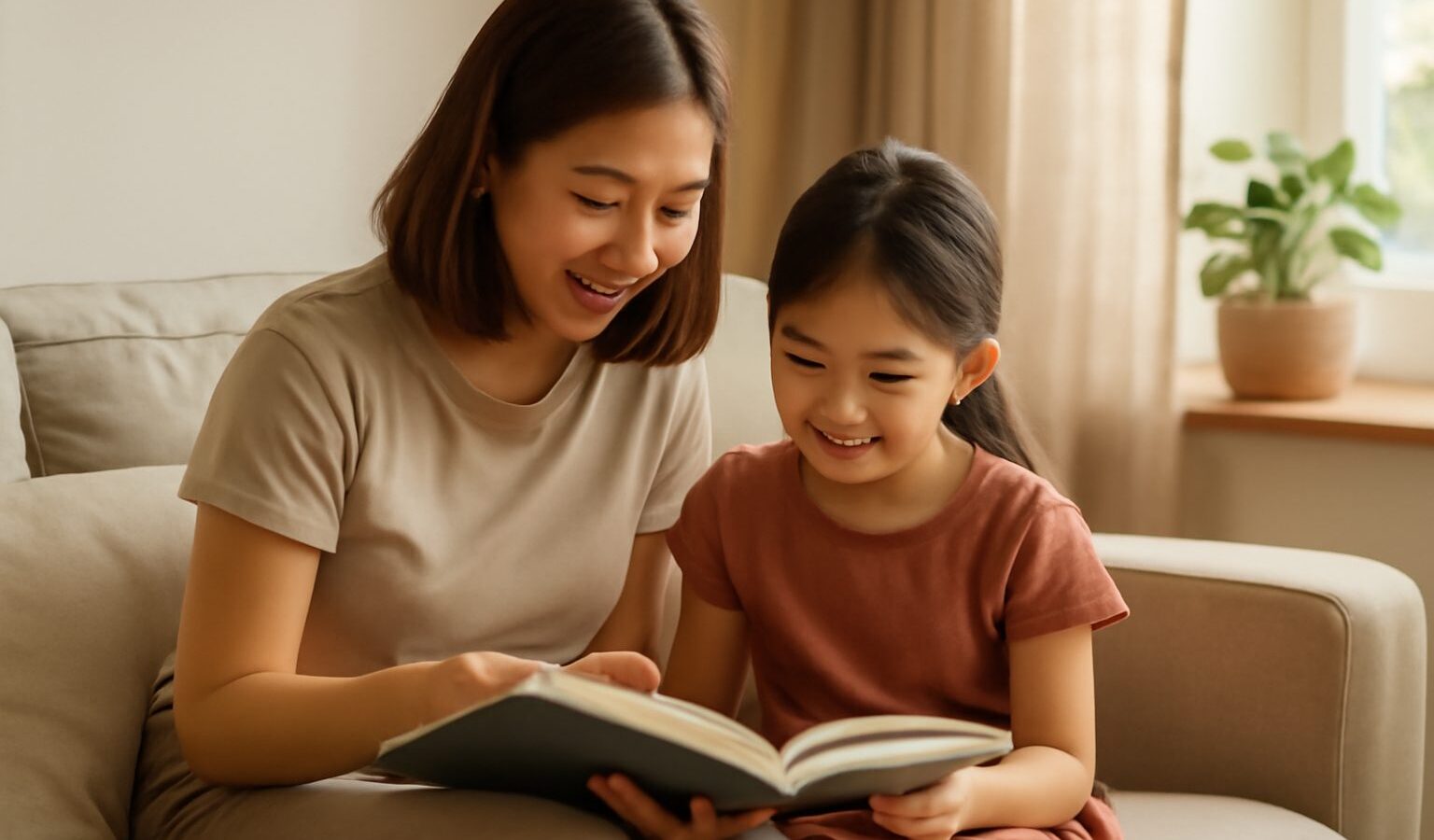
Somewhere between the picture books of the toddler years and the reading list of the exam years, many children quietly decide whether reading is a chore or a joy. Nurturing a genuine love of reading kids will carry for life is one of the most useful things you can do as a parent, and the good news is that it rarely depends on expensive programmes or a perfect home library. It grows out of small, repeated moments: the right book in the right hand, a calm ten minutes before bed, a trip to the library that feels like a treat rather than homework.
This guide is for parents of school-age children in Singapore who want reading to feel natural, not forced. The aim is not to raise the fastest reader in the class, but a child who reaches for a book by choice.
Start With Books They Actually Want To Read
The quickest way to switch a child off reading is to insist on books you think they should like. A love of reading almost always starts with permission to read for pleasure, and that means following your child’s interests, even when they seem unserious to you.
- Let them choose. Comics, graphic novels, joke books, football annuals and magazines all count. A child devouring a comic is still building vocabulary, fluency and stamina.
- Match the level, not the age label. A book that feels slightly easy builds confidence and speed. Reluctant readers often thrive on books a notch below their “recommended” level.
- Follow a passion. A dinosaur-obsessed child will happily read a thick non-fiction title that would bore them in class. Interest carries them past hard words.
- Series are your friend. Once a child loves one book in a series, the next few are an easy sell, and momentum matters more than variety at this stage.
If your child is learning in two languages, a common reality in Singapore, let them enjoy stories in whichever language feels comfortable first. Confidence in one language tends to support the other rather than compete with it.
Make Reading Part Of The Daily Routine
Children read more when reading has a predictable home in the day, the same way brushing teeth does. You do not need a long block of time. Ten to fifteen unhurried minutes, most days, beats a tense hour once a week.
A few habits that tend to stick:
- Read together at bedtime, even with children who can read alone. Being read to is still one of the strongest predictors of a lasting reading habit, and it keeps the ritual warm rather than performance-based.
- Keep books within reach. Leave a small basket in the living room, keep one in your bag for MRT rides, and let the bedside book be theirs to pick.
- Model it. Children copy what they see. If they catch you reading a novel, a recipe or the news for pleasure, reading looks like something grown-ups actually want to do.
- Talk about stories, not comprehension. Ask what they would have done, who they liked, what was funny. Save the “what does this word mean” quizzing for schoolwork.
- Protect it from screens gently. Rather than banning devices, offer a screen-free wind-down window where a book is the natural option.
Try to keep reading free of reward charts and pressure. Once reading becomes a task to be paid for, the pleasure often leaks out of it.
Use Singapore’s Libraries And NLB Resources
Families in Singapore have one of the best library systems in the world close at hand, and it costs nothing to use well. The National Library Board (NLB) runs public libraries across the island, and a regular library visit does something a home shelf cannot: it lets your child browse, change their mind, and take risks on new titles without any cost.
Ways to make the most of it:
- Make the library a routine outing, not a one-off. Familiarity turns it into their space.
- Borrow generously. Let your child pile up more than they will finish. Abandoning a book they dislike is a reader’s right, not a failure.
- Explore the NLB mobile app and e-books for reading on the go, and look out for free storytelling sessions, reading programmes and school-holiday activities that many libraries run.
- Ask a librarian. They are wonderful at matching a specific child to books, especially a picky or reluctant one.
Your child’s school library and class reading programmes are allies too. A quick word with the teacher can tell you what your child gravitates to when you are not watching.
Matching Reading Support To Your Child’s Stage
Children move through reading at their own pace, and the kind of support that helps shifts as they grow. Use this as a loose guide rather than a rulebook, and adjust to the child in front of you.
| Stage | What reading often looks like | How you can help | Watch for |
|---|---|---|---|
| Early primary | Sounding out words, building fluency, still loves being read to | Read aloud daily, choose short books, celebrate effort | Frustration on every page, avoiding books entirely |
| Middle primary | Reading longer stories alone, forming preferences | Offer series and choice, keep bedtime reading going | A sudden drop in interest or confidence |
| Upper primary | Reading for information and pleasure, opinions of their own | Discuss books as equals, widen genres, respect their taste | Reading only for school, never for fun |
| Any stage | Varies widely by child | Follow interests, keep it pressure-free | Ongoing struggle despite support |
When A Child Still Resists Reading
Some children stay lukewarm about reading no matter how inviting you make it, and that is not a verdict on your parenting or their intelligence. Keep offering choice, keep reading aloud, and keep the mood light. Graphic novels and audiobooks are legitimate on-ramps, not shortcuts to feel guilty about.
If your child consistently struggles to read words that peers manage, tires very quickly, mixes up letters well beyond the early years, or grows deeply frustrated and avoids reading altogether, it is worth a calm conversation with their teacher. Persistent difficulty can have many ordinary causes, and sometimes a professional assessment through the school or a specialist can help. Raising it early is supportive, not alarmist, and it keeps your child’s confidence intact while you find the right help.
Above all, protect the relationship. A child who associates books with warmth, choice and your company has already taken the most important step toward a lifelong love of reading.
Explore more
Reading and learning grow together, so if a lukewarm reader is also dragging their feet over schoolwork, our guide on helping a reluctant learner find their spark pairs well with this one. For the wider picture of raising a considerate, resilient child, see teaching kids good manners and everyday etiquette.