
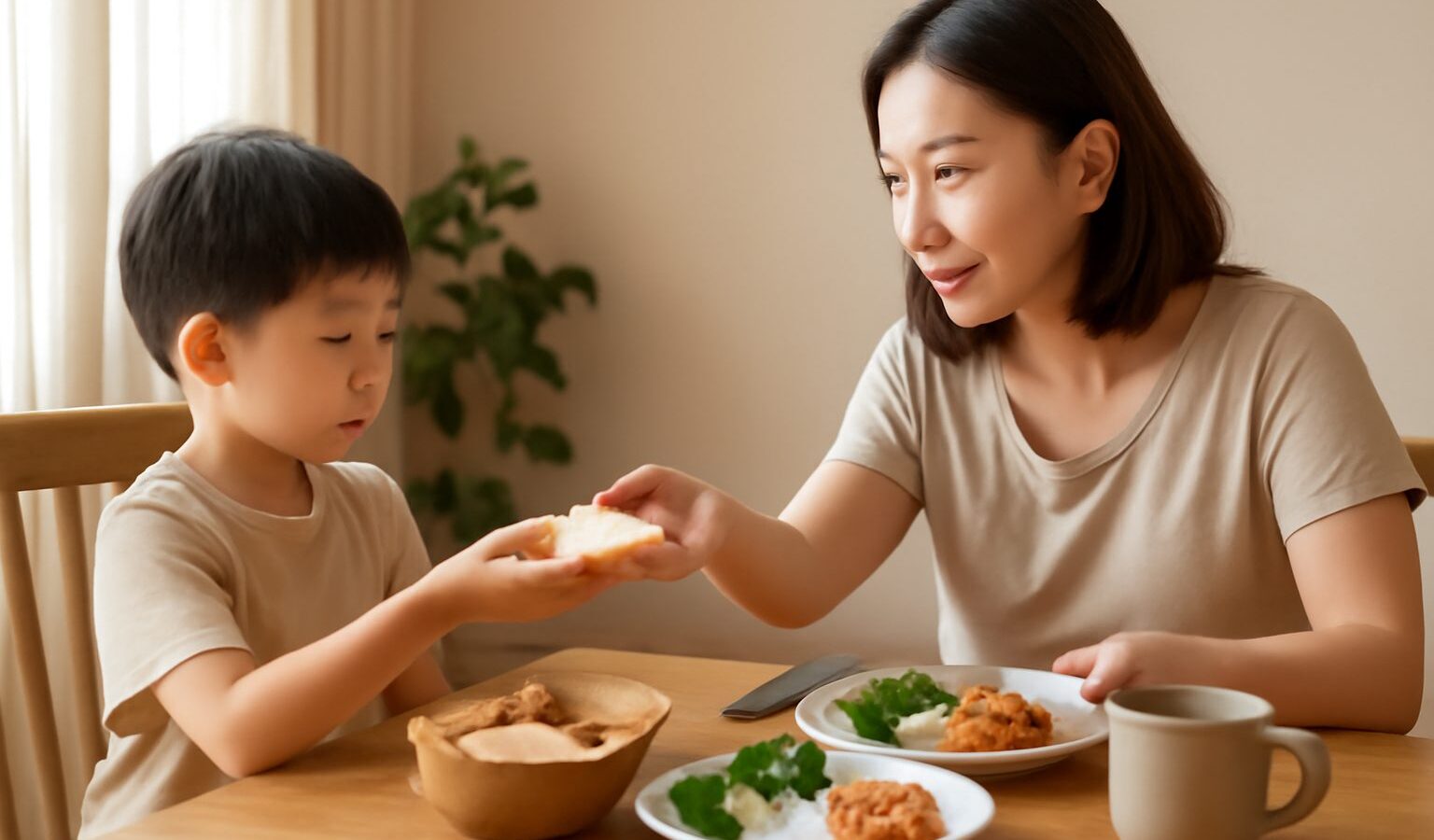
Good manners are not about producing a stiff, performing child who says the right thing on cue. At their heart, manners are kindness made visible: small habits that tell other people they matter. Teaching kids good manners is really teaching them to notice others, to share space graciously, and to move through the world with warmth. In a densely packed, multicultural Singapore, where we share lifts, hawker tables, buses and void decks with people from every background, that everyday consideration is a genuine life skill.
This guide focuses on how manners are actually learned: through daily example, gentle practice and plenty of patience, not through nagging or embarrassment. The aim is a child who is polite because they are kind, not merely obedient.
Model The Manners You Want To See
Children learn manners far more from what they see than from what they are told. If you say “please” to them, thank the hawker uncle, and apologise when you are short-tempered, your child absorbs those habits as simply how people behave. If manners only appear when guests arrive, children learn that politeness is a performance.
A few ways to lead by example:
- Use the words yourself, at home. “Please pass me the plate”, “thank you for helping”, and “sorry, that was my fault” should be as normal indoors as they are in public.
- Be courteous to your child, too. Interrupting them mid-sentence or barking orders teaches that manners are for people above you, not below.
- Show respect across differences. Greeting neighbours of every race and faith, and being patient with the elderly or a frazzled service worker, teaches inclusion by example.
- Own your slip-ups. When you are rude because you are tired, naming it (“I snapped, that wasn’t kind, I’m sorry”) is one of the most powerful lessons of all.
You do not need to be a model of perfect etiquette. A parent who tries, repairs and keeps a warm tone teaches far more than one who demands flawless behaviour.
Focus On The Manners That Matter Most
It is easy to drown children in rules until politeness feels like a minefield. Start with the handful of courtesies that genuinely affect other people, and build from there as your child grows.
Core everyday manners worth prioritising:
- The basics: please, thank you, sorry, excuse me, and a friendly greeting. These carry a child a long way.
- Listening and not interrupting. Waiting for a turn to speak is respect in action.
- Table manners suited to the setting. Chewing with a closed mouth, not grabbing, and helping to clear up work as well at a hawker centre as at a restaurant.
- Sharing public space. Keeping voices down on the MRT, giving up a seat for someone who needs it, queueing patiently, and clearing your own tray.
- Kindness online. As children start chatting and gaming, the same courtesy applies to messages and comments as to faces.
- Gracious receiving. Saying thank you for a gift, even one they did not want, protects the giver’s feelings.
Keep expectations age-appropriate. A five-year-old who forgets and a ten-year-old who forgets need very different responses, and both need patience.
Teach Through Practice, Not Public Correction
Manners are a skill, and skills grow with practice in a safe setting. The worst moment to teach etiquette is in the heat of embarrassment, when your child is flustered and you are annoyed. Correcting a child sharply in front of others tends to teach shame rather than skill.
Better approaches:
- Rehearse in advance. Before a visit or a restaurant meal, talk through what to expect and what you hope they will do. A quick, calm run-through sets them up to succeed.
- Correct quietly and kindly. A gentle word or a pre-agreed signal preserves your child’s dignity while still guiding them.
- Praise the good moments. “I noticed you thanked the waiter, that was thoughtful” reinforces the behaviour far better than pointing out every lapse.
- Explain the why. “We keep our voices down so others can rest” makes sense to a child in a way that “because I said so” never will.
- Use stories and play. Role-play, books and pretend tea parties let young children practise courtesy without pressure.
Consistency matters more than intensity. Small, calm reminders repeated over years shape a child far more reliably than occasional lectures.
Adjust Your Expectations To Their Age
What counts as good manners looks different at four than at fourteen. The table below offers a rough guide to what is realistic at each stage, so you can encourage without expecting too much too soon.
| Age stage | Reasonable to expect | How to support | Keep in mind |
|---|---|---|---|
| Toddler to preschool | Please, thank you with reminders, gentle sharing | Model constantly, keep it playful | Forgetting is normal, not defiance |
| Early primary | Greetings, basic table manners, taking turns | Praise effort, rehearse before outings | Consistency over perfection |
| Upper primary | Considerate public behaviour, online courtesy | Explain reasons, give responsibility | They test limits as they grow |
| Teens | Self-aware courtesy, hosting, gracious disagreement | Treat as near-adults, respect their views | Nagging backfires at this age |
Handle Rudeness Without Losing Warmth
Every child will be rude sometimes, whether out of tiredness, testing boundaries, or simply forgetting. How you respond teaches as much as the manners themselves. Snapping back or shaming a child in public often deepens the problem, because a humiliated child stops listening.
When rudeness happens, stay calm and address the behaviour, not the child’s character. “That tone was unkind” is more useful than “you are so rude”. Give them a chance to try again: “Let’s say that in a kinder way.” If a child is overtired or overwhelmed, sometimes the kindest and most effective response is to meet the underlying need first and revisit the manners later, when everyone is calm.
Remember that manners bloom slowly. A considerate teenager is built from a thousand small, patient moments in childhood. Keep the tone warm, keep modelling, and trust that the kindness you show your child is exactly what they will one day show the world.
Explore more
Courtesy sits alongside other character lessons, so this guide pairs naturally with teaching honesty and handling lying in kids. And because standing firm politely helps children resist bad influences, you may also want helping your child handle peer pressure.
Related across Sky Media: Teaching Kids Critical Thinking: A Practical Singapore Guide · Teaching Your Children About Money in Singapore