

A year-end party is a thank-you to your team, and the games you choose shape how people remember it. The right office party games get colleagues laughing together across departments and seniority. The wrong ones leave half the room watching their phones, or worse, feeling embarrassed or left out. This guide is for business owners and organisers planning a year-end celebration in Singapore. It covers inclusive activity formats for teams of different sizes, how to match games to your crowd, and the common mistakes to avoid.
Principles of Inclusive Office Party Games
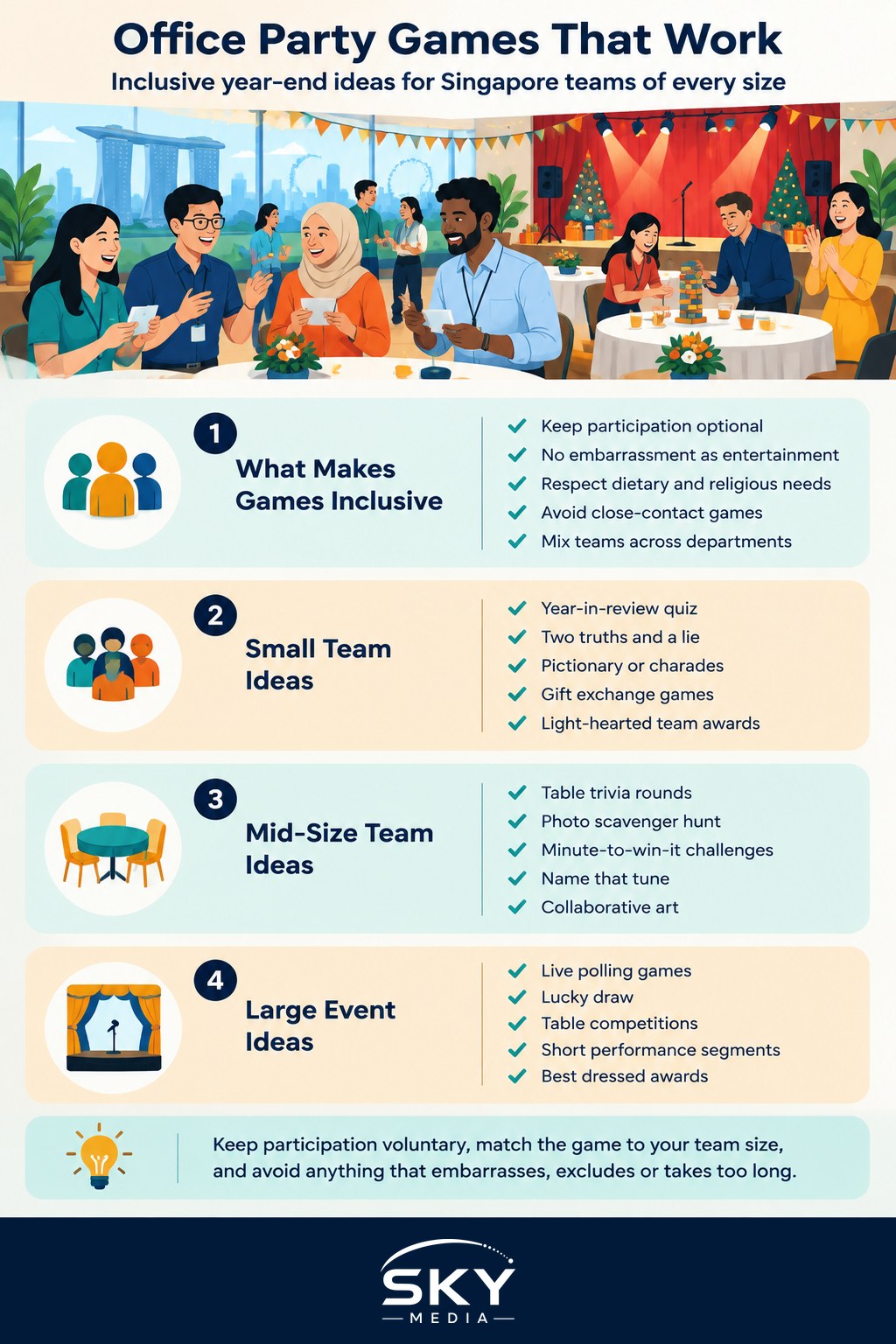
Singapore workplaces are diverse in age, culture, language, religion and personality. Before picking any game, keep these principles in mind.
- Participation should be optional. Make it easy to cheer from the side. Nobody should be pressured onto a stage.
- No embarrassment as entertainment. Avoid forfeits, dares and games that rely on making someone look silly.
- Mind dietary and religious needs. Drinking games exclude colleagues who do not drink, and food challenges should respect halal, vegetarian and other requirements.
- Avoid physical contact games. Games involving close contact can make people uncomfortable and may cross professional lines.
- Mix teams deliberately. Assign teams across departments and levels so the game builds new connections instead of reinforcing cliques.
- Keep language accessible. If your team includes colleagues more comfortable in Mandarin, Malay, Tamil or another language, choose visual or simple-rule games, or explain rules in more than one language.
- Keep it short. Most games work best at 10 to 20 minutes. Energy drops quickly after that.
Games for Small Teams (Under 20 People)
Small teams can play together as one group, which makes for a warm, personal atmosphere.
- Year-in-review quiz. Write questions about the company’s year: milestones, funny moments, new joiners, client wins. Keep questions positive and avoid anything that singles out mistakes.
- Two truths and a lie. Each person shares three statements and others guess the lie. Simple, low-pressure, and colleagues learn something new.
- Pictionary or charades with work-safe prompts. Prepare prompts about Singapore food, places and festive themes.
- Gift exchange games. A Secret Santa or a “steal the gift” exchange works well at this size. See our guide to office Secret Santa etiquette for the gift side.
- Team awards. Light-hearted, kind awards such as “Most Helpful Teammate” or “Best Desk Plant”, voted anonymously beforehand.
Games for Mid-Size Teams (20 to 80 People)
At this size, split into tables or teams of six to ten.
- Table trivia. A host runs multiple rounds: general knowledge, Singapore culture, music intros and a company round. Each table writes answers on a sheet or uses a free online quiz tool on their phones.
- Photo scavenger hunt. Teams complete a list of photo challenges around the venue, such as recreating a famous painting or a team pyramid of shoes. Make sure tasks are safe and respectful of other guests if you are in a shared space.
- Minute-to-win-it challenges. Quick tabletop tasks such as stacking cups, sorting coloured sweets with chopsticks, or moving a biscuit from forehead to mouth without hands. One volunteer per team per round keeps it moving.
- Name that tune. Play short clips across decades and languages, including English, Mandarin and Malay hits, so every generation gets a chance.
- Collaborative art. Each table decorates a panel of a larger artwork, revealed at the end.
Games for Large Events (80 People and Above)
For a full dinner and dance or a large company event, games need a stage host, a sound system and simple mechanics everyone can follow from their seat.
- Live polling games. Audience response apps let hundreds of people answer questions on their phones, with results on a big screen. They work well for trivia and “guess the colleague” rounds where people opt in to share fun facts.
- Lucky draw. Still a Singapore favourite. Keep it fair and transparent, and consider prizes that suit different lifestyles. Note that lucky draws and similar games of chance may fall under rules on gambling and promotional activities, so check the current requirements with the relevant authorities if you are unsure.
- Table competitions. Each table plays a mini challenge at the same time, with one winner per round going up for a quick prize.
- Performance segments. Departments can volunteer a short song, dance or skit. Keep it voluntary and give a time limit.
- Best dressed. If you have a theme, a best-dressed award adds fun without requiring stage time. See our guide on what to wear to a year-end office party.
Choosing the Right Format
| Format | Best team size | Prep needed | Inclusiveness tips |
|---|---|---|---|
| Year-in-review quiz | 5 to 80 | Medium, write questions | Keep it positive, mix teams |
| Two truths and a lie | Under 20 | Low | Let people pass if they prefer |
| Photo scavenger hunt | 20 to 80 | Medium, prepare a list | Avoid physical or risky tasks |
| Live polling trivia | 50 and above | Medium, set up an app | Offer paper answers for those without phones |
| Lucky draw | Any size | Low to medium | Check rules, include everyone fairly |
| Department performances | 50 and above | High for performers | Strictly voluntary, time-limited |
Hybrid and Remote-Friendly Activities
If some staff work overseas or remotely, include them.
- Run trivia or polling games online so remote colleagues can play alongside the room.
- Send small treat packs or vouchers in advance so they can join toasts and challenges.
- Hold a short video call segment where remote teams share their own year-end moments.
- Schedule the virtual segment at a time that works for different time zones.
Planning Tips for Business Owners
- Survey your team. A quick anonymous poll on preferred activities avoids guesswork.
- Appoint an energetic host. A confident emcee, whether a colleague or a hired professional, makes or breaks the games. If you hire an external emcee or games company, compare a few and check what is included.
- Prepare prizes in advance. Wrap them, group them by value, and keep a list.
- Test equipment. Microphones, screens and apps should be checked before guests arrive.
- Plan the timing. Put the first game early, while energy is high, and keep speeches short. Avoid running games during the main meal.
- Budget sensibly. Prizes, venue extras and hosts add up. Plan your spend alongside other festive costs and decide early who approves extra expenses.
- Follow up. Share photos in the company chat afterwards and ask for quick feedback for next year.
A good year-end party leaves people feeling valued and a little closer to their colleagues. Choose inclusive office party games that match your team’s size and personality, keep participation voluntary, and focus on shared laughter rather than spectacle. Your team will remember the evening, and look forward to the next one.
Frequently Asked Questions
What office party games work with almost no budget? Two truths and a lie, a year-in-review quiz, charades and a team awards vote cost nothing beyond a little prep. Use free online quiz tools and small, inexpensive prizes or just bragging rights. Time and thoughtfulness matter more than spending.
How do I get shy or reluctant colleagues to take part without pressure? Offer roles that are not on stage, such as scorekeeper, judge or cheering squad, and make every game opt-in. Small team formats and written or phone-based answers feel safer than speaking aloud. Never single out someone who declines.
Which games suit older colleagues or staff with mobility limits? Seated, low-physical games such as trivia, name that tune, bingo and quizzes include everyone. Avoid running, floor activities or anything needing quick reflexes. Check the venue’s step-free access, and offer clear instructions in large print or more than one language.
How should I give out prizes so that it feels fair? Decide the rules and prize list before the event, and announce how winners are chosen. Use random draws for luck-based prizes and group items by value. Pick gifts suitable for different lifestyles, avoiding alcohol-only prizes, and keep a record of who won what.
How do I know if the year-end games went well? Look for whether people were laughing, mixing across teams and staying engaged, then ask for quick, anonymous feedback within a few days. Note what worked and what dragged, and share photos in the company chat. Use the feedback to plan next year’s format.
Further reading: Office Party Etiquette in Singapore: Drinks, Speeches and Photos · What Are Party Games?