
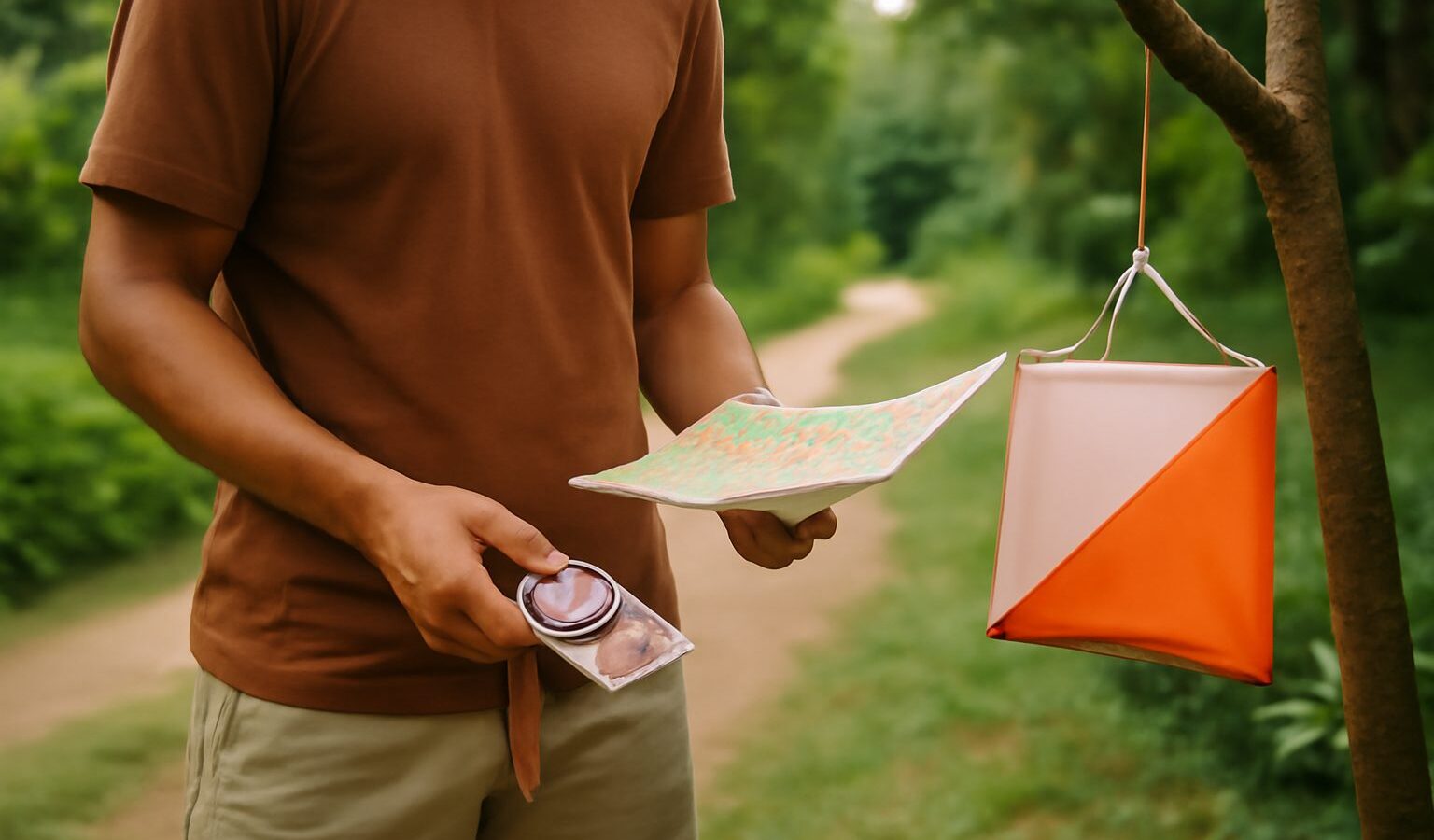
Imagine mixing a treasure hunt, a nature walk, and a gentle brain workout, all in one outing. That is orienteering: the sport of navigating from point to point using a detailed map and a compass, finding a series of marked checkpoints along the way. Orienteering as a hobby singapore residents can enjoy is wonderfully flexible, welcoming everyone from families on a stroll to runners who like a challenge. It gets you outdoors, sharpens your mind, and turns any park into an adventure. Best of all, you can start simply and grow at your own pace.
What Orienteering Actually Involves
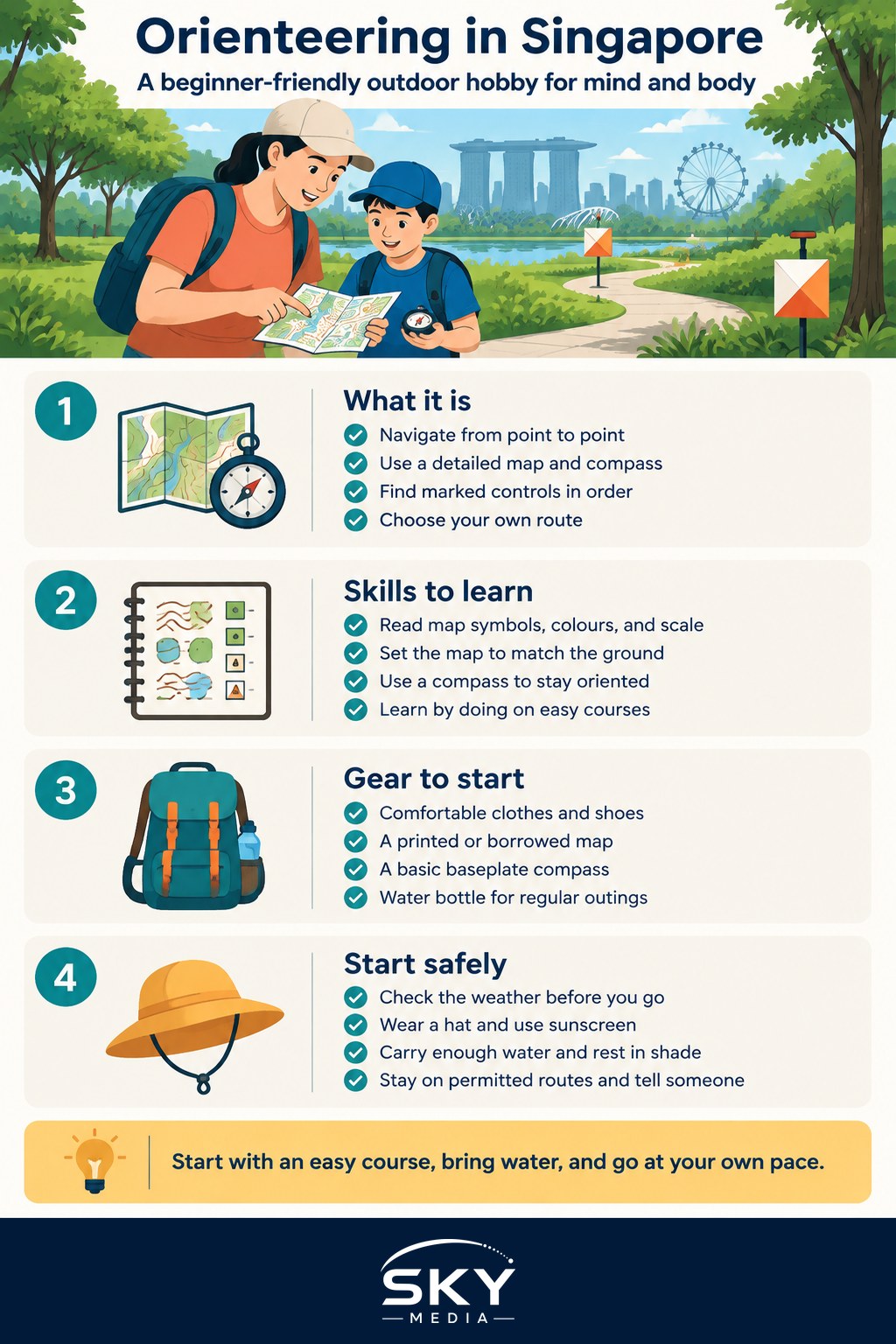
At its heart, orienteering is about finding your own way. You are given a specialised map marked with a start, a finish, and several checkpoints, called controls, that you must visit in order. Using the map and often a compass, you choose your own route between them. The map is far more detailed than an ordinary one, showing terrain, paths, vegetation thickness, and small features like boulders or ditches.
The skill is not really speed, it is decision-making. Do you take the longer path that is easy going, or the shorter route through rougher ground? Learning to read the map, relate it to what you see around you, and pick smart routes is the puzzle that makes the hobby so absorbing. Because you set your own pace, a beginner can walk the whole course while an experienced participant runs it.
If you enjoy solving problems on the move, you may also like crossword and puzzle solving in Singapore, which flexes the same problem-solving muscles indoors.
The Basic Skills to Learn
Three core skills carry you a long way, and all are beginner-friendly.
- Map reading: understanding the symbols, colours, and scale, and matching them to real features around you
- Setting the map: turning the map so it lines up with the ground, which makes everything clearer
- Using a compass: mainly to keep the map oriented and to hold a rough direction of travel
You do not need to master everything before you start. Most beginners learn by doing, on easy courses where paths are clear and controls are simple to find. As confidence grows, you tackle courses with trickier navigation and rougher terrain.
Gear You Need to Begin
One of the joys of orienteering is how little you need at first. Comfortable clothes and shoes with decent grip will do for your first outing. As you get more serious, a few pieces of kit help.
| Tier | What you use | Rough cost | Best for |
|---|---|---|---|
| Budget | Comfortable clothes, trainers, a borrowed or printed map | Very low | A first try on an easy course |
| Mid | A basic baseplate compass, trail shoes, a small water bottle | Moderate | Regular local outings |
| Premium | A thumb compass, lightweight gear, a hydration pack | Higher | Faster, competitive courses |
Prices vary and change over time, so check current retail. A simple baseplate compass and a printed map are honestly enough for a long time. Do not feel pressured to buy specialist gear before you know you love the hobby.
Where and How to Get Started
You can begin informally in any large park with a downloadable map, or join organised events where courses are set up and mapped for you. Around the world, orienteering is run by national and local clubs that host regular events for all levels, and Singapore has an active scene too. For current event calendars, membership, permanent courses, and beginner sessions, check the relevant national orienteering association and local clubs, which are the reliable source for up-to-date details.
Organised events are the friendliest way in. They usually offer courses graded by difficulty, so you can pick an easy one, get guidance from experienced members, and learn the ropes in good company. Many community and school groups also run introductory activities. If you are still weighing up hobbies, how to find a new hobby in Singapore can help you decide where to begin.
Staying Safe Outdoors
Orienteering takes you outdoors in our tropical climate, so sensible precautions keep it fun and safe.
Heat and hydration come first. Our sun and humidity are no joke, so wear a hat, apply sunscreen, and carry enough water even for a short course. Drink regularly, rest in shade when you need to, and stop immediately if you feel dizzy, overheated, or unwell. Go out in the cooler morning hours where you can, rather than the fierce midday heat.
A few more habits round things out:
- Check the weather before you go and be ready for our sudden downpours, seeking shelter if thunder or lightning arrives
- Wear shoes with grip, as trails can be muddy and slippery after rain
- Tell someone your plan, especially if going alone, and carry a charged phone
- Stay on permitted routes, respect park rules and other users, and take your litter home
- Watch your footing on uneven ground and slow down where you cannot see clearly
None of this is complicated. A little preparation lets you focus on the fun of finding your way.
Enjoy the Journey, One Control at a Time
The beauty of orienteering is that progress feels like play. Every outing you get a little better at reading the map, a little quicker at spotting controls, and a little more confident choosing routes. Start with an easy course, walk it at your own pace, and celebrate finding each checkpoint. Bring water, mind the heat, and enjoy being outdoors with your mind fully engaged. Take it step by step and orienteering as a hobby singapore adventurers love soon becomes a favourite way to explore, think, and move all at once.
Frequently Asked Questions
Do I need to be a fast runner to enjoy orienteering? No. The skill is decision-making rather than speed, and you set your own pace, so a beginner can walk the whole course while an experienced participant runs it. Courses are graded by difficulty, so start with an easy one.
What is a control in orienteering? A control is one of the marked checkpoints on your map that you must visit in order. You choose your own route between them using the map and often a compass. Finding each one is the satisfying part of the outing.
Do I need a compass for my first orienteering outing? Not at first. Comfortable clothes, shoes with grip and a borrowed or printed map are enough for an easy course. A basic baseplate compass helps later, mainly to keep the map oriented and hold a rough direction of travel.
How is an orienteering map different from a normal map? It is far more detailed, showing terrain, paths, vegetation thickness and small features like boulders or ditches. Learning to read the symbols, colours and scale, and to turn the map so it lines up with the ground, is central to the hobby.
How do I stay safe orienteering in Singapore’s heat and rain? Wear a hat, apply sunscreen, carry enough water, and go in the cooler morning hours where you can. Seek shelter if thunder or lightning arrives, wear shoes with grip, tell someone your plan, and stop if you feel dizzy or unwell.
Further reading: Chapteh Kicking as a Hobby in Singapore · Disc Golf in Singapore: A Beginner’s Hobby Guide · Orienteering in Singapore