

A neighbour tree overhanging your garden can be a lovely source of shade, or a steady supply of fallen leaves, blocked gutters and cracked paving. This guide explains what you are generally allowed to do about branches and roots that cross your boundary, which NParks rules you need to check before cutting anything, and how to move a disagreement towards a fair outcome without souring a relationship you will live with for years.
This is general information, not legal advice. If a dispute involves serious damage or a large claim, speak to a lawyer and check the current rules with the relevant agency.
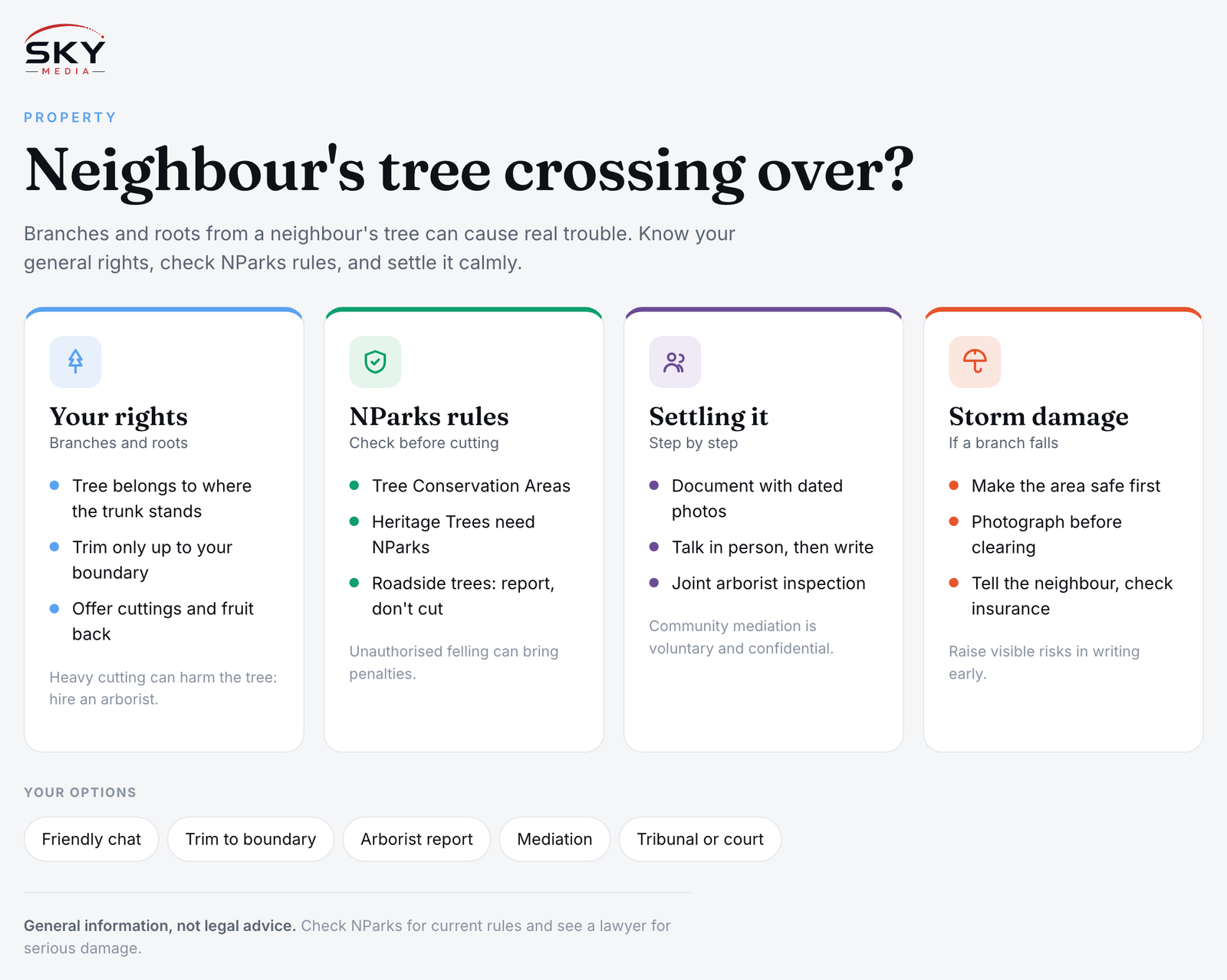
What Counts as a Problem Tree
Not every overhang is a dispute. Most neighbours tolerate a few branches across the fence. The issues that usually trigger complaints are:
- Overhanging branches that drop leaves, fruit or sap into your compound, block light to your plants or solar panels, or brush against your roof and walls.
- Invasive roots that lift driveways, crack boundary walls, block drains or push into foundations and pipes.
- Dead or weakened limbs that could fall during a thunderstorm and hit your car, roof or someone in your garden.
If your concern is the shared boundary structure itself rather than the tree, our guide to boundary wall and fence disputes between landed neighbours covers that side in detail.
Your General Rights Over Branches and Roots
Singapore follows common law principles inherited from English law on this point. Broadly speaking:
- The tree belongs to the owner of the land where its trunk stands. Responsibility for maintaining it generally sits with that owner.
- You may usually trim branches and roots up to your boundary line. This is often called “self-help” or abatement. You should cut only what is on your side, and you should not enter your neighbour’s land or damage the health of the tree as a whole without their agreement.
- The cuttings and any fruit still belong to the tree owner. A courteous approach is to offer them back rather than throw them over the fence, which can itself cause a fresh complaint.
- You generally pay for your own trimming if you choose to cut back to the boundary on your own initiative.
- If the tree causes real damage, such as roots cracking your foundations or a falling limb that a reasonable owner should have spotted, the owner may be liable under the law of nuisance or negligence. Whether they are depends on the facts, so get advice before assuming.
A practical caution: heavy cutting on one side can unbalance a large tree or kill it. If the tree later fails, you may find yourself in a dispute about who caused the problem. For anything bigger than light pruning, hire a qualified arborist and keep a record of the work.
NParks Rules You Must Check Before Cutting
Before anyone picks up a saw, check whether the tree is protected. The National Parks Board (NParks) administers the Parks and Trees Act, which includes protections that override what neighbours agree between themselves.
- Tree Conservation Areas. Many established landed estates fall within designated Tree Conservation Areas. Within these areas, larger trees above a girth threshold set by NParks cannot be felled without approval, whether they are on private land or not. NParks publishes the current girth threshold and the areas covered, so check before planning removal.
- Heritage Trees. Some notable trees are recognised under the Heritage Tree Scheme. Work on or around these needs NParks involvement. You can read more in our guide to Singapore’s heritage trees and historic parks.
- Roadside and state land trees. A tree on the road verge or a public park is not your neighbour’s. Report concerns about those trees to NParks directly, or through the OneService app, rather than cutting them yourself.
Pruning is usually treated differently from felling, but the rules can change and penalties for unauthorised felling can be significant. Check the NParks website, or ask your arborist to confirm, before any major work on a large tree.
Comparing Your Options
Here is a quick view of the main routes, from lightest touch to most formal.
| Option | When it fits | What to keep in mind |
|---|---|---|
| Friendly conversation | Leaves, light overhang, first time raising it | Bring photos, suggest a shared solution, agree on timing |
| Trim to the boundary yourself | Branches over your side, tree not protected | Cut only your side, offer cuttings back, avoid harming the tree |
| Joint arborist inspection | Large tree, dead limbs, root damage suspected | Agree on who pays, get a written report |
| Community mediation | Talks have stalled, both sides willing to meet | Voluntary and confidential, aims for a workable agreement |
| Tribunal or court claim | Real property damage, mediation failed | Needs evidence, costs and time, get legal advice |
A Calm, Step-by-Step Approach to a Dispute
Most tree problems are solved with a conversation. When they are not, a structured approach helps.
- Document first. Take dated photos of the overhang, root lifting, cracks, fallen branches and any damage. Note dates of storms or incidents. Keep receipts for repairs or cleaning.
- Talk in person. Knock on the door or catch your neighbour in the evening. Explain the specific problem, show the photos and suggest a solution, such as a joint trim before the monsoon season.
- Follow up in writing. If you agree on something, send a short, polite message summarising it. If not, a calm letter setting out the issue and a reasonable timeline gives you a record without escalating the tone.
- Bring in a professional. For large or ageing trees, suggest a joint inspection by a certified arborist. A neutral report on tree health and risk often settles arguments about whether a limb is dangerous.
- Try mediation. The Community Mediation Centre offers mediation for neighbour disputes. It is voluntary, confidential and usually far cheaper and faster than going to court. Check the centre’s website for how to apply.
- Consider formal routes last. If there is actual property damage, a claim may be possible through the Small Claims Tribunals or the courts, depending on the amount and nature of the claim. Check the eligibility rules on the State Courts website and take legal advice before filing.
Fallen Branches, Storm Damage and Insurance
Sudden thunderstorms can bring down branches with little warning. If a limb from your neighbour’s tree damages your property:
- Make the area safe first. Keep people away from hanging or cracked limbs. If a branch is on power lines or blocking a road, contact the relevant authority or emergency services.
- Photograph everything before clearing up, including where the branch came from.
- Tell your neighbour promptly and calmly. They may have home insurance that covers liability to third parties.
- Check your own home insurance policy. Some policies cover storm damage to your property. Read the policy wording and speak to your insurer before arranging major repairs.
Liability often depends on whether the risk was foreseeable, such as a visibly dead limb pointed out earlier, so raise concerns in writing early.
Being a Good Tree Neighbour Yourself
If you own the tree, a little prevention goes a long way:
- Have large trees inspected periodically, especially after major storms.
- Prune before the wetter months, and keep branches clear of your neighbour’s roof and gutters.
- Choose planting positions carefully. Fast-growing species with aggressive roots planted beside a boundary wall cause many of these disputes. Our guide to growing a mango tree at home explains how much space a fruit tree really needs.
- Offer to share fruit and clear-up duties. Goodwill makes any future conversation easier.
If you are planning renovation works near a boundary tree, factor in root protection and any NParks requirements early, as covered in our guide to additions and alterations to landed homes.
Further reading: When a Neighbour’s Renovation Damages Your Home: Who Pays