
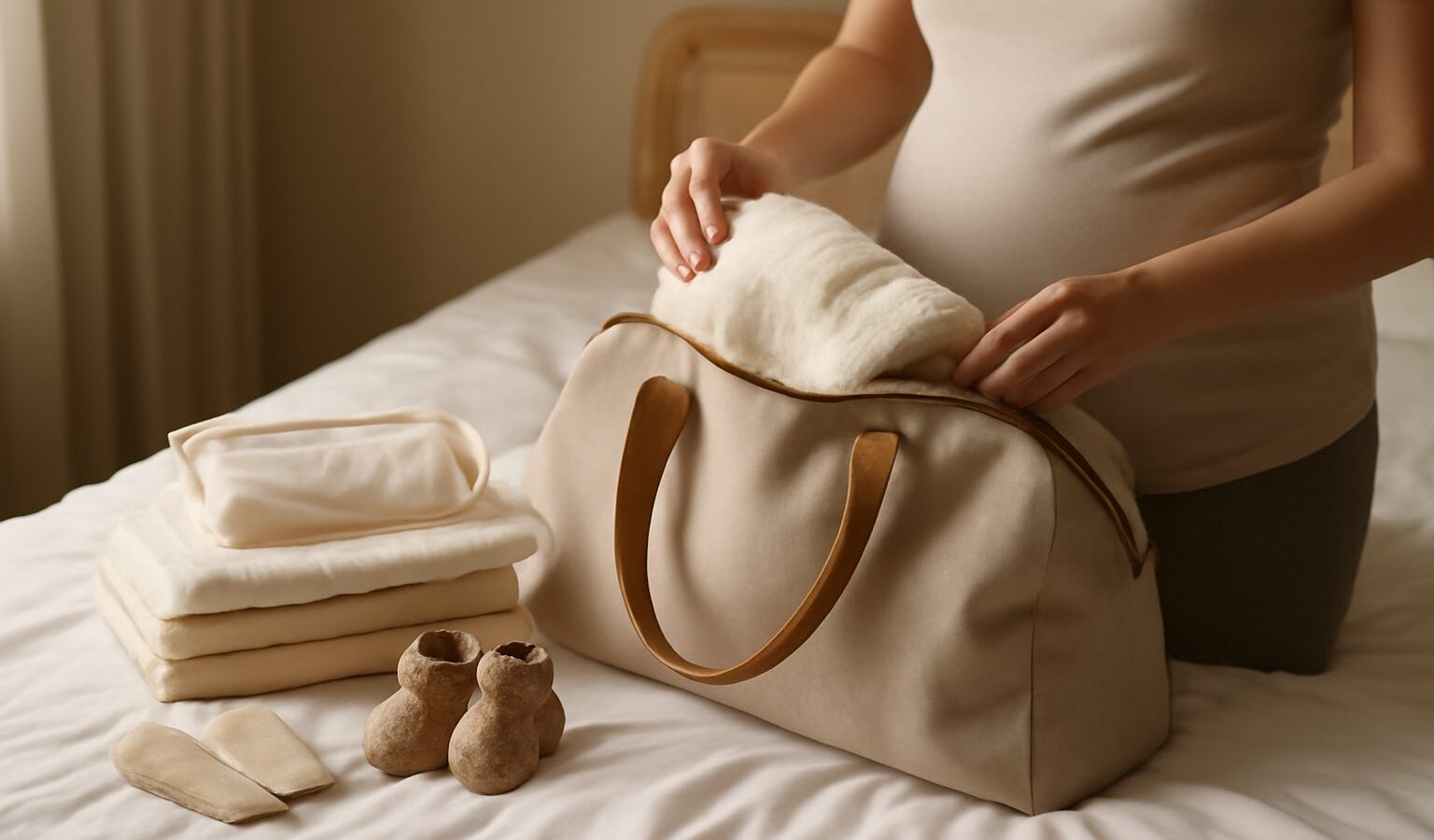
Packing a hospital bag for delivery is one of those tasks that makes the birth feel real. It is also wonderfully within your control at a time when so much is not. You cannot decide exactly when or how labour will unfold, but you can make sure that when the moment comes, you simply pick up a bag and go.
This is general guidance to help you feel prepared, not medical advice. Your hospital will give you its own list, and some, such as KKH and NUH, provide certain items while others expect you to bring your own. Always check what your specific hospital supplies and follow your care team’s instructions. With that in mind, here is a calm, practical way to pack.
When to Have Your Bag Ready
Aim to have your hospital bag for delivery packed and by the door by around the start of your final month, though your provider may suggest a timeframe that suits your pregnancy. Babies keep their own schedules, and having everything ready early means one less thing to think about if labour starts sooner than expected.
Keep the bag somewhere obvious, tell your partner or support person exactly where it is, and keep your important documents in an outer pocket so nobody is hunting for them during a contraction. If you are driving or arranging a ride, do a quick practice route to your hospital and have a backup plan, because traffic and timing are unpredictable.
A few things to keep together and easy to grab:
- Your identity card, appointment card and any hospital paperwork.
- Your birth preferences, if you have written any, kept flexible.
- A phone and a fully charged power bank.
- A list of who to call and in what order.
What to Pack for You
The person giving birth needs comfort, practicality and a few small dignities. Labour and early recovery can be long and messy, so choose things you will not mind getting stained and that make you feel a little more human.
- Loose, comfortable clothing and a going home outfit that fits a still soft postnatal tummy.
- Several pairs of high waisted underwear you do not mind ruining, and maternity pads.
- A nursing bra or comfortable bra, plus nursing tops if you plan to breastfeed.
- Toiletries, lip balm, hair ties and any daily medication in its original packaging.
- Slippers or flip flops, warm socks, and a light layer, since wards can be cool.
- Snacks and a drink for during and after labour, subject to your care team’s advice.
- A towel, glasses instead of contact lenses if you wear them, and your phone charger.
If you are hoping to breastfeed, ask about lactation support during your stay. Feeding often takes practice for both of you, and the early days set gentler expectations than any book. Our guide to building a strong bond with your baby touches on those first quiet hours together.
What to Pack for Your Baby
Hospitals in Singapore usually provide a fair amount for newborns during your stay, including nappies and sometimes clothing, but always confirm with yours. What you most need to bring is a safe way to get your baby home and something for them to wear out.
- An approved infant car seat, correctly installed, if you are travelling by car. This is not optional for a car journey, and it is worth fitting and practising with it before the day.
- A going home outfit in newborn and one size up, since you will not know your baby’s size, plus a hat and socks.
- A swaddle or light blanket suited to our climate.
- A couple of muslin cloths for dribbles and burping.
- Mittens if your baby scratches, though many find these slip off.
Dress your baby for the weather, not for a photo. In Singapore’s heat, light layers are kinder than a thick snowsuit, and the aim is simply a safe, comfortable trip home. For what comes next once you are back in your flat, bringing your newborn home walks through those first days gently.
Do Not Forget the Partner or Support Person
Whoever is with you during labour also needs to last the distance, and a supported partner is far more useful to you than an exhausted, hungry one. It is easy to pack lovingly for the baby and forget the person holding your hand.
- A change of clothes, toiletries and anything they need to stay overnight if allowed.
- Snacks, a water bottle and some cash and small change.
- Phone, charger and the camera, if you want early photos.
- A little patience and a plan for meals, because hospital hours drag.
Agree in advance on their role: who updates the relatives, who fetches things, and who protects your rest when visitors want to crowd in. In many Singapore families the news travels fast and everyone wants to visit, so it helps to decide together how you will manage that kindly.
A Simple Three Bag Approach
You do not need one enormous suitcase. Many parents find it easier to split things across a few smaller bags so the right one is always to hand, especially in a busy delivery ward.
| Bag | When you need it | What goes in it |
|---|---|---|
| Labour bag | During labour and birth | Documents, phone and power bank, lip balm, hair ties, light snacks, a comfortable top |
| Postnatal bag | After the birth, on the ward | Your clothing, underwear, maternity pads, toiletries, nursing bra, going home outfit |
| Baby bag | Coming home | Car seat, going home outfit, swaddle, muslins, hat and socks |
Label them if it helps, and keep the labour bag on top. Your partner can bring the others in once you are settled, rather than lugging everything at once.
Keeping It in Perspective
It is easy to over pack out of nerves, and just as easy to feel you have forgotten something vital. In reality, anything you miss can usually be brought in later or bought nearby, and the hospital will not let you or your baby go without the essentials. A calm, well organised hospital bag for delivery is a gift to your future, tired self, not a test you can fail.
Remember that this is general information, not medical guidance. Follow your own hospital’s packing list and your care team’s advice, check what KKH, NUH or your chosen hospital provides, and pack for the birth you can prepare for while staying flexible about the one you will actually have. Once the bag is by the door, you can turn your attention to the exciting part: meeting your baby.