

Raising two or more little ones with only a small gap between them is intense, tender and often gloriously chaotic. If you are parenting children close in age singapore life can feel like a permanent double shift, with two sets of needs, two nap schedules and two little people who both want you at once. Take heart. A tight age gap brings real gifts as well as challenges, and with a few practical systems you can bring more calm to the household. This guide offers reassurance and grounded ideas, whatever your family setup looks like.
The Real Upsides of a Small Age Gap
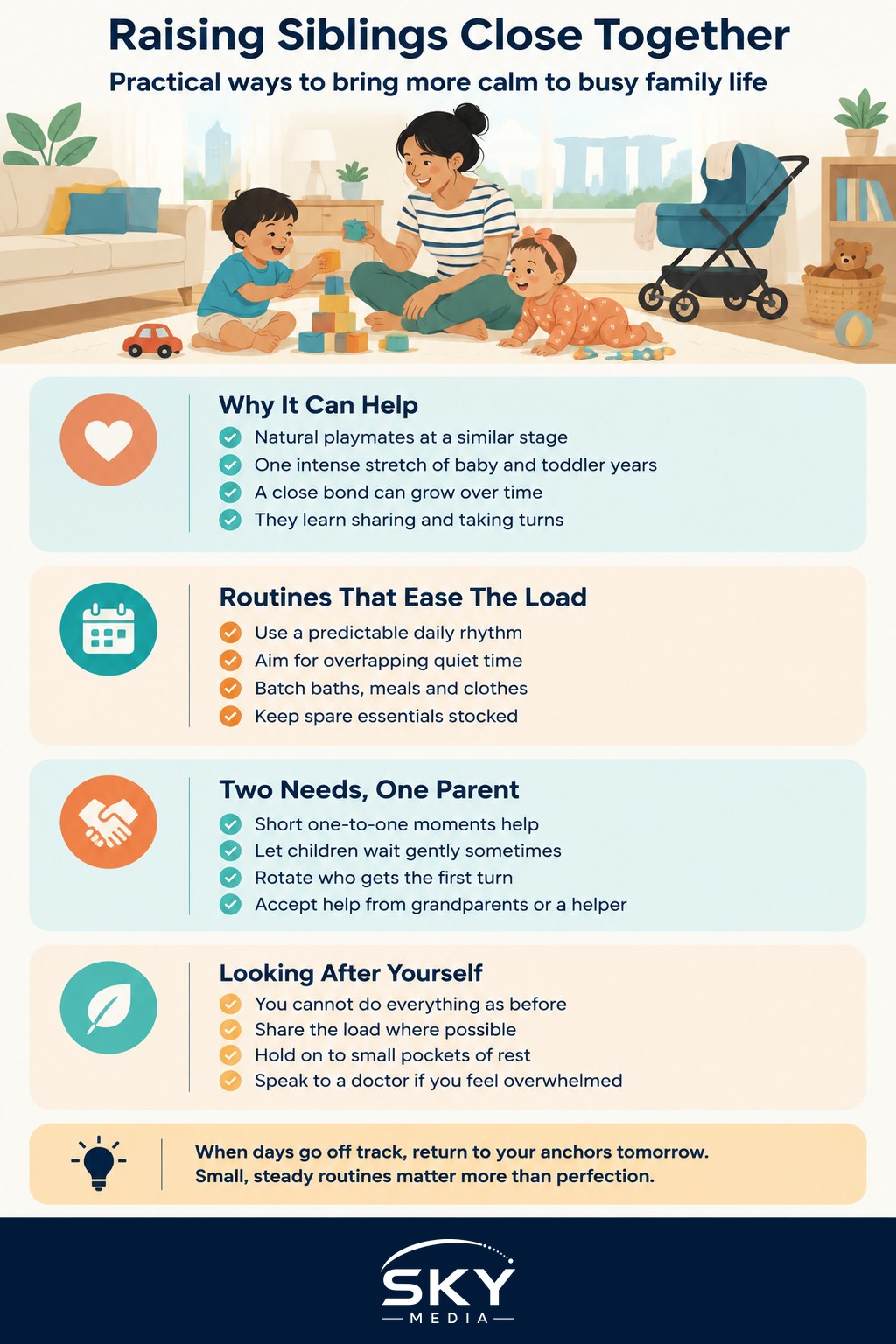
In the thick of the toddler and baby years it is easy to focus only on how hard it is, so it is worth naming the advantages. Children close in age often become natural playmates. They share a stage of life, enjoy similar games, and can keep each other company in a way that lightens the load as they grow. You also move through the demanding phases, night feeds, nappies, tantrums, in one concentrated stretch rather than stretching them out across many years, which many parents come to appreciate later.
There is a social bonus too. Siblings near in age frequently develop a close bond and a shared shorthand, and they learn important lessons in sharing, negotiating and taking turns simply by living side by side. None of this is guaranteed, and every pairing is different, but these are common and lovely outcomes to hold on to on the tiring days.
Building Routines That Save Your Sanity
The single biggest help when children are close in age is a predictable rhythm. You do not need a rigid, minute-by-minute timetable. You need dependable anchors that both children can rely on, which reduces the constant decision-making that wears parents down.
A few approaches that many families find useful:
- Aim for overlapping rest. Even if the children no longer nap at the same time, a shared quiet period gives everyone, including you, a breather.
- Batch the big daily tasks. Bath both together where safe, prepare meals in one go, and lay out clothes the night before.
- Keep essentials duplicated and stocked. A tight gap often means two in nappies or two needing similar things at once, so a well-stocked cupboard prevents mad dashes out.
- Build in transitions. Young children cope better with a warning before moving from one activity to the next, which cuts down on meltdowns.
Consistency matters more than perfection. On days that fall apart, and there will be many, simply returning to your anchors the next day is enough. If bedtime is a particular flashpoint, our guide to baby sleep and routines has ideas you can adapt for two.
Meeting Two Sets of Needs at Once
The hardest part of parenting children close in age is that both often need you in the same moment. You cannot be in two places, and that is not a failure. Small children can learn, gently and over time, that sometimes they wait, and this is a healthy lesson rather than neglect.
Try giving focused one-to-one time in short bursts rather than aiming for equal attention every minute. A few undivided minutes reading with one child while the other plays nearby often means more than a whole day of divided attention. Rotating who gets the “first” turn also helps children feel things are fair. For more on the emotional side, helping siblings bond and get along is a natural companion to this article, and if comparison creeps in, managing sibling comparison and favouritism is worth a read.
Do lean on the support around you. In many Singapore households, grandparents or a helper share the care, and multigenerational living can be a genuine blessing when everyone is on the same page about routines and rules. Accepting help is a strength, not a shortcut.
Protecting Your Own Wellbeing
Two little ones close together can leave parents running on empty. Your wellbeing is not a luxury here, it is part of the household infrastructure. Tired, depleted parents find everything harder, so guarding your own rest and sanity directly benefits the children.
Keep expectations realistic. The house will be messier, outings will take longer, and you will not do everything you did before. Lower the bar kindly. Share the load with your partner or support network as evenly as you can, take turns for lie-ins where possible, and hold on to even small pockets of time for yourself. Our guide to recharging and self-care for parents is written for exactly this season. If you feel persistently low, overwhelmed or unable to cope, please speak to a doctor, as support is available and reaching out early makes a real difference.
A Practical Wrap-Up
Parenting children close in age is a demanding but deeply rewarding stretch of family life. Lean on steady routines, batch your tasks, and give short bursts of focused attention rather than chasing perfect balance. Accept help without guilt, protect your own rest, and trust that the intense early years pass. The siblings you are raising side by side today may well grow into each other’s closest companions, and the effort you are pouring in now is quietly building that bond.
Frequently Asked Questions
What is the ideal age gap between siblings? There is no ideal gap, as each spacing has pros and cons. A small gap can mean playmates and one concentrated stretch of baby years, while a bigger gap gives more one-to-one time. What matters most is your health, finances and support at home, so choose what suits your family.
How do I stop two toddlers from fighting over the same toys? Some squabbling is normal at this age. Keep duplicates of favourite items where possible, and teach simple turn-taking with a timer or a clear order. Step in calmly only when someone might get hurt, and praise sharing when it happens rather than forcing it.
Is it harder to manage two in childcare at the same time? It can be easier in some ways, as drop-offs and school runs happen on one schedule, but costs and illnesses can double up. Check fees and any support you may qualify for with the relevant official agencies. Lean on grandparents or a helper where you have them.
How can I give each child individual attention? Aim for short, undivided pockets rather than equal time every minute. Ten minutes of reading with one child while the other plays nearby can mean a lot. Rotate who goes first, and let each child have something that is just theirs, like a special bedtime story.
What should I do if I feel exhausted and overwhelmed all the time? Feeling drained is common with two little ones, but do not push through alone. Share tasks with your partner or family, accept offers of help, and protect small pockets of rest. If low mood or inability to cope lingers, speak to a doctor, since support is available.