
When the afternoon sun hits a west-facing HDB flat, the air-con can feel like the only answer. Passive cooling is the quiet art of keeping your home comfortable using less energy, by working with air flow, shade and materials rather than against them. It will not replace air-con on the hottest, most humid days, but it can cut how often you reach for the remote, trim your electricity bill and make the in-between hours genuinely pleasant. Best of all, most passive cooling costs little or nothing to try.
This guide walks through what passive cooling means in our climate, the moves that make the biggest difference in a typical flat, and how to be honest about when the compressor still needs to come on. None of it asks you to suffer in the heat. The goal is a cooler home and a smaller bill, with the air-con as a tool rather than a reflex.
What Passive Cooling Actually Means
Passive cooling covers everything that lowers indoor heat without a compressor doing the work. That means letting breezes move through the flat, stopping direct sun from turning your living room into an oven, and helping trapped heat escape once the day cools a little. It is a mindset as much as a set of tricks: notice where the heat is coming from, then deal with it at the source instead of just fighting it with more cooling.
Singapore’s climate makes this both harder and more rewarding. We have steady heat and high humidity all year, so there is no cool season to coast through. On the other hand, we get a fairly reliable breeze and predictable sun angles you can plan around. Because a large share of our electricity still comes from burning natural gas, every kilowatt-hour you avoid genuinely counts. If you are curious about that mix, see /where-your-electricity-comes-from-singapore/.
Working With Air Flow in a Flat
The single most useful passive move is cross-ventilation: letting air enter on one side of the home and leave on the other. Warm, stale air is pushed out and cooler, moving air takes its place, which feels cooler on the skin even when the temperature barely changes.
- Open opposite sides. Fling open windows at the front and back so there is a path for air to travel through, not just a single window that lets heat sit.
- Use the main door safely. If you have a grille gate, leaving the solid door open behind it while you are home lets the corridor breeze pull through. Only do this when you are around.
- Do a night purge. Late evening and early morning are usually the coolest, breeziest hours. Open up then to flush out the day’s heat, and close windows and draw shades before the sun climbs.
- Aim for the sea breeze. Many blocks catch a prevailing wind. Spend a week noticing which windows deliver the best draught and prioritise opening those.
If your layout traps air in one room, a fan placed to push warm air towards an open window can restart the flow rather than just stirring hot air in circles.
Stopping Heat Before It Gets In
Once sunlight lands on your floor, walls or furniture, it turns into heat that lingers for hours. Blocking that sun before it enters is far more effective than cooling the room afterwards, and it is where west-facing and top-floor flats gain the most.
- Shade the worst windows. Light-coloured curtains, blinds or roller shades on sun-facing windows cut a surprising amount of heat. Close them during the hottest part of the day.
- Consider reflective film. Solar-control window film reflects part of the sun’s heat while still letting light through. Check your options and any building rules before applying it.
- Mind the drying rack. Hanging laundry outside the window rather than across a sunny living room keeps both moisture and radiant heat out of the room.
- Let heat out at night. Once the sun is off the glass, open up again so the heat stored in walls and floors can escape.
Here is a rough sense of what different moves cost and where each one shines, so you can start with the wins that suit your flat:
| Passive cooling move | Roughly what it costs | Where it helps most |
|---|---|---|
| Cross-ventilation and night purging | Free | Any flat with windows on two sides |
| Curtains, blinds or shades on sun-facing windows | Low | West-facing and afternoon-hot rooms |
| Ceiling or standing fans | Low to moderate | Everyday comfort, all rooms |
| Solar-control window film | Moderate | Rooms with strong, direct glare |
| Balcony or corridor greenery | Low, plus upkeep | Softening heat and glare near windows |
Fans, Habits and the Small Wins
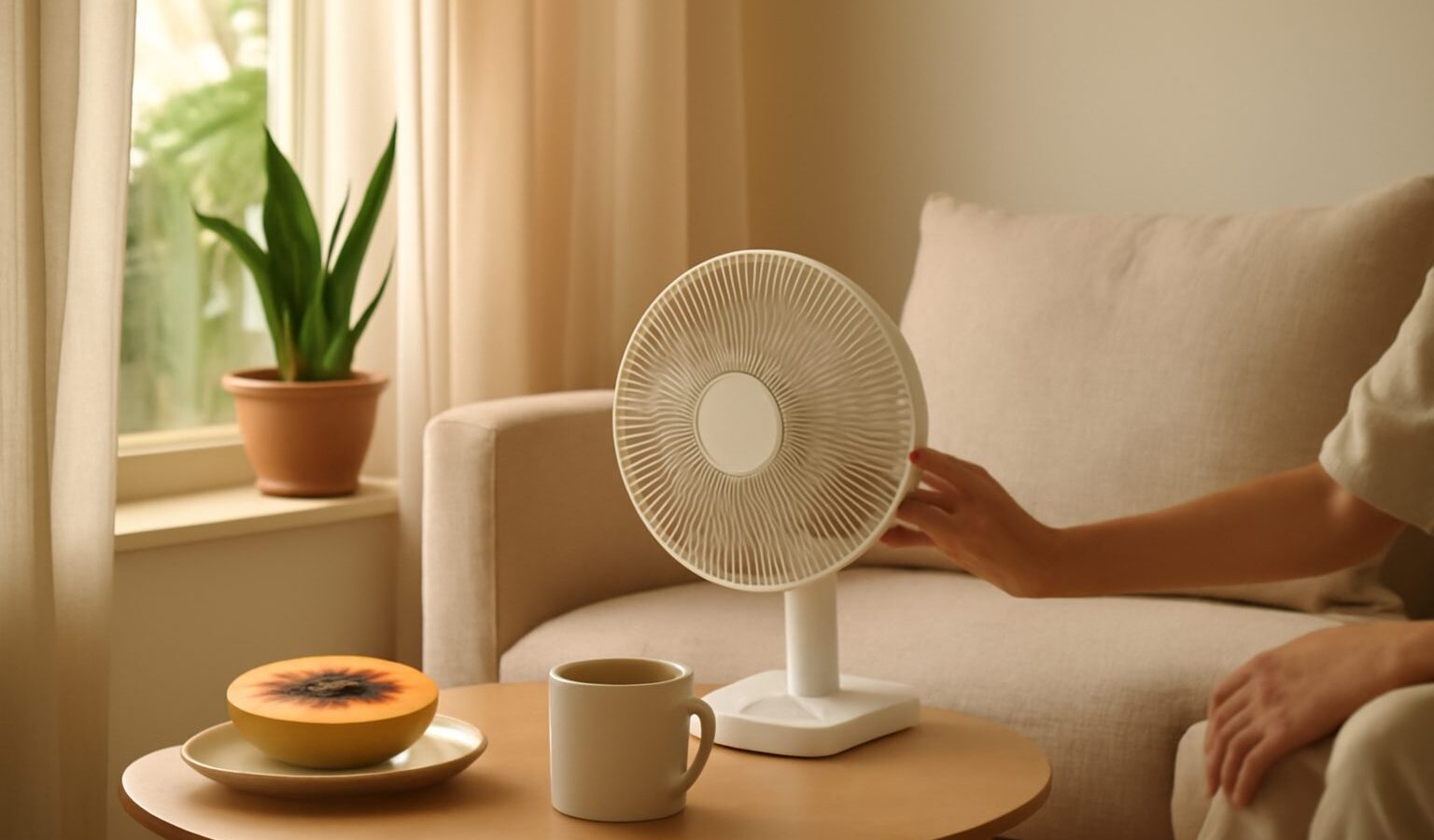
A moving-air breeze from a fan lets you feel comfortable at a higher temperature, which is why a fan is the passive-cooling workhorse. Ceiling fans cover a whole room efficiently, while a standing fan can be aimed where you sit or sleep. Reach for the fan first and you may find you never need the air-con at all on milder days.
Everyday habits add up too. Switch to LED lighting, which runs far cooler than old bulbs. Cook during cooler hours or use the extractor fan to vent kitchen heat, since a wok on full blast warms the whole flat. Unplug or switch off devices that sit humming and warm when idle, which also helps them last longer; there is more on that in /making-your-devices-last-longer-singapore/. When you do shop for a fan, aircon or fridge, the efficiency ratings tell you which model sips power rather than gulps it, explained in /understanding-energy-labels-when-you-shop-singapore/.
Greenery and the Outside of Your Home
Plants and greenery cool by shading surfaces and releasing moisture, and even a modest amount near your windows helps. A few leafy pots on a balcony or a trellis can soften harsh afternoon glare and take the edge off reflected heat from concrete. At the building scale, green roofs and planted facades do the same job in a bigger way, which is worth understanding if your estate is adding them; see /skyrise-greenery-and-green-roofs-singapore/.
Keep it responsible. Any balcony or corridor gardening must respect HDB and MCST rules, and you must not create standing water where mosquitoes can breed, so cover or empty saucers and trays and follow the current NEA guidance. Choosing light-coloured furnishings and keeping outdoor surfaces shaded also reduces how much heat radiates back at you through the glass.
When You Still Need the Air-Con
Passive cooling is powerful, but honesty matters: on the most humid nights, or for babies, elderly family members and anyone unwell, air-con can be the safe and sensible choice, especially for sleep. The aim is not to banish it but to use it well.
- Set a sensible temperature. A moderate setting uses far less energy than a very cold one, and a fan running alongside lets you stay comfortable a degree or two warmer.
- Cool only the room you are in. Close doors and cool the bedroom at night rather than the whole flat.
- Service the unit. A clean filter and a well-maintained system cool faster and cost less to run.
- Combine, don’t compete. Use shading and fans to reduce the load, so the air-con runs for shorter spells.
Treat passive cooling as your default and air-con as the backup, and the two work together. Building these choices into your ordinary week, as part of a wider routine like the one in /building-a-sustainable-daily-routine-singapore/, is how a cooler, cheaper home stops being an effort and simply becomes how you live.