
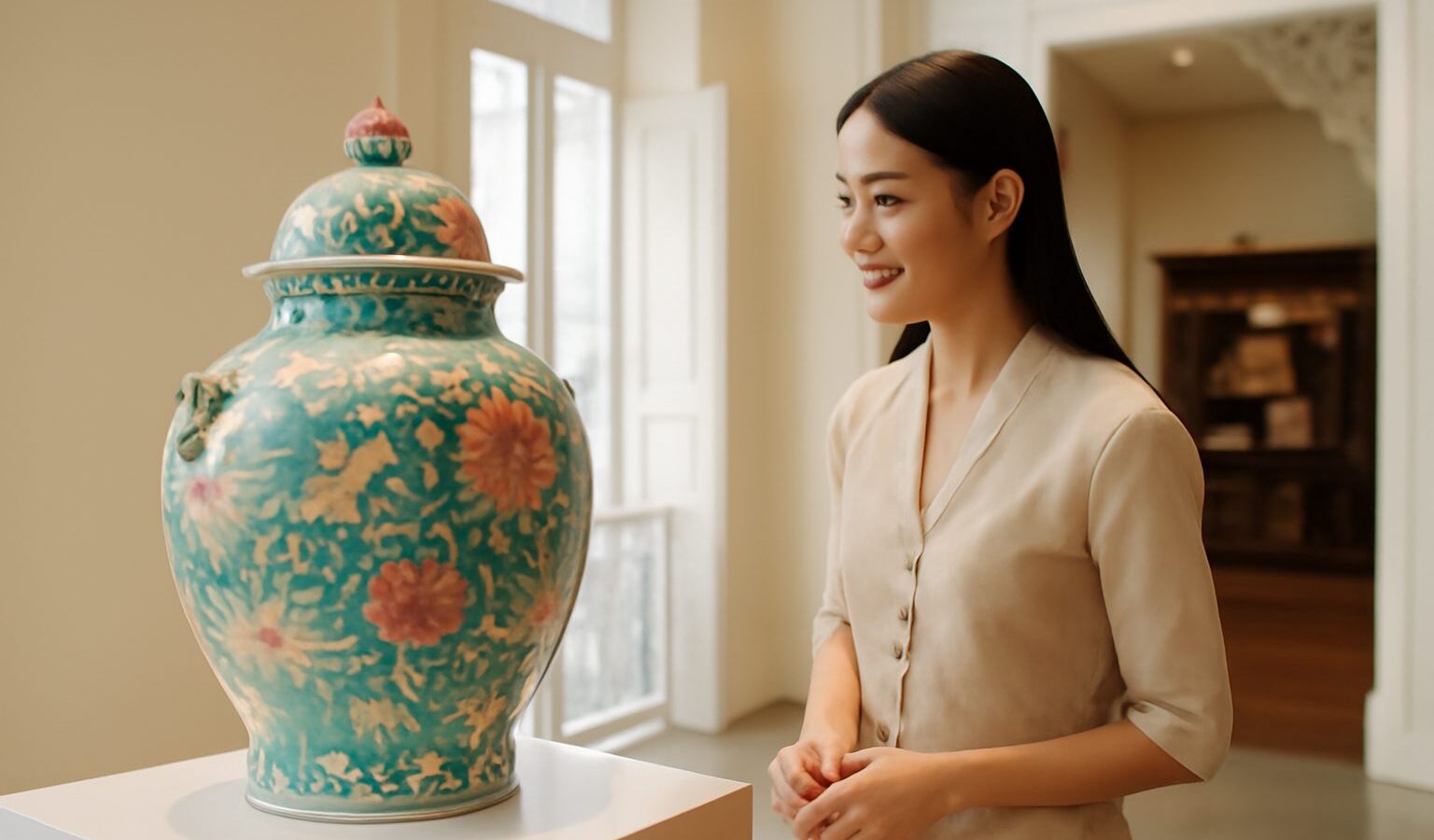
The Peranakan Museum Singapore is one of the most rewarding cultural stops in the city, and it packs a lot of colour, craft and story into a compact, easy to enjoy visit. Housed in a graceful heritage building on Armenian Street, it tells the story of the Peranakans, the descendants of early traders who settled across the region and blended Chinese, Malay, Indian and European influences into a distinctive way of life. If you have ever admired an intricately beaded slipper, a tiled shophouse facade or a plate of colourful kueh, this is the place that explains where all of that comes from.
It is also a genuinely comfortable outing. The whole experience is indoors and air conditioned, so it works beautifully on a hot afternoon or a wet one, and it sits right in the museum quarter next to Fort Canning, making it easy to fold into a bigger day out.
What the Peranakan Museum Is
Peranakan culture grew out of centuries of trade and intermarriage in port cities such as Singapore, Malacca and Penang. The word means “locally born”, and the community developed its own food, dress, language and customs that borrowed from many sources yet became something entirely its own. The museum sets out to make that heritage tangible, moving from where the Peranakans came from to how they lived, dressed, worshipped and celebrated.
The building itself is part of the story. It is a restored former school with high ceilings, tall windows and detailed plasterwork, and the galleries are arranged over several floors so you climb gently through different themes. Compared with a sprawling national museum, this is a focused collection, which is exactly why many visitors find it so satisfying. You can take in the whole thing without feeling rushed or worn out.
Highlights and Galleries to See
The collection is strong on the objects that Peranakan families treasured and used every day, and the level of craftsmanship is remarkable. Look out for the beadwork and embroidery, where thousands of tiny glass beads form flowers, birds and phoenixes on slippers and panels. The porcelain, often in bright pinks, greens and yellows, was commissioned specially and is instantly recognisable once you have seen it.
Other galleries explore the elaborate traditions around weddings, which could stretch over many days, and the family and religious life that held the community together. There are richly detailed garments, jewellery, furniture inlaid with mother of pearl, and everyday items that show how style ran through even the smallest household objects.
Here is a quick sense of what different visitors tend to gravitate towards:
| Gallery focus | What you will see | Great for |
|---|---|---|
| Origins and trade | How the community formed across port cities | History and context lovers |
| Wedding traditions | Ceremonial dress, beadwork, ritual objects | Craft and textile fans |
| Home and family life | Furniture, porcelain, jewellery, dining ware | Design and interiors fans |
| Food and celebration | The culture around kueh, feasts and festivals | Foodies and families |
The museum refreshes displays and hosts special exhibitions from time to time, so it is worth checking the official website before you go to see what is currently showing. Do the same for opening hours and any admission charges, since these can change.
Who It Suits
This is an easygoing museum that flexes to different groups. Couples enjoy it as a relaxed, unhurried date, especially paired with a coffee or a meal in the surrounding streets. Culture and design enthusiasts can lose an hour or two in the detail of the beadwork and porcelain alone. Visitors new to Singapore get a clear, memorable introduction to a heritage that shaped local food, fashion and architecture.
Families with children can enjoy it too, though it leans towards looking rather than touching, so it suits kids who are happy to explore galleries and spot bright, unusual objects. If you are visiting with younger children who need more hands-on play, you might pair it with a different stop on the same day.
- Couples wanting a calm, cultured afternoon
- Design, craft and textile lovers
- First-time visitors keen to understand local heritage
- Curious families with older children
Getting There and Visiting Tips
The Peranakan Museum is very central and easy to reach. The nearest MRT stations are within a short, walkable distance, with City Hall and Bras Basah both convenient, and several bus services pass nearby. Because it sits in the arts and heritage belt, you can easily combine it with a stroll around Armenian Street, Waterloo Street and the Bras Basah district, which is full of galleries, cafes and places of worship.
Give yourself roughly one to two hours inside, depending on how deeply you like to read the labels. It is compact enough that you will not feel overwhelmed, yet detailed enough to reward a slower pace. Since the entire visit is indoors and air conditioned, it is one of the best rainy-day or midday-heat options in the museum quarter, and a good anchor for a plan that mixes indoor and outdoor stops.
A few practical notes to make the day smoother:
- Check the official website for current opening hours, ticket prices and any timed entry before you set off.
- Look up the latest special exhibition so you know what is on while you visit.
- Wear comfortable shoes, as there are stairs between floors, and lifts are available if you need them.
- Leave a little time for the streets around the museum, which reward a wander.
The trade-offs are gentle. Weekends and school holidays can bring more visitors, so a weekday morning is quietest if you prefer space to linger. It is not a large museum, so treat it as a focused, high-quality experience rather than a full-day destination, and plan a nearby lunch or another stop to round out your outing.
Explore More
If this whets your appetite for Singapore’s heritage stories, carry on with the Indian Heritage Centre in Little India and the Malay Heritage Centre in Kampong Glam, which each tell a different community’s history through galleries and everyday objects. For a change of pace, the Singapore Art Museum shifts the focus to contemporary art in the same central belt.