
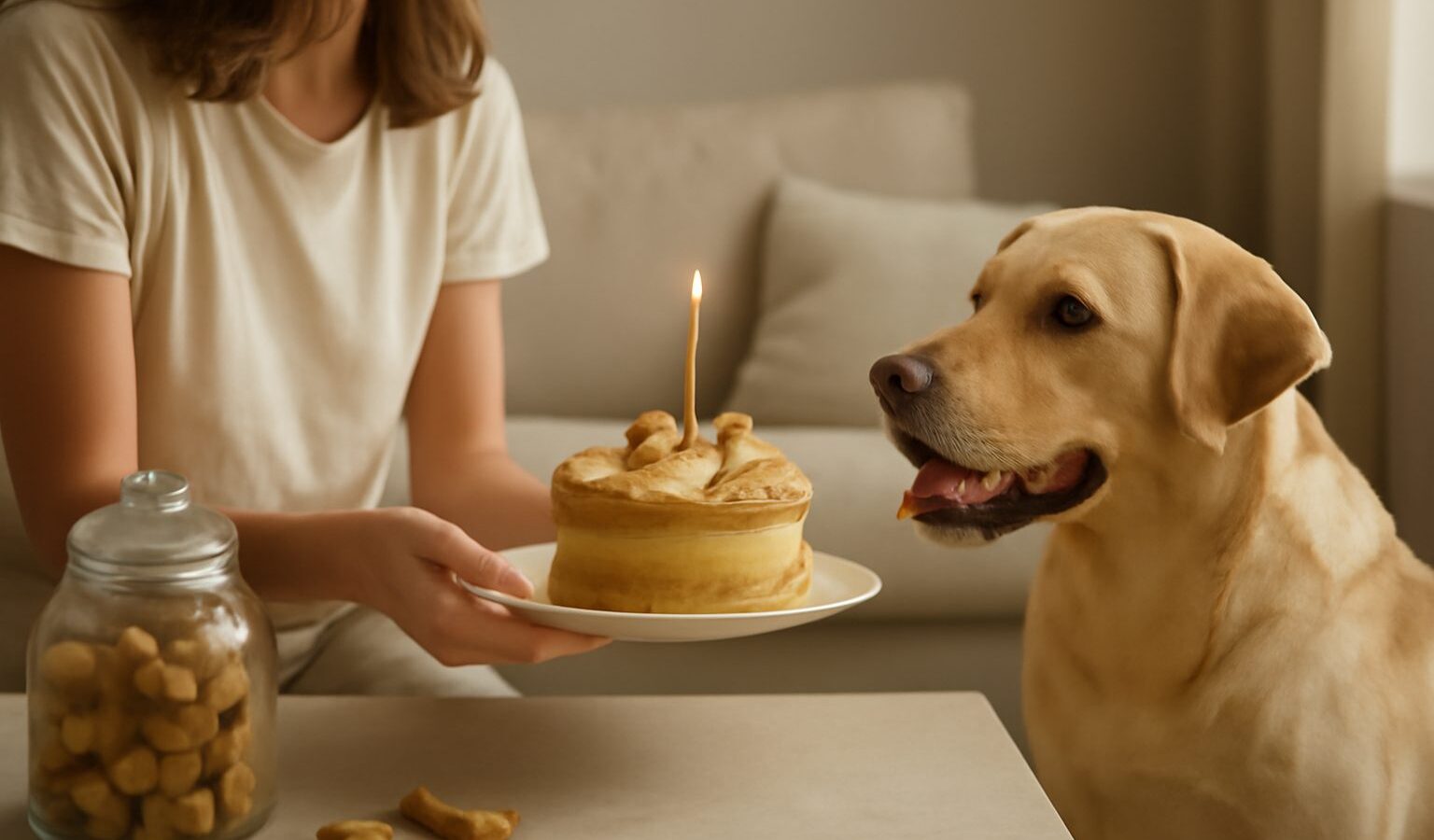
Celebrating a dog’s birthday has become a lovely tradition for many pet owners here, complete with candles, photos and a cake made just for them. But a dog cake is not simply a smaller human cake. Many ingredients we love are harmful to dogs. This guide to choosing a dog birthday cake in Singapore covers which ingredients are safe, what to look for in a pet bakery, how to make a simple cake at home, and how to host a pet birthday that stays fun for everyone, including your dog.
This is general information. If your dog has allergies, a sensitive stomach, diabetes, kidney problems or is overweight, check with your vet before any treat, even a small one.
Why Dogs Need a Different Kind of Cake
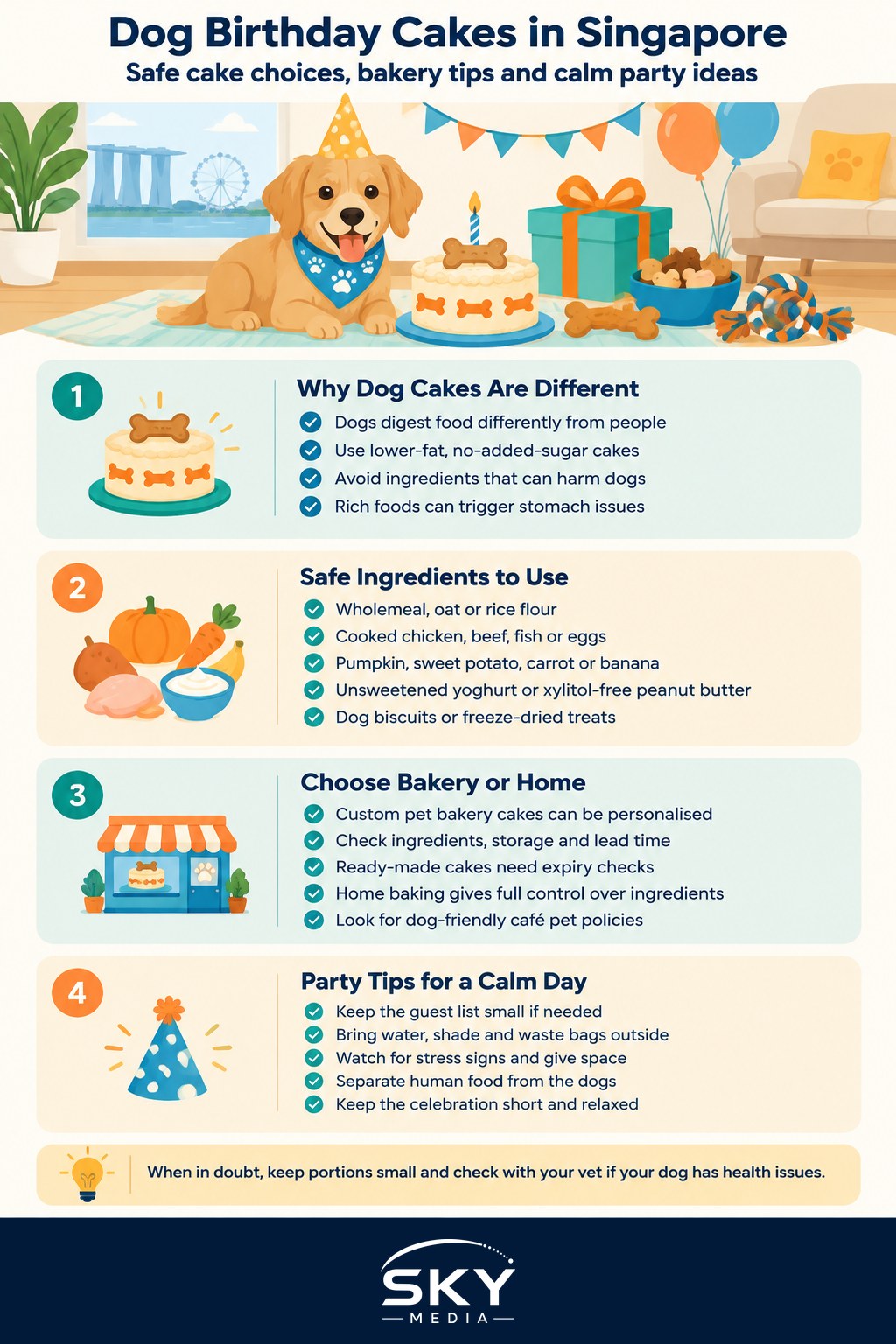
Dogs digest food differently from people. Sugar, butter, chocolate and some sweeteners can cause anything from an upset stomach to serious poisoning. Rich, fatty foods can also trigger pancreatitis (inflammation of the pancreas) in some dogs. A proper dog cake is usually lower in fat, contains no added sugar and uses dog-friendly flours and fillings.
Ingredients to avoid completely include:
- Chocolate and cocoa, in any form.
- Xylitol, a sweetener sometimes found in sugar-free peanut butter, yoghurt and baked goods. It can be very dangerous for dogs.
- Grapes, raisins and sultanas.
- Macadamia nuts.
- Onion and garlic, including powders.
- Alcohol and caffeine.
- Large amounts of sugar, salt, butter and cream.
Our full guide to foods that are toxic to dogs and cats explains these in more detail. If your dog eats something harmful, contact your vet or an emergency vet clinic immediately.
Dog-Safe Ingredients Commonly Used in Pet Cakes
Pet bakeries and home bakers often use these ingredients, which are generally considered dog-friendly in small amounts:
- Flours: wholemeal, oat or rice flour. Some dogs are sensitive to wheat, so grain-free options exist.
- Proteins: cooked chicken, beef, fish or eggs.
- Fruit and vegetables: pumpkin, sweet potato, carrot, apple without seeds or core, banana and blueberries.
- Binders and toppings: plain unsweetened yoghurt, mashed potato or sweet potato as “frosting”, and xylitol-free peanut butter.
- Decorations: dog biscuits or freeze-dried treats instead of icing and sprinkles.
Even safe ingredients can upset a dog that is not used to them, so introduce new foods gradually and keep portions small.
Buying From a Pet Bakery or Making Your Own
You can order a cake from a pet bakery, buy a ready-made cake from a pet shop, or bake one at home. Each has benefits.
| Option | What you get | Things to check |
|---|---|---|
| Custom cake from a pet bakery | Personalised design, flavour and size, often with a name and number | Full ingredient list, lead time, delivery or pickup, storage instructions |
| Ready-made cake from a pet shop | Convenient, no advance order needed | Expiry date, whether it is frozen or chilled, ingredients and preservatives |
| Homemade cake | Full control over ingredients, simple and affordable | Following a dog-safe recipe, portion size, keeping it fresh |
| Dog-friendly café celebration | Cake and a venue in one, sometimes with party packages | Pet policy, space, other dogs present, cancellation terms |
When choosing a pet bakery, ask:
- What exactly is in the cake? A trustworthy baker will list every ingredient.
- Can it be adjusted? For example, grain-free or a different protein for allergies.
- How should it be stored? Many pet cakes contain fresh ingredients and no preservatives, so they need refrigeration and must be eaten quickly.
- What size suits my dog? Cakes are often sized for small, medium and large dogs. A tiny cake is plenty for a small breed.
- How far ahead do I need to order? Popular dates book up, so order early.
Many pet bakeries also sell party extras such as bandanas, hats, treat bags for guest dogs and “pupcakes” (dog cupcakes).
A Simple Homemade Dog Cake Idea
If you prefer to bake yourself, here is a simple approach many owners use. Mix wholemeal or oat flour with a mashed banana or pumpkin purée, an egg and a spoonful of xylitol-free peanut butter. Bake in a small tin until cooked through, cool completely, then top with plain unsweetened yoghurt or mashed sweet potato and a few dog biscuits.
A few tips:
- Keep it small. A cake treat should be a small part of the day’s food. Reduce the regular meal on the day to balance it.
- Skip the candles near the dog. Light one briefly for photos, then remove it.
- Store leftovers in the fridge and use within a short time, or freeze individual slices.
- Make a matching human cake separately if you are having guests; if you would rather order one, see our birthday cake delivery round-up. Keep human cake away from the dogs.
Hosting a Dog Birthday Party That Stays Calm
A birthday should be enjoyable for your dog, not stressful. Some dogs love company; others prefer a quiet day at home with their family.
Choose the right setting
- At home: familiar and comfortable. In an HDB flat or condo, keep the guest list small and be mindful of neighbours and noise.
- Dog-friendly café: check whether they allow dogs indoors, how many dogs, and whether they have party packages.
- Park or dog run: open and fun, but bring water, shade and waste bags, keep your dog on a leash where rules require it, and avoid the hottest part of the day. Check NParks rules for the park you choose.
Keep it dog-friendly
- Invite only dogs that get along, and ask guests to confirm vaccinations and good social behaviour.
- Set up a quiet corner with water and a bed where the birthday dog can rest.
- Watch for stress signs such as lip-licking, yawning, tucked tail, hiding or growling, and give space if needed.
- Supervise food. Keep human snacks out of reach, and give each dog a separate portion of cake so there is no guarding or squabbling.
- Avoid balloons and small decorations that can be chewed or swallowed.
- Keep it short. An hour or so is usually enough for most dogs.
Gifts and games
Good ideas include puzzle toys, a lick mat, a new bed or a simple game such as “find the treat”. These keep dogs engaged without overexcitement.
Making the Day About Your Dog
The best dog birthdays focus on what your dog actually enjoys: a favourite walk, extra cuddles, a new toy and a small, safe cake. Whether you order from a pet bakery or bake at home, check every ingredient, keep portions modest and let your dog set the pace. A happy, comfortable dog makes for the best photos anyway.
Frequently Asked Questions
Can I give my dog a slice of regular birthday cake? It is best not to. Human cakes are high in sugar, butter and cream, and may contain chocolate, raisins or xylitol, which are harmful to dogs. A small, dog-safe cake or a few biscuits is a much better treat. If your dog has eaten a slice already, watch for symptoms and call your vet.
What should I do if my dog eats chocolate cake? Contact your vet or an emergency vet clinic straight away rather than waiting for symptoms. Tell them what was eaten, roughly how much, and your dog’s size. Do not try to make your dog vomit unless a vet tells you to.
How much cake is a safe portion for a small dog? Think of it as a few bites, not a slice. Even a dog-safe cake adds calories, so cut the regular meal on the day and share the cake over time if it is large. Your vet can suggest a sensible amount if your dog is small, older or overweight.
How long does a dog cake stay fresh at home? It depends on the recipe and whether it has preservatives, and many pet cakes contain none. Keep it chilled, follow the baker’s storage note and eat it within the window they give. Slices of homemade cake can be frozen in single portions to avoid waste.
Can a dog with allergies still have a birthday cake? Often yes, if the cake is made around the allergy, but it needs care. Ask the baker for a full ingredient list and a version without your dog’s trigger, such as grain-free flour or a different protein. Check with your vet first if your dog has a diagnosed allergy or digestive condition.