

Our pets are family, and most of us have hundreds of blurry, half-cropped photos to prove it. Good pet photography in Singapore does not need expensive gear. A modern phone, a little patience and an understanding of light and timing will get you photos you actually want to frame. And for milestone moments, a professional pet shoot can capture something special.
This guide covers both: practical phone tips you can use today at home, in the HDB void deck or at the park, followed by what to expect, and what to check, if you book a professional pet photographer.
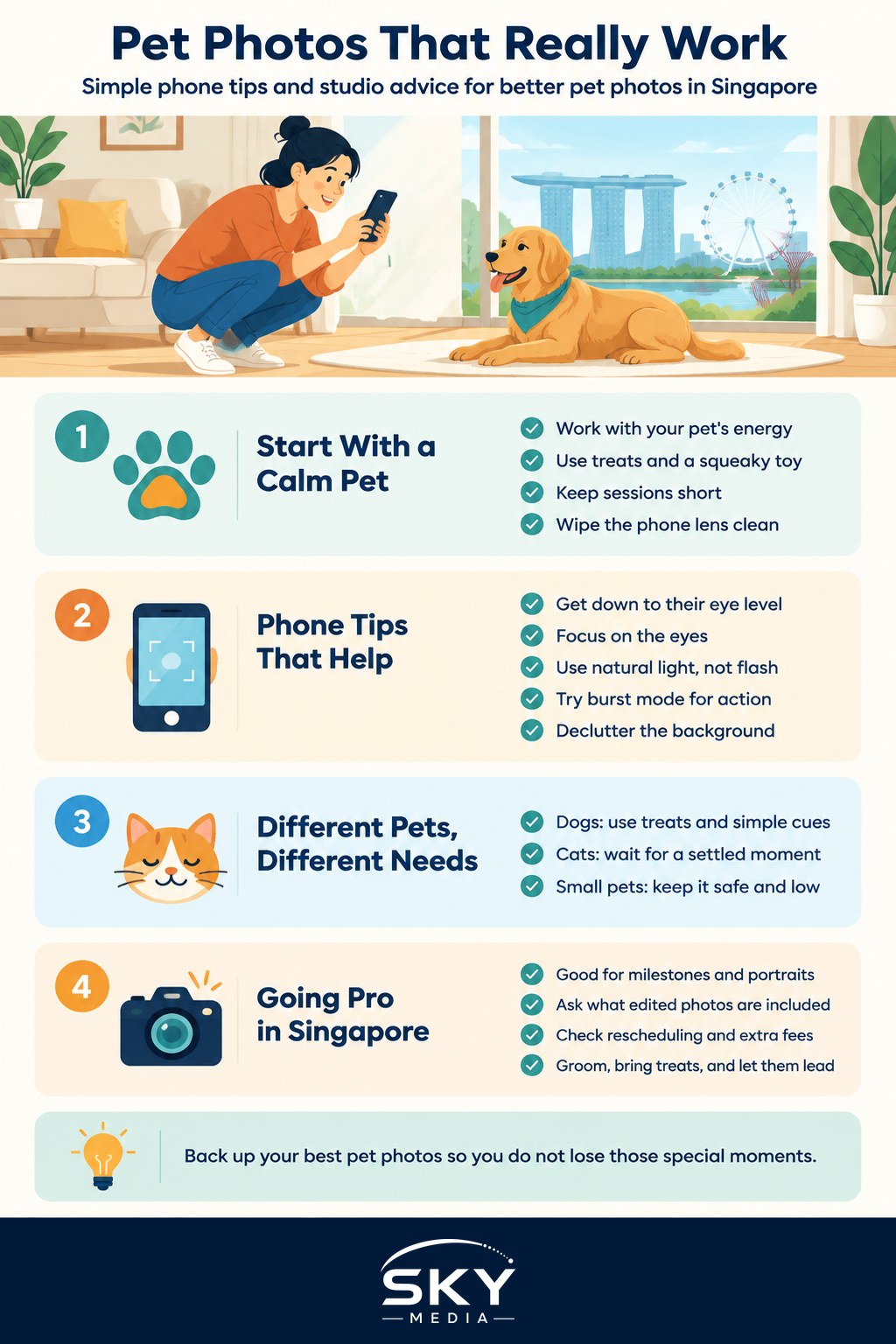
Get the Basics Right Before You Shoot
Work with your pet’s energy, not against it. A puppy fresh from a nap or a dog that has just come back from a long walk is calmer and easier to photograph. Cats tend to be more cooperative when they are relaxed and settled in a favourite spot.
Have treats and a squeaky toy ready. These are your two main tools: treats for staying still, and sounds for getting attention.
Keep sessions short. Five to ten minutes at a time is plenty. If your pet gets stressed, stop. A calm, happy animal makes a far better photo than a frustrated one.
Clean the lens. Phone lenses pick up fingerprints and smudges constantly, and a quick wipe makes a noticeable difference to sharpness.
Phone Photography Tips That Actually Work
1. Get down to their level. The single biggest improvement. Crouch, kneel or lie on the floor so the camera is at your pet’s eye height. Photos taken from standing height looking down make pets look small and distant.
2. Focus on the eyes. Tap the screen on your pet’s eyes to set focus. If the eyes are sharp, the photo usually works even if other parts are soft.
3. Use natural light. Shoot near a window or on a shaded corridor. Soft daylight flatters fur and shows texture. Avoid using the flash, which can startle animals and causes glowing eyes.
4. Use burst mode for action. Hold the shutter button (or use the burst option on your phone) when your dog is running or your cat is mid-pounce, then pick the best frame later.
5. Try portrait mode for close-ups. It blurs the background and makes your pet stand out. It works best when the pet is still and well lit, and can struggle with fluffy edges, so check the result.
6. Make a sound just before you shoot. A squeak, a click or a whisper of their name will get ears up and eyes on the camera. It works best a few times only, so save it for the important frame.
7. Declutter the background. Move shoes, laundry and cables out of frame. A plain wall, a sofa or a patch of grass looks far better than a messy floor.
For more on composition and light with your phone, our smartphone photography tips go into detail.
Dogs vs Cats: Different Approaches
Dogs respond well to commands and treats. Ask for a sit or a down, hold a treat just above the lens so they look towards the camera, and shoot as they focus on it. For action shots, have a helper call the dog towards you while you shoot in burst mode.
Cats are less interested in posing. Rather than trying to direct them, wait for them to settle in a sunny spot, a box or their favourite perch, and photograph them there. A feather wand or toy just above your phone can catch their attention for a few seconds. Patience is everything.
Small pets such as rabbits, hamsters and guinea pigs are easily stressed. Photograph them in a safe, enclosed space at floor level, keep sessions very short, and never hold them up in the air for a shot.
Shooting Outdoors in Singapore
Singapore’s light and weather shape outdoor pet photos.
- Shoot early morning or late afternoon. Midday sun is harsh, creating strong shadows, and the heat is hard on pets, especially short-nosed breeds.
- Check the ground. Pavements and tarmac can get very hot in the sun. Test with the back of your hand and keep shoots on grass or shaded paths.
- Bring water for your pet and take breaks in the shade.
- Keep your dog leashed in public spaces as required, and follow the rules for each park. Some parks have designated dog runs where off-leash play is allowed. Check NParks guidance for which parks and areas allow dogs before you go.
- Overcast days are a gift. Cloudy skies act like a giant softbox, giving even light without squinting eyes.
If you are planning a getaway with your pet, our tips for a pet-friendly staycation can turn the trip into a photo opportunity too.
DIY vs Professional Pet Shoot
| Factor | DIY with your phone | Professional pet shoot |
|---|---|---|
| Cost | Free | Paid, varies by package |
| Best for | Everyday memories, social media | Milestones, portraits, prints and albums |
| Lighting and gear | Natural light, phone camera | Studio lights, professional lenses, backdrops |
| Editing | Basic phone edits | Professional retouching and colour work |
| Time with pet | Short, flexible sessions anytime | Scheduled session with planned set-ups |
| Skill with animals | Depends on you | Experienced photographers know how to handle nervous pets |
What to Expect From a Professional Pet Photographer
A professional shoot is worth considering for moments such as a new puppy’s arrival, a birthday, a family portrait with your pet, or a senior pet’s final years.
Types of shoots commonly offered:
- Studio sessions with plain or themed backdrops and controlled lighting.
- On-location shoots at your home, a park or a beach, which can feel more natural.
- Lifestyle sessions capturing your pet with the family, during walks or play.
Questions to ask before booking:
- How many edited photos are included, and in what format?
- Is there an extra charge for travel, more pets or more people in the shot?
- What happens if your pet is unwell, or if it rains on an outdoor date? Ask about the rescheduling and cancellation terms.
- How long until you receive the photos, and are prints or albums extra?
- Do they have experience with your type of animal, especially if your pet is anxious, reactive or elderly?
- Look at their portfolio for animals similar to yours, and read reviews from past clients.
On the day:
- Groom your pet a few days before, not the same morning, so fur settles naturally.
- Bring favourite treats, toys and a towel.
- Walk your dog before the session so it is calmer.
- Let the photographer lead, and step back if your pet keeps looking at you instead of the camera.
A good pet photographer puts the animal’s comfort first and will pause or end the session if your pet becomes distressed.
Editing and Keeping Your Photos
A few simple edits go a long way: straighten, crop for a tighter frame, lift shadows slightly and adjust warmth so fur colour looks true. Avoid heavy filters, which can make fur look unnatural.
Finally, back up your favourite pet photos to cloud storage or an external drive. Pets do not stay young for long, and those photos become more precious with every year.
Frequently Asked Questions
How do I photograph a black dog or cat so the details show? Dark fur loses detail easily, so give it soft, even light. Shoot near a window or on an overcast day, tap the screen on the eyes to set focus, and nudge the exposure up slightly. Avoid harsh midday sun and flash, which flatten the coat or cause glowing eyes.
How can I get my anxious rescue dog to relax for photos? Let the dog settle first and keep the first few sessions very short, with treats and a calm voice. Photograph from a little distance using your phone’s zoom rather than crowding the animal. Stop at the first signs of stress, such as lip licking or turning away, and try again another day.
Can I take pet photos at a park or beach in Singapore? Often you can, but rules vary by location. Parks run by NParks have their own guidance on whether dogs are allowed and whether they must stay on a leash, so check before you go. Bring water, and choose shaded paths because hot ground can burn paws.
What should a pet photographer do if my pet gets stressed during a shoot? A good photographer pauses, gives your pet a break and ends the session if the animal stays distressed. Ask about this before booking, along with rescheduling terms if your pet is unwell. Photographers used to nervous or elderly animals usually handle these moments best.
How do I print and display pet photos so they last? Pick your sharpest, best-lit frames and print them from the original file rather than a screenshot. Framed prints, an album or a canvas all work well, and a professional print service can match colours more accurately than a home printer. Keep a backup copy of the files in cloud storage or on a drive.