
If you are moving to Singapore with a cat or dog, one of the biggest worries is quarantine. Will your pet need to stay in a facility? For how long? Can you visit? This guide to pet quarantine in Singapore focuses on that part of the journey: which situations lead to quarantine, the documents that matter, what daily life at a quarantine facility is generally like, and how to prepare yourself and your pet.
This is general information, not legal or veterinary advice. Import rules are set by the Animal and Veterinary Service (AVS), which is part of the National Parks Board (NParks). Rules change, so always confirm the current requirements on the AVS website before you make any plans.
Why Singapore Has Pet Quarantine
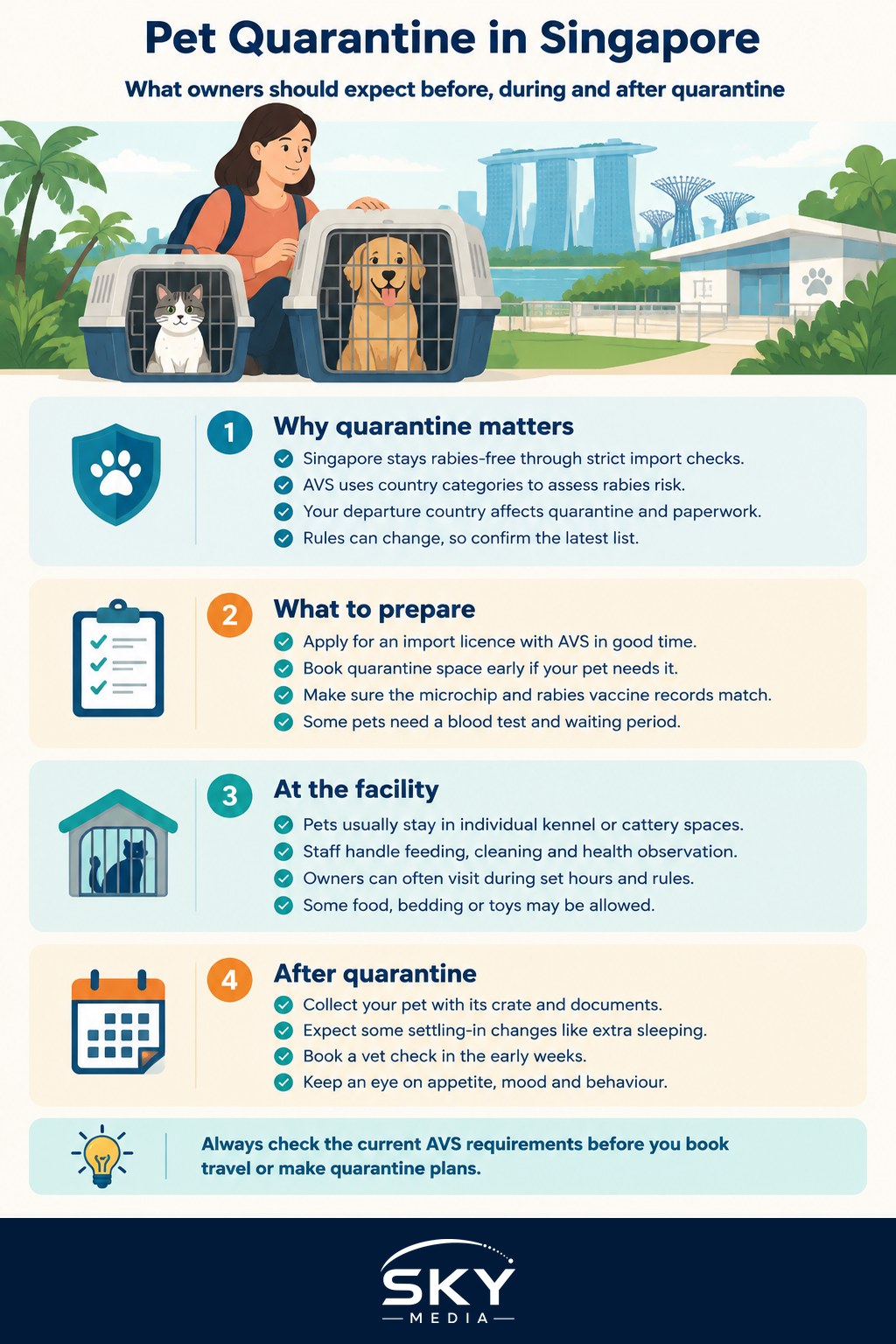
Singapore is free of rabies, and the government works hard to keep it that way. Rabies is a deadly disease that can pass from animals to people. Quarantine and strict import checks are the main tools used to keep it out.
For readers moving from mainland China, the idea may feel familiar: China also has its own rules for animal entry. Singapore’s system differs in its details, and it is generally strict, so it is worth starting early.
AVS groups countries and regions into categories based on their rabies risk. The category of the place your pet is exported from affects:
- Whether quarantine is required at all.
- How long the quarantine period is.
- Which vaccinations, blood tests and waiting periods are needed before travel.
Check AVS’s current country list to see which category applies to your pet’s departure country. Do not rely on old forum posts or a friend’s experience from years ago.
Common Quarantine Scenarios
Every case is decided by AVS rules, but owners usually find themselves in one of these situations.
| Scenario | What generally happens | What to confirm with AVS |
|---|---|---|
| Pet comes from a lower-risk country and meets all requirements | May be exempt from quarantine or have a shorter stay | Whether your departure country qualifies and which documents prove it |
| Pet comes from a higher-risk country with all tests completed | Usually requires a period in quarantine on arrival | The current quarantine length and booking process |
| Paperwork or test results are incomplete or incorrect | Pet may face a longer quarantine, be refused entry or be sent back | What can be corrected and what cannot |
| Pet has lived in more than one country before travel | Category may depend on where it has lived and for how long | Residency rules for each country involved |
Because the consequences of a paperwork mistake can be serious, many owners use a professional pet relocation agent. That is optional, but it can reduce stress.
Documents and Steps to Prepare
The exact list depends on your situation, but these are the items owners commonly need to arrange. Confirm every detail with AVS.
- Licence to import. Owners must apply to AVS for permission to bring in a cat or dog. Apply in good time.
- Quarantine space booking. If quarantine applies, space at the facility needs to be reserved in advance and can fill up during busy relocation seasons.
- Microchip. Your pet will need a microchip that meets the standard AVS accepts. The chip should be implanted before rabies vaccination so records match.
- Rabies vaccination. Vaccination records must show valid dates and the microchip number.
- Rabies antibody blood test. Pets from some countries need a blood test, called a rabies neutralising antibody titre test, done at an approved laboratory, followed by a waiting period.
- Veterinary health certificate. Usually issued by a government or authorised vet in the exporting country shortly before departure.
- Other vaccinations and treatments as required, such as treatment for parasites.
- Dog licence in Singapore. Dogs living in Singapore must be licensed, and there are rules on which breeds are allowed and in what type of housing, including HDB flats. Cats also have their own rules. Check AVS before you bring your pet.
Keep originals and copies of every document in one folder, plus digital scans on your phone. Ask your vet to double-check that names, dates and microchip numbers match exactly across every page.
What Daily Life in Quarantine Is Like
Owners often imagine quarantine as harsh, but facilities are designed to keep animals safe and healthy. Exact routines are set by the facility, so check its current guidelines, but owners commonly report the following:
- Individual kennels or cattery spaces, so animals are not mixed.
- Regular feeding and cleaning by staff, with access to veterinary checks.
- Observation for signs of illness throughout the stay.
- Visiting arrangements for owners, usually during set hours and under rules about hygiene and handling.
- Owner-supplied items such as particular food, bedding or toys may be allowed within the facility’s rules.
Remember that Singapore is hot and humid all year. If your pet comes from a cooler climate, such as northern China, ask how the facility manages heat and ventilation, and talk to your vet about helping your pet adjust.
Preparing Your Pet Emotionally
Quarantine is a change of routine, smells and sounds. You can soften the transition before you travel.
- Crate training early. Help your pet see its travel crate as a safe den, weeks or months before the move.
- Pack familiar items. A worn T-shirt or blanket with your scent can be comforting, if the facility allows it.
- Keep the diet steady. Sudden food changes during stress can upset the stomach. Ask whether you can supply the usual food.
- Ask your vet about anxiety. Do not give any calming medication without veterinary advice.
- Plan your visits. Short, calm, regular visits often help more than long emotional ones.
Looking After Yourself as the Owner
It is very normal to feel guilt or worry while your pet is in quarantine. Some practical ways to cope:
- Use the time productively. Set up your new home, find a nearby vet and buy pet supplies so everything is ready on release day.
- Join owner communities. Other expat and newcomer pet owners, including Chinese-speaking groups, can share tips and reassurance.
- Prepare your home for the climate, with shade, water bowls and a cool resting spot.
Our first-time pet owner guide for Singapore covers daily care basics, and our list of vets pet owners regularly recommend can help you line up a clinic before your pet is released.
Release Day and the First Weeks
When quarantine ends, collect your pet with its crate, documents and a calm plan for the journey home. Expect some changes in behaviour as your pet settles: more sleeping, clinginess or a smaller appetite at first. Book a check-up with your local vet within the early weeks, and contact a vet promptly if anything worries you.
Pet quarantine in Singapore asks for patience and careful paperwork, but thousands of cats and dogs go through it and settle happily into island life. Start early, follow AVS guidance closely and keep your pet’s comfort at the centre of every step.
Frequently Asked Questions
Can I visit my pet while it is in quarantine in Singapore? Visits are generally allowed, but the facility sets the hours and hygiene rules. Short, calm and regular visits tend to settle pets better than long emotional ones. Check the facility’s current visiting guidelines when you book, because routines can change.
What happens if my pet’s vaccination or blood test paperwork has a mistake? A paperwork error can lead to a longer quarantine, refused entry or the pet being sent back. Some errors can be corrected and others cannot, so ask AVS early. Having your vet check that names, dates and microchip numbers match on every page helps avoid this.
Do I need a pet relocation agent to bring my dog or cat to Singapore? No, an agent is optional. Owners can apply to AVS themselves, but many use an agent because the steps are detailed and mistakes are costly. If you go solo, start early and confirm each requirement with AVS.
How do I help my pet cope with Singapore’s heat? Introduce the change gradually and talk to your vet before travel. Ask the quarantine facility how it manages heat and ventilation. Once home, give your pet shade, fresh water and a cool resting spot, and avoid exercise in the midday sun.
Can I bring my dog to Singapore if I live in an HDB flat? It depends on the breed and the housing type, because Singapore has rules on which dogs are allowed in HDB flats. Dogs must also be licensed. Check AVS and HDB requirements for your specific dog before you apply to import it.
Official sources: Animal & Veterinary Service
Further reading: Pet Import Permit Singapore: Step-by-Step Guide · What to Ask Before Using a Pet Relocation Service in Singapore · Bringing Your Pet to Singapore