

Moving a cat or dog across borders is one of the most stressful parts of any international move. Many owners hand the job to a pet relocation service in Singapore, and for good reason: the paperwork, airline rules and timing can be unforgiving. But agents vary a great deal in experience, communication and what their quote actually covers.
This guide is not a step by step walkthrough of the import or export process itself. Instead, it gives you the questions to ask before you sign with an agent, the warning signs to watch for, and the mistakes owners commonly make when they choose on price alone. Rules and fees change, so always check current requirements with the Animal and Veterinary Service (AVS), which is part of the National Parks Board (NParks) and regulates pet imports and exports in Singapore.
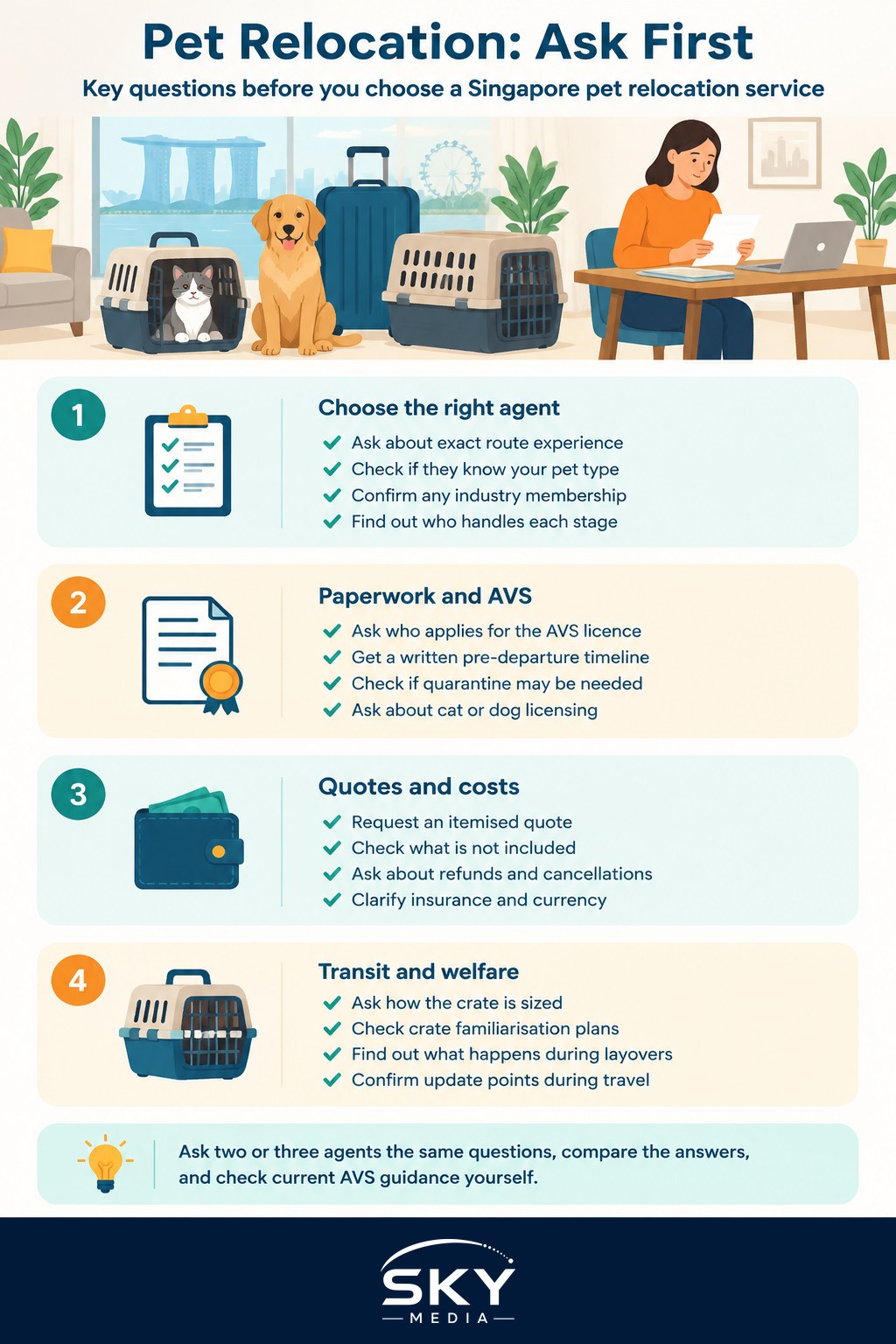
Why the Choice of Agent Matters
A pet relocation agent coordinates the pieces you would otherwise juggle yourself: vaccinations and blood tests on a strict timeline, the AVS import or export licence, airline bookings that accept live animals, crate sizing, and collection on arrival. If one piece slips, the whole schedule can move by weeks, and in some cases your pet may need to stay in quarantine longer or be refused entry.
A good agent reduces that risk by knowing the rules for your specific route. A weak one may be cheaper upfront but leave you chasing documents at the last minute. The questions below help you tell the difference before money changes hands.
Questions About Experience and Accreditation
Start by finding out whether the agent genuinely knows your route and your type of pet.
- How many relocations have you handled on this exact route? Moving a dog from Australia is very different from moving a cat from a country with a higher rabies risk. Ask for recent, comparable examples.
- Are you a member of an industry association? Some agents belong to international pet transport associations that set standards for animal welfare and handling. Membership is not a guarantee, but it shows some accountability. Check the association’s own website to confirm the membership is current.
- Who will physically handle my pet at each stage? Many agents subcontract the origin or destination leg to partner companies. Ask who those partners are and how they communicate with each other.
- Have you moved my breed before? Snub-nosed breeds such as pugs, bulldogs and Persian cats face airline restrictions because of breathing risks. An experienced agent will raise this early rather than after you have paid.
Questions About Paperwork and Government Requirements
Paperwork is where most relocations go wrong, so ask the agent to explain exactly who does what.
- Who applies for the AVS import licence, and when? In Singapore, an import licence for cats and dogs is generally applied for through the AVS online system before the animal travels. Ask the agent to confirm the timing for your case and to show you how they track it.
- What does my pet need before departure? Depending on the country of origin, this can include microchipping, rabies vaccination, a rabies antibody blood test and a waiting period. The agent should give you a written timeline based on current AVS rules, not a vague promise.
- Will my pet need quarantine, and for how long? Quarantine depends on where the pet comes from and whether all conditions were met. Ask the agent to explain the likely outcome and what could extend it.
- Do you handle the cat licence or dog licence after arrival? Dogs in Singapore need a licence, and AVS has been rolling out licensing for cats as well. Ask whether the agent helps with this or whether it is your job.
Do not rely on the agent alone. Read the current requirements on the AVS website yourself so you can spot anything that sounds wrong. If you are coming from mainland China, our guide to relocating your pet from China to Singapore covers the route specific steps, and the broader importing pets guide explains the overall process.
Questions About Cost, Quotes and Refunds
Quotes are often hard to compare because each agent bundles different services. Ask for an itemised breakdown and compare line by line.
| What to check | Good sign | Warning sign |
|---|---|---|
| Itemised quote | Each cost listed: crate, flight, vet visits, permits, handling | One lump sum with no detail |
| Government and airline fees | Clearly marked as pass through costs that may change | “All inclusive” with no mention of what happens if fees rise |
| Quarantine charges | Explained separately, with who pays the facility | Not mentioned at all |
| Deposit and refunds | Written terms for cancellations and delays | Large upfront payment with no refund policy |
| Insurance | States what cover applies during transit | Vague answer or none offered |
A few more questions to ask:
- What is not included? Common extras include vet visits at origin, extra blood tests, crate upgrades, weekend handling and transport to and from quarantine.
- What happens if the flight is cancelled or my pet is refused boarding? Ask who pays for rebooking and boarding in the meantime.
- How do you handle currency? Some international agents quote in foreign currency, which can shift your final cost.
Be wary of a quote that is far cheaper than others for the same route. It may leave out essential steps that you will end up paying for later.
Questions About Your Pet’s Welfare in Transit
The paperwork matters, but so does how your pet is treated during a long journey.
- How will you size the crate? Airlines usually require a crate large enough for the animal to stand, turn and lie down comfortably. Ask the agent to measure your pet or guide you through doing it correctly.
- Can my pet get used to the crate before travel? A good agent will encourage you to introduce the crate weeks ahead so your pet sees it as a safe space.
- What happens during layovers? Ask whether your pet will be checked, given water or moved to a climate controlled area. Direct flights are generally less stressful where available.
- What is your policy on sedation? Many airlines and vets advise against sedating pets for flights because it can affect breathing and balance. Discuss this with your own vet, not just the agent.
- How will you keep me updated? Ask whether you will receive messages at key points such as check-in, departure, arrival and release.
If your cat has a health condition, speak to your regular vet early. Our guide to owning a cat and using vet services explains how to find a vet and what records to keep, which helps both before and after the move.
Common Mistakes Owners Make
Even with an agent, owners can trip themselves up. Watch out for these:
- Starting too late. Some routes need months of preparation because of blood tests and waiting periods. Contact agents as soon as your move is likely, not when your flight is booked.
- Choosing on price alone. The cheapest quote may cut corners on handling or leave out fees.
- Not keeping copies. Keep digital and paper copies of every vaccination record, test result and licence.
- Assuming the agent knows your pet. Tell them about anxiety, medical conditions, diet and past travel. These details affect crate setup and handling.
- Ignoring the arrival plan. Know where your pet will go after landing, whether to quarantine or straight home, and who will collect them.
Choosing With Confidence
A reliable pet relocation service in Singapore should answer all of these questions clearly and in writing. If an agent avoids specifics, pushes you to pay quickly, or cannot explain current AVS requirements, keep looking. Ask two or three agents the same questions and compare their answers side by side.
Finally, remember that the agent works for you. You are entitled to understand every step, every fee and every risk. Check the official AVS guidance yourself, keep good records, and plan early. Your pet will thank you for the extra care when they settle into their new home.
Official sources: Animal & Veterinary Service