

Travelling to Jordan from Singapore puts one of the world’s great archaeological wonders within a single connecting flight. This guide covers Petra, the desert of Wadi Rum and the famous Dead Sea, plus how to plan the practical side of a trip. It is a general overview only, so please confirm current visa rules, flight options and prices yourself before you book.
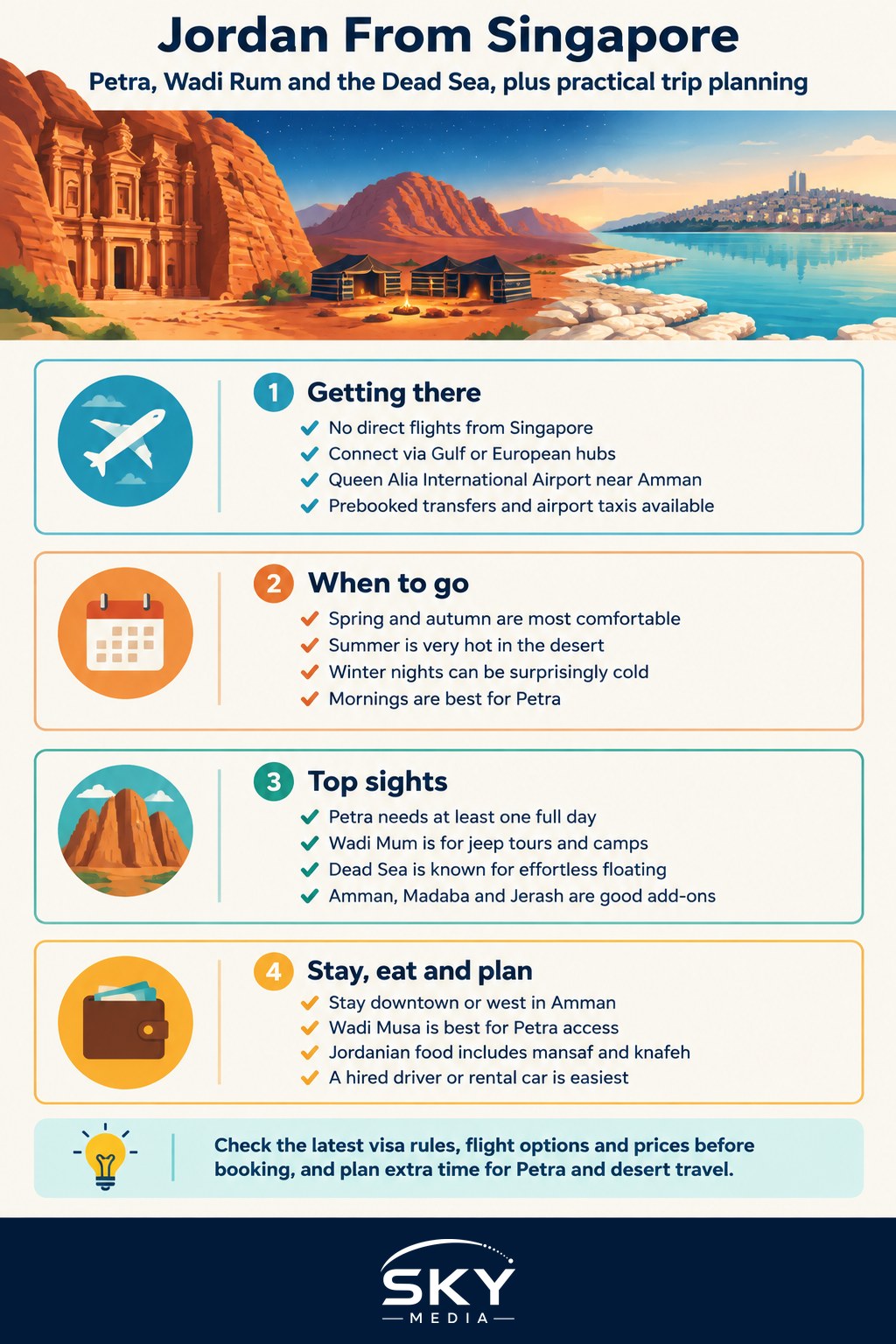
Getting there from Singapore
There are no direct flights, so you will connect through a Gulf or European hub. The most common routings go via the Middle East, with a single change of plane before landing at Queen Alia International Airport near Amman, the capital. Total journey time is usually a long day of travel once you add the layover.
From the airport, prebooked transfers and airport taxis run into Amman and onward to the main sights. Many visitors hire a car with a driver for the classic loop that links Amman, the Dead Sea, Petra and Wadi Rum, since public transport between the highlights is limited and infrequent. Self drive is possible on the main highways if you are comfortable with regional road conditions.
Best time to visit
Spring, from around March to May, and autumn, from September to November, are the most comfortable seasons. Days are warm rather than punishing and evenings are pleasant, which matters when you are climbing steps in Petra or sleeping in a desert camp.
Summer brings intense desert heat, especially in Wadi Rum and around the Dead Sea, which sits far below sea level. Winter is cooler and can be surprisingly cold at night, with occasional rain in the highlands around Amman and Petra. Whenever you go, mornings are the best time to reach Petra ahead of the crowds and the midday sun.
Top things to see and do
Petra is the headline. Enter through the Siq, a narrow canyon that opens dramatically onto the carved Treasury, then keep walking to reach the Monastery, the royal tombs and the high places, which reward the climb with sweeping views. A full day is the minimum and two days lets you slow down.
Wadi Rum is a landscape of red sand, towering rock and wide silence. Guided jeep tours, camel rides and overnight desert camps are the usual way to experience it, and the night skies are exceptional. The Dead Sea offers the novelty of floating effortlessly in mineral rich water, along with mud rich shorelines and spa style resorts.
Beyond these, Amman rewards a day with its citadel, Roman theatre and lively food scene, while the mosaics of Madaba and the Roman ruins at Jerash are easy add ons. Petra by Candlelight, held on selected evenings, lights the walk to the Treasury with hundreds of lanterns and is worth checking if the timing suits your stay.
Food is a genuine highlight in its own right. Look out for mansaf, the national dish of lamb, yoghurt sauce and rice, along with fresh mezze, grilled meats and generous helpings of hummus and flatbread. Sweet tooths should try knafeh, a warm cheese and pastry dessert, and mint tea or cardamom coffee round off most meals. Sampling local food in a family run restaurant is one of the simplest pleasures of the trip.
How Jordan’s headline sights compare
| Destination | Best for | Suggested time | Pace |
|---|---|---|---|
| Petra | Ancient carved city | 1 to 2 days | Active, lots of walking |
| Wadi Rum | Desert scenery and camps | 1 to 2 days | Relaxed with jeep tours |
| Dead Sea | Floating and spa time | Half to full day | Easy and restful |
| Amman | City culture and food | 1 day | Moderate |
| Jerash | Roman ruins | Half day | Easy strolling |
Where to stay
In Amman, the downtown area places you near the historic sights and street food, while the western districts feel more modern and residential with quieter hotels. Choose downtown for atmosphere and the west for calm.
Near Petra, the town of Wadi Musa sits right at the gates, so staying there means an early start into the ruins without a long drive. For Wadi Rum, the experience is the desert camp itself, ranging from simple tented sites to more comfortable bubble domes under the stars. Along the Dead Sea, the resort strip clusters accommodation with private beach access and pools, which is convenient given the remote setting.
Practical tips
For entry and visas, Singapore passport holders should check the latest requirements on the ICA website and with the Jordanian embassy or its official visa portal before departure. Many travellers find the Jordan Pass, bought online in advance, useful because it can bundle the tourist visa with entry to Petra and other sites, subject to conditions such as a minimum length of stay.
The currency is the Jordanian dinar. Cash is handy for smaller vendors, tips and rural areas, while cards work in hotels and larger restaurants. Jordan is not a budget destination by regional standards, and Petra entry in particular is a significant cost, so plan a mid range to higher band and treat guides, transfers and camps as worthwhile extras.
Getting around is easiest with a hired driver or a rental car, as intercity buses are limited and taxis between towns need fares agreed in advance. A common approach is to build a loop over four to six days, spending a night near the Dead Sea, one or two nights at Petra and a night in a Wadi Rum camp, with Amman at either end. Jordan is generally regarded as a welcoming country for visitors, but as with any trip, keep an eye on official travel advisories and take normal precautions. On etiquette, dress modestly away from resorts, cover shoulders and knees when visiting religious or traditional areas, and always ask before photographing people. Carry plenty of water, wear sturdy shoes for Petra and use sun protection year round.
A rewarding journey
Jordan packs ancient wonder, dramatic desert and easy warmth into a compact, friendly country that suits first time and seasoned travellers alike. Plan for the heat, respect local customs and give Petra the time it deserves, and the trip from Singapore repays every hour in the air.
Explore more: Dubai from Singapore · Cairo from Singapore · Istanbul from Singapore
Frequently Asked Questions
What is the Jordan Pass and is it worth buying? It is a pass bought online in advance that can bundle the tourist visa with entry to Petra and other sites, subject to conditions such as a minimum length of stay. Check the current terms on the official Jordan Pass site before buying.
How many days should I spend in Petra? A full day is the minimum, and two days lets you slow down. The Siq, the Treasury, the Monastery and the high places involve a lot of walking, so go early in the morning to beat the crowds and the midday sun.
Can I swim and float in the Dead Sea safely? Yes, the mineral rich water lets you float effortlessly. Avoid getting it in your eyes or on cuts, and do not stay in too long. Resort strips offer private beach access, and anyone with health concerns should ask a doctor first.
Is it better to self drive or hire a driver in Jordan? A car with a driver suits the classic loop, since public transport between highlights is limited and infrequent. Self drive is possible on the main highways if you are comfortable with regional road conditions. Agree fares for taxis in advance.
Is Jordan expensive for visitors from Singapore? It is not a budget destination by regional standards, and Petra entry is a significant cost. Plan a mid range to higher budget, and treat guides, transfers and desert camps as worthwhile extras. Cards work in hotels, while cash helps in rural areas.
Further reading: Oman from Singapore: A Travel Guide to Muscat and Beyond · Luxor and the Nile From Singapore · AlUla and Saudi Arabia From Singapore · Jerusalem and Israel from Singapore