

A piano is one of the largest purchases many families make for a hobby. It takes up a wall, needs regular tuning, and can be hard to move once it is in your flat. That is why piano rental in Singapore appeals to so many households: it lets you test whether anyone will actually keep playing before you spend on an instrument you may struggle to resell.
This guide looks at when renting before buying makes sense, which rental terms to read carefully, and which kinds of households tend to benefit most.
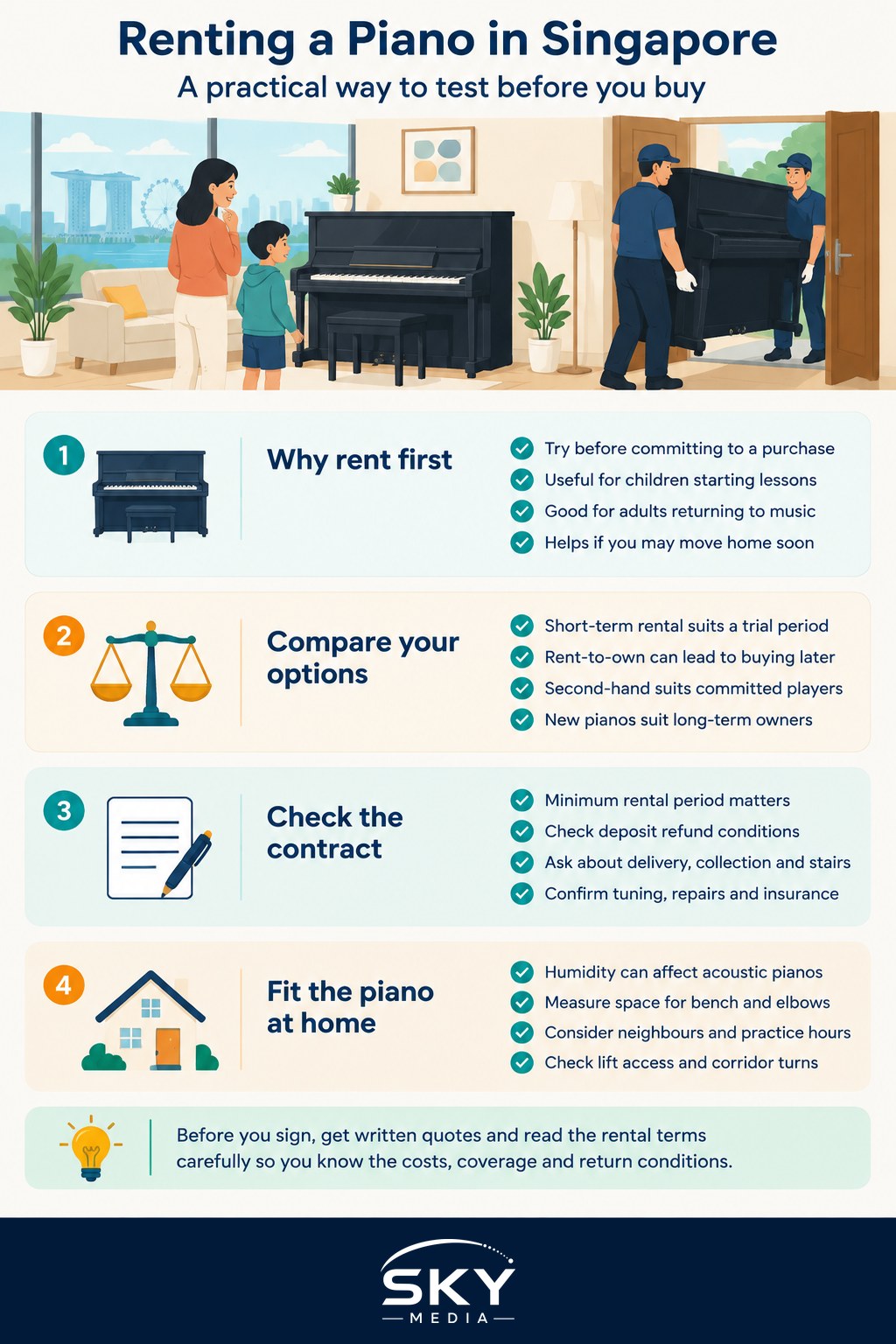
Why Rent Before Buying a Piano
The main reason to rent is uncertainty. Common situations include:
- A child starting lessons. Many children try the piano for a year or two, then move to another instrument or activity. Renting covers that trial period.
- An adult returning to music. If you played as a child and want to restart, renting shows whether you will find time to practise around work.
- Newcomers to Singapore. If you are on a fixed-term posting, owning a heavy instrument creates a moving problem when you leave.
- Families planning to move home. Moving a piano between flats takes specialist movers. Renting until you settle in your next home can avoid paying for that twice.
- Not sure between acoustic and digital. Renting one type for a few months is a practical way to decide. Our guide to digital piano vs acoustic piano explains the differences in touch, sound and upkeep.
Renting is less useful if you already know the player is committed, for example a student working steadily through graded exams who will need the instrument for years. In that case, the total rental paid over a long period may approach or exceed what a good second-hand piano costs. Do the sums with real quotes rather than assumptions.
Renting vs Buying: How the Options Compare
| Option | Upfront outlay | Flexibility | Who it suits |
|---|---|---|---|
| Short-term rental | Usually a deposit plus delivery, then monthly rent | High, can return after the minimum period | Beginners, trial periods, short postings |
| Rent-to-own scheme | Monthly rent, with part credited towards purchase | Medium, can convert to ownership | Families who expect to buy if lessons continue |
| Buying second-hand | Full price upfront, plus moving and tuning | Low, resale needed to exit | Committed players on a budget |
| Buying new | Highest upfront cost | Low, but includes warranty | Long-term players who want a specific model |
Exact deposits, monthly rates and delivery charges vary between companies and models, so get written quotes from more than one provider and compare like for like.
Rental Terms to Check Before You Sign
Rental agreements differ a great deal. Read the contract carefully, and ask for anything unclear to be explained in writing. Key points to check:
- Minimum rental period. Many rentals have a minimum term. Find out what happens if you return the piano early.
- Deposit and refund conditions. Ask how the deposit is calculated, when it is refunded, and what deductions can be made for wear, scratches or damage.
- Delivery and collection charges. Moving a piano in Singapore often involves stairs, narrow corridors or lift access in HDB blocks and condos. Check whether delivery and return collection are both included, and whether extra charges apply for stairs or difficult access.
- Tuning and maintenance. Ask if regular tuning is included, how often, and who pays for repairs from normal use versus accidental damage.
- Condition and model. Ask for the brand, model and approximate age of the piano. Request photos or a viewing before delivery if possible.
- Rent-to-own terms. If offered, ask exactly how much of your rent counts towards purchase, for how long, and whether the purchase price is fixed in the contract.
- Insurance and liability. Check whether you are responsible for loss or damage, and whether your home contents insurance covers a rented instrument. Your insurer can confirm this based on your policy wording.
- Exchange options. Some providers allow you to swap models, for example from a digital to an acoustic piano, which is useful if your needs change.
If you are renting a home yourself, also check your tenancy agreement and speak to your landlord before bringing in a heavy instrument. Our tenant’s guide to renting covers how to raise these questions politely.
Practical Considerations for Singapore Homes
Singapore homes bring a few specific challenges for pianos:
- Humidity. Acoustic pianos are sensitive to Singapore’s humid climate, which can affect tuning stability and internal parts. Ask the provider about dehumidifier rods or other moisture control, and keep the piano away from windows, aircon vents and direct sunlight.
- Space and placement. Measure the wall where the piano will go, including enough room for the bench and the player’s elbows. Upright pianos are the usual choice for HDB flats and condos; grand pianos need far more floor space.
- Noise and neighbours. Sound travels between flats. A digital piano with headphones may suit late-night practice. With an acoustic piano, keep practice to reasonable hours and consider a rug or acoustic panels to soften sound.
- Access for delivery. Check lift dimensions and corridor turns before delivery day, and let your management office or town council know if any building rules apply to moving bulky items.
Who Benefits Most From Renting
Renting tends to work best for:
- Families with young beginners who want lessons to start on a real instrument without committing to a purchase.
- Adult learners testing whether they will keep up regular practice. If that is you, see our guide on learning the piano as an adult.
- Expatriates and newcomers on postings of uncertain length.
- Households in transition, such as those waiting for a BTO flat or renovating, who do not want to move a piano more than once.
Buying is usually better for experienced players who know what they want, students who will play for many years, and families who already have the space and plan to stay put.
Making the Decision at the End of Your Rental
Set a review point before you start, for example after six months or after the first exam. At that point, ask yourself:
- Is the player practising regularly without constant reminders?
- Has the teacher recommended a better instrument for their level?
- Has your home situation changed?
- Do the rent-to-own credits make buying the same piano attractive?
If the answer points towards continuing, compare the cost of converting your rental with buying a second-hand or new instrument elsewhere. If interest has faded, return the piano on time and in good condition so your deposit refund goes smoothly. Either way, piano rental in Singapore gives you a clear, lower-risk way to find out before you commit.
Frequently Asked Questions
How much does it cost to move a rented piano? Costs depend on the provider, the piano and access, so there is no standard figure here. Ask for written quotes, and check whether delivery and return collection are both included and whether stairs or difficult access add charges.
Should I rent a digital or an acoustic piano first? Renting one type for a few months is a practical way to find out. A digital piano with headphones suits late-night practice and small flats, while an acoustic piano offers a fuller touch and sound but needs tuning and humidity care.
Can I move a rented piano to another room or flat myself? Do not move it yourself. Pianos are heavy and easily damaged, so shifting one usually needs specialist movers. Check your rental contract, as moving without the provider’s agreement may affect your deposit or liability.
Does my home insurance cover a rented piano? It depends on your policy wording, so ask your insurer directly. Also check your rental contract to see whether you are responsible for loss or damage. Do this before the piano arrives rather than after an accident.
What if my child stops practising halfway through the rental? Check the minimum rental period and early-return terms in the contract. Speak to the teacher about whether a break or a different instrument suits your child. If interest has faded, return the piano on time and in good condition so the deposit refund goes smoothly.
Further reading: How to Sell Your Piano in Singapore