
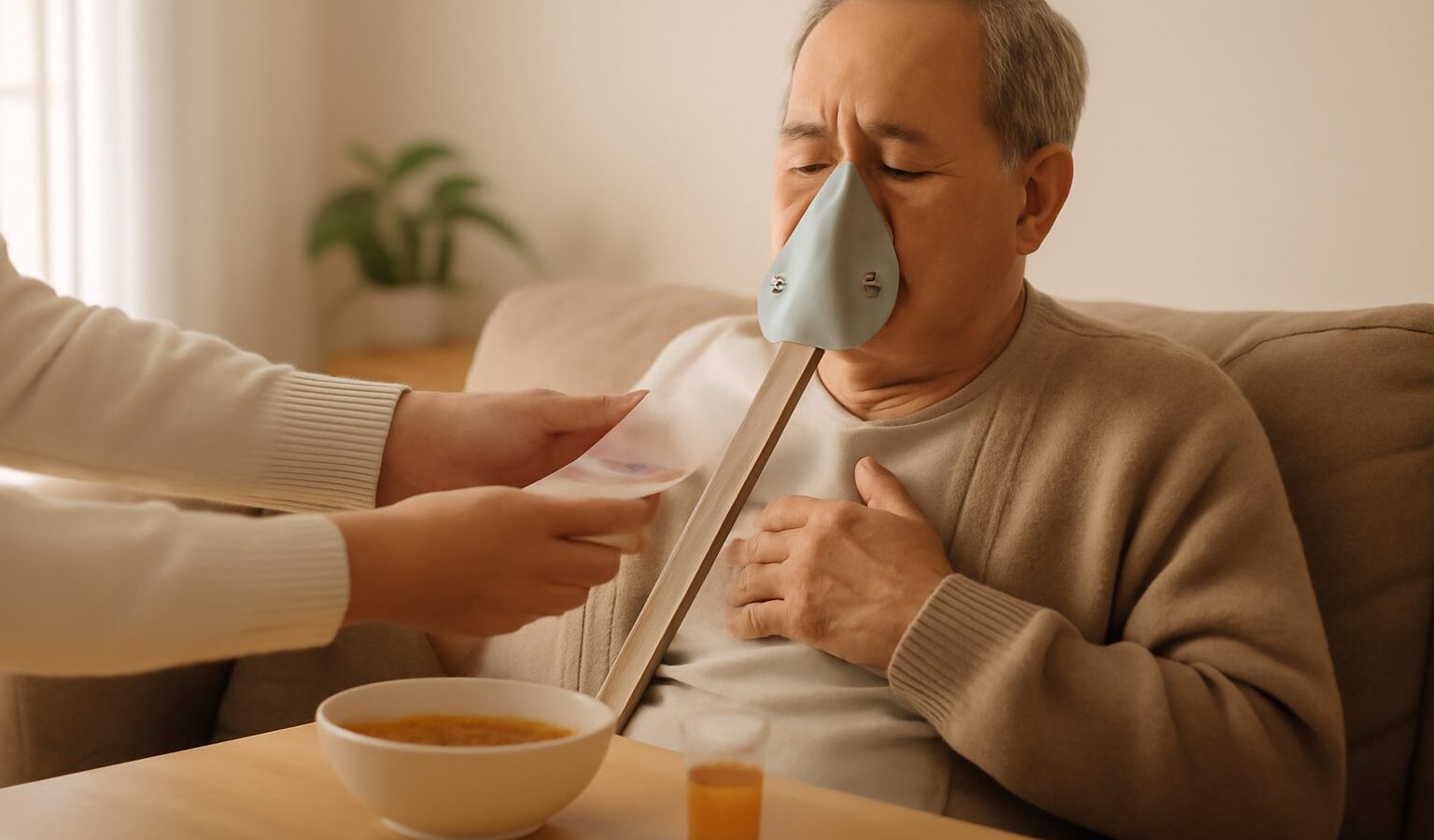
Pneumonia is an infection that inflames the air sacs in the lungs, and it is one of the illnesses that hits older people hardest. The tricky part about pneumonia in elderly parents and grandparents is that it often does not look like the textbook version. Instead of a high fever and a hacking cough, an 80-year-old may simply seem more confused, eat less or have a fall. This guide explains the subtle signs families in Singapore should watch for, when to treat it as urgent, and the practical steps that lower the risk.
This is general information, not medical advice. If you are worried about someone’s breathing or condition, speak to a doctor, polyclinic or, in an emergency, call 995.
Why Pneumonia in Elderly People Is Easy to Miss
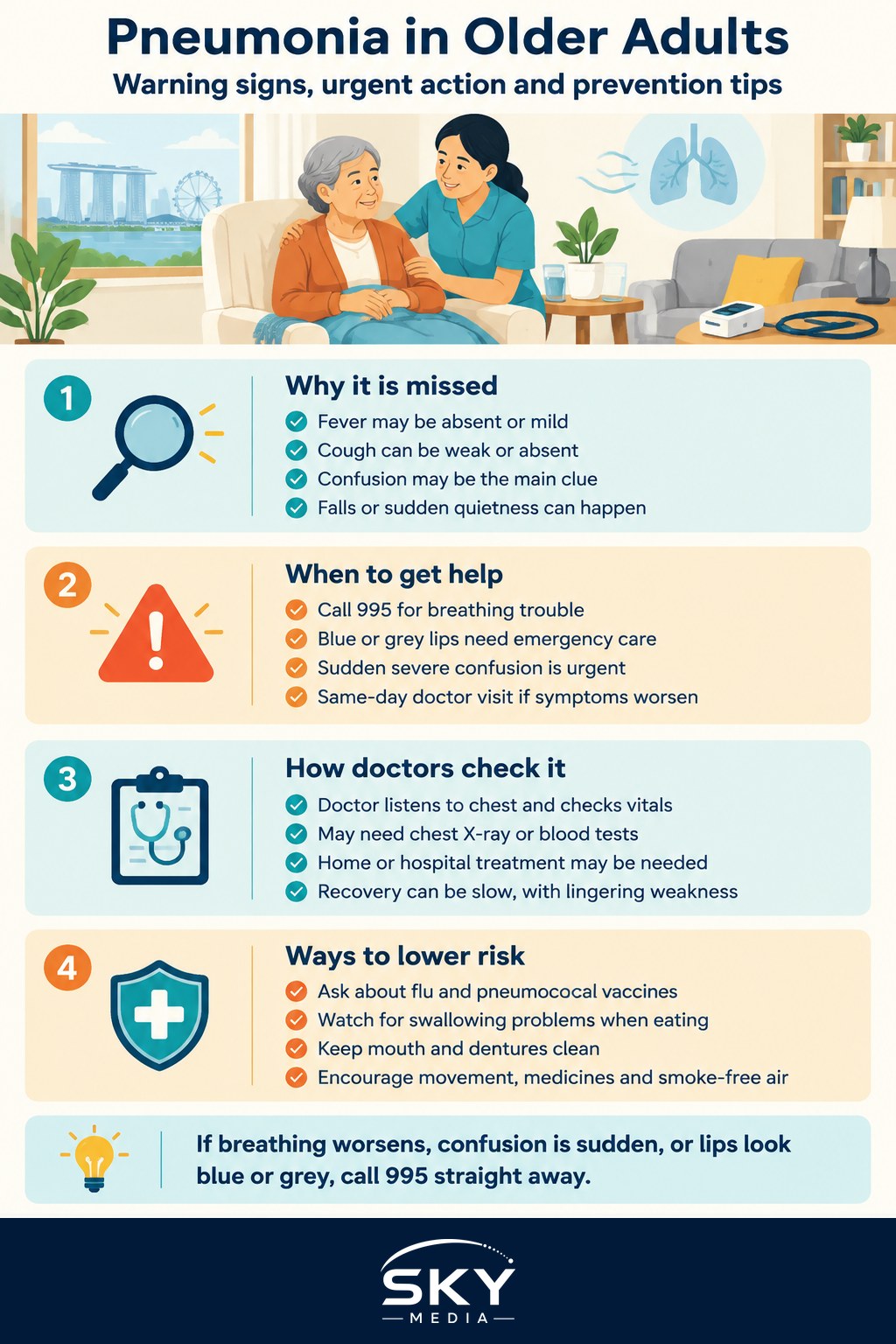
As we age, the immune system responds less strongly to infection. That means the classic signals your body uses to say “something is wrong”, such as a high temperature and shivering, can be muted or missing altogether. Older adults may also already live with conditions such as heart disease, diabetes, chronic lung disease or dementia, and the symptoms of pneumonia can blur into those.
Several other factors raise the risk in later life:
- Swallowing difficulties. After a stroke, or with conditions such as Parkinson’s disease, food or saliva can slip into the airway. This can lead to what doctors call aspiration pneumonia.
- Reduced mobility. Someone who is bedbound or spends most of the day sitting does not breathe as deeply, and secretions can settle in the lungs.
- Recent flu or respiratory virus. Pneumonia often follows a cold or influenza a week or so later.
- Recent hospital stay. Infections picked up during or soon after a hospital admission need prompt attention.
- Smoking history and weak cough. Both make it harder for the lungs to clear germs.
Caregivers are often the first to notice that something is off, so knowing the quieter signs matters.
Typical vs Atypical Symptoms in Seniors
The table below compares what many people expect pneumonia to look like with how it can show up in an older person. Not everyone will have every sign, and none of these on its own is a diagnosis.
| What people expect | How it may show up in an older adult |
|---|---|
| High fever and chills | Normal or even low temperature, feeling cold, or only a slight rise |
| Strong, productive cough | Mild cough, no cough at all, or a weak cough they cannot clear |
| Obvious chest pain | Vague discomfort, tummy pain, or no pain mentioned |
| Feeling unwell and saying so | New confusion, drowsiness, agitation or unusual quietness |
| Clearly breathless | Faster breathing at rest, needing to pause mid-sentence, tiring easily |
| Staying in bed with illness | A sudden fall, loss of balance, or being unable to do usual routines |
Other atypical signs worth noting include a sudden loss of appetite, not drinking enough, new incontinence, and worsening of an existing condition, such as a diabetic whose sugar readings swing unexpectedly. For someone with dementia, a sharp change from their usual baseline, over hours or a day or two, is a reason to get them checked.
Keep a simple note of what you observe, when it started and what has changed. Doctors find this timeline useful when the patient cannot describe their own symptoms.
When to Seek Urgent Care
Pneumonia can worsen quickly in older adults, so err on the side of getting help early. Treat the following as an emergency and call 995 for an ambulance:
- Struggling to breathe, gasping, or unable to speak in full sentences
- Lips, face or fingertips looking bluish or grey
- Very drowsy, hard to wake, or not responding normally
- Sudden severe confusion
- Chest pain that is severe or crushing
- Collapse or fainting
Some of these signs, such as sudden confusion, can also point to a stroke or other serious problem. Our guide to stroke warning signs in Singapore explains what to look for, but in any case, do not wait to work out the cause yourself. Let emergency services assess.
For signs that are worrying but not life-threatening, such as a cough with fever that is not improving, rising breathlessness on exertion, or poor eating for a day or two, arrange to see a doctor the same day. Options include your family GP, a polyclinic, or an after-hours clinic. For non-emergency ambulance transport, Singapore has a separate number, 1777, but do not use it if the person is in distress.
If your parent is already on antibiotics or other treatment and is getting worse rather than better after the period the doctor mentioned, go back. Do not simply wait for the course to finish.
How Pneumonia Is Usually Diagnosed and Treated
A doctor will typically listen to the chest, check temperature, pulse, breathing rate and oxygen levels, and may order a chest X-ray or blood tests. Depending on the cause and how unwell the person is, treatment may happen at home or in hospital. Older adults with low oxygen levels, dehydration or confusion are more likely to be admitted.
Recovery in later life can be slow. Fatigue and weakness can linger for weeks, and some seniors lose muscle strength or confidence after a hospital stay. Ask the care team about:
- Follow-up appointments and when a repeat check or X-ray is needed
- Breathing exercises or physiotherapy to help the lungs recover
- Whether a swallowing assessment is advisable, especially after a stroke
- What warning signs should prompt a return to hospital
If your parent sees many specialists and has several long-term conditions, a coordinated review can help. Our guide on how to find a geriatrician in Singapore explains how these doctors look after the whole picture.
Practical Ways to Lower the Risk
You cannot remove every risk, but several everyday measures make a real difference.
Talk to a doctor about vaccinations. Singapore’s National Adult Immunisation Schedule includes pneumococcal vaccination and yearly influenza vaccination for older adults, and for certain younger adults with specific medical conditions. Which vaccines are suitable, and when, depends on the person’s age and health, so ask a GP or polyclinic. HealthHub and the Ministry of Health (MOH) websites list the current recommendations and subsidies, which can change.
Support safe swallowing. If your parent coughs or chokes while eating, has a wet or gurgly voice after drinking, or takes a long time to finish meals, mention it to their doctor. A speech therapist can assess swallowing and suggest food textures, posture and pacing. Sitting upright during meals and for a while afterwards helps.
Keep the mouth clean. Good oral hygiene, including cleaning dentures daily, reduces the germs that can be breathed into the lungs. For a frail or bedbound relative, help with brushing is part of good care.
Encourage movement. Even short walks around the flat, or sitting out of bed for meals, help the lungs expand. Gentle activity also protects strength for recovery if illness does strike.
Manage long-term conditions. Keeping diabetes, heart failure and lung conditions under control lowers the chance of complications. Make sure regular medicines are taken as prescribed and appointments are kept.
Avoid smoke. Help a smoker to quit, and keep the home smoke-free.
Reduce exposure during outbreaks. Hand washing, staying away from people with flu-like symptoms where possible, and wearing a mask in crowded indoor spaces when unwell all help protect vulnerable relatives.
Supporting a Parent Through Recovery at Home
Once your parent is home, the first few weeks matter. Make sure they drink enough, eat small frequent meals if appetite is poor, and rest without staying in bed all day. Watch for a return of fever, increasing breathlessness or new confusion, and seek help early if these appear.
Practical aids can make recovery easier for a frail parent who is temporarily less mobile, such as a commode, grab bars or continence products. Our guide to choosing an adult diaper for elderly parents covers the options if continence becomes an issue during illness.
Finally, look after yourself as a caregiver. Pneumonia in elderly relatives can be frightening, so share the watching and appointments among family members.
Official sources: HealthHub
Further reading: Excessive Daytime Sleepiness in Seniors: When Sleeping Too Much Is a Warning Sign · A Cough That Won’t Go Away in Older Adults: What It Could Mean · Cellulitis in Older Adults: Red, Swollen Legs and When to Go to A&E · COPD and Breathing Problems in Seniors: A Singapore Guide