
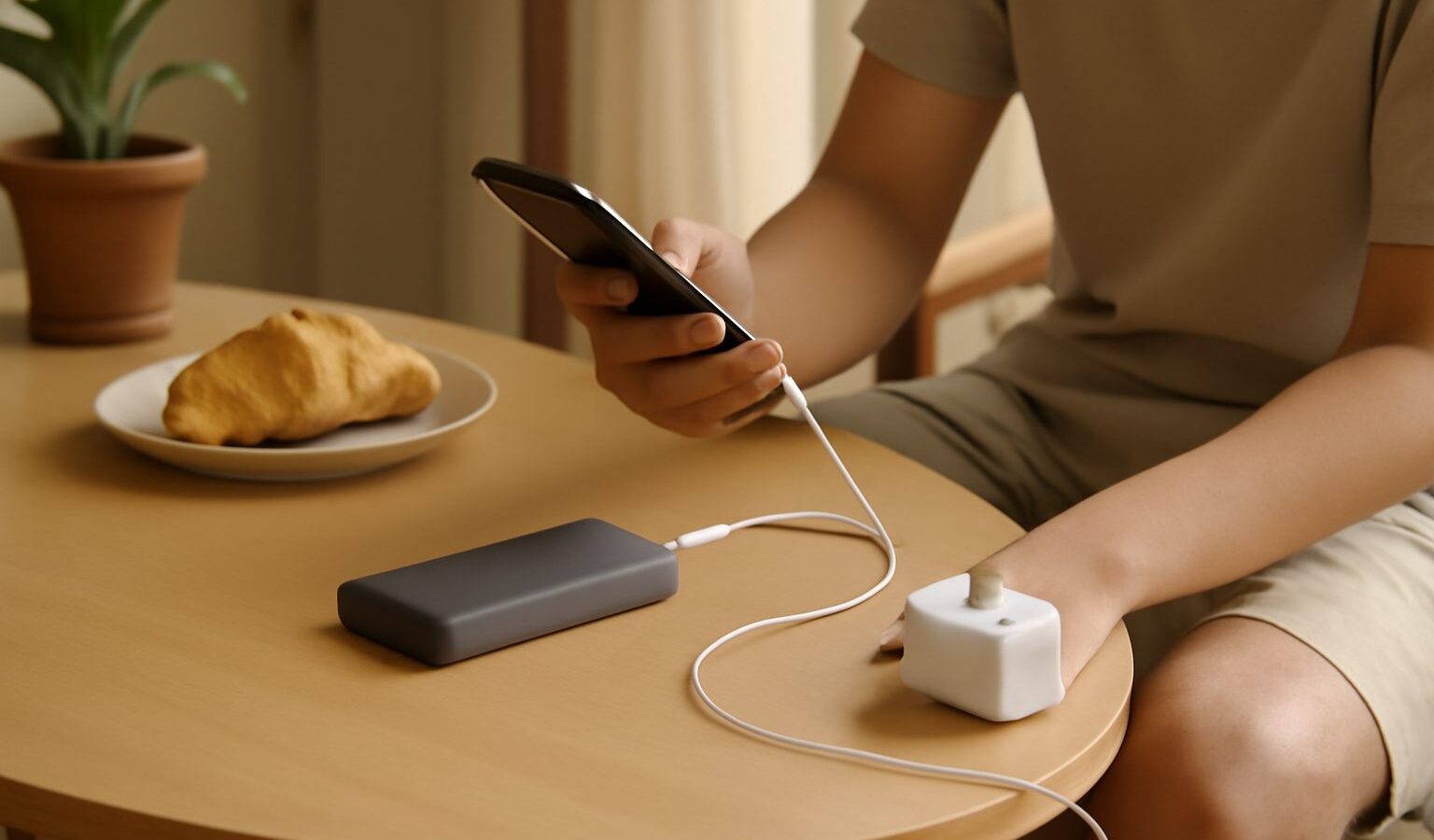
A dead battery at the worst moment is a familiar frustration, whether you are commuting on the MRT, out for the day, or travelling. The right power bank in Singapore, paired with a decent charger and cable, quietly solves this and keeps your phone, tablet and laptop topped up wherever you are. The catch is that charging gear is easy to get wrong: capacity numbers can mislead, cheap cables can be slow or unsafe, and not every power bank is allowed on a plane. This guide walks through how to choose a power bank, understand fast charging and GaN chargers, follow airline rules, and stay safe with certified gear.
Choosing a Power Bank That Fits Your Life
Start with capacity, usually measured in milliamp-hours (mAh). A larger number means more stored energy and more recharges, but also a heavier, bulkier unit. The right size depends on how you use it:
- A slim, pocketable pack is enough for a single top-up of a phone during a long day out, and barely adds weight to your bag.
- A mid-sized pack can recharge a phone a couple of times or give a tablet a useful boost, which suits day trips and travel.
- A large, high-capacity pack can charge a laptop or keep several devices going, at the cost of size and weight.
Beyond capacity, look at the output power (measured in watts) and the number and type of ports, since these decide how fast and how many devices it can charge at once. It is also worth checking the pack’s own recharge speed, because a large battery that takes all night to refill can be inconvenient. Buy from reputable brands and trusted sellers, whether at Courts, Harvey Norman, Challenger, Best Denki, an official brand store, or an established seller on Shopee or Lazada, rather than the cheapest unbranded option.
Understanding Fast Charging, USB-C and Power Delivery
Fast charging can make a real difference, but it only works when the power bank, the cable and your device all support the same standard. The most widely useful standard today is USB-C Power Delivery (USB-C PD), which many modern phones, tablets and laptops use. Choosing gear built around USB-C PD gives you the best chance of fast, compatible charging across devices, and lets you carry fewer cables.
A few practical points help here. Charging speed is limited by the slowest link in the chain, so a fast phone paired with a weak charger or a basic cable will still charge slowly. Higher-wattage output matters more for laptops than for phones, so match the gear to your heaviest device. And while different brands market their own fast-charging names, USB-C PD is the common language that tends to work across the widest range of products, so favour it when you can.
GaN Chargers and Smarter Wall Adapters
For charging at home, in the office or in a hotel, a good wall charger matters as much as the power bank. This is where GaN chargers come in. GaN, short for gallium nitride, is a newer material that lets a charger deliver high power from a much smaller, cooler body than older designs. In plain terms, a GaN charger can be noticeably more compact for the same output, which is ideal for travel.
Many GaN chargers also offer several ports, so one adapter can charge a laptop, a phone and earbuds at once, sharing power intelligently between them. If you are tired of carrying a separate brick for every device, a single multi-port GaN charger with USB-C PD can replace several older adapters. As always, buy a reputable model and check that it carries proper safety certification for use in Singapore.
Comparing Charging Gear to the Right Use
Different gear suits different situations. This table matches common charging tools to where they shine, so you can build a kit that fits how you actually move around.
| Charging gear | Best use | Key strength | Watch out for |
|---|---|---|---|
| Slim power bank | Daily commute, one phone top-up | Light and pocketable | Limited total capacity |
| High-capacity power bank | Travel, multiple devices, laptops | Many recharges from one pack | Bulk, weight, airline limits |
| Multi-port GaN charger | Home, office, hotel charging | Replaces several adapters | Needs a wall socket, not portable power |
| Wireless charging pad | Tidy desk or bedside charging | Cable-free convenience | Slower, needs good alignment |
| Shared rental power bank | Emergencies when caught short | No need to carry your own | Rental fees, availability, bring your cable |
Most people end up combining two or three of these rather than relying on a single item.
Airline Rules, Cables and Wireless Charging
If you fly, power bank rules matter. Airlines and aviation authorities restrict lithium batteries in checked luggage, so power banks generally must go in your carry-on, not the hold. There are also limits on capacity, expressed in watt-hours (Wh), above which a pack may be restricted or banned, and very large packs may not be allowed at all. Because these rules can change and vary by airline, check your airline’s current policy and the relevant aviation guidance before you pack, and look at the Wh rating printed on the pack.
Cables deserve more attention than they usually get. A poor-quality cable can charge slowly, fail to support fast charging, or wear out quickly, so choose well-made cables rated for the power you need, ideally USB-C. Wireless charging is a convenient option for tidy desk or bedside use, letting you simply set a compatible phone on a pad, though it is generally slower than a cable and needs the phone positioned correctly to work well.
Staying Safe With Certified Batteries
Cheap, uncertified batteries and chargers are a genuine safety hazard, since a poorly made lithium battery can overheat, swell or in rare cases catch fire. This is not a reason for alarm, but it is a strong reason to buy quality gear. In Singapore, certain power adapters and related products fall under safety regulations, and you should look for the Safety Mark, which indicates a product has met required safety standards. Buying from reputable brands and authorised sellers greatly reduces the risk of ending up with a dangerous fake.
A few habits keep you safe day to day: avoid leaving batteries charging unattended for long periods on soft surfaces, stop using any power bank that becomes very hot, swollen or damaged, and dispose of old or faulty batteries responsibly rather than in general rubbish. Shared power-bank rental services scattered around malls and eateries are handy when you are caught short, but bring your own cable and treat them as a backup rather than a daily habit. Because models, prices and rules change over time, treat this as general guidance and confirm current specifications, safety marks and airline policies before you buy or travel.
Explore more
New device in hand and ready to power it up? See our guide to setting up a new phone in Singapore. And when you are shopping for chargers, cables and other gear, our guide to buying electronics in Singapore covers where to buy and how to get a fair deal.