
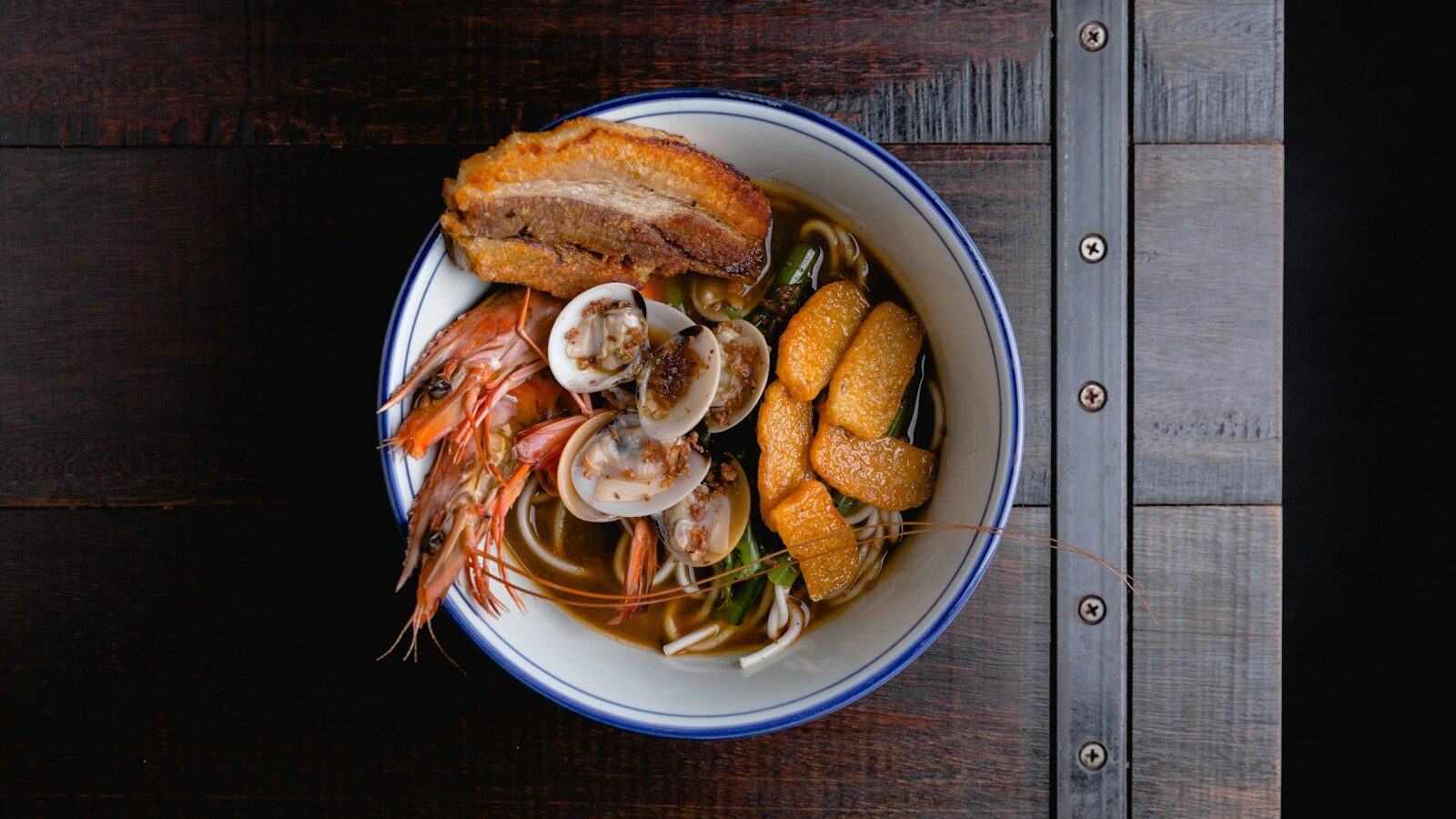
For a bowl that delivers pure, deep savouriness, few hawker dishes rival prawn noodles, known locally as hae mee. Built on a rich broth simmered from prawn shells and pork, it is intensely flavourful comfort food that inspires real loyalty among those in the know. Whether served as a fragrant soup or a robust dry version, a good bowl of prawn noodles is a masterclass in extracting maximum flavour from humble ingredients. This guide explains what prawn noodles are, the styles you will meet, how to order, and how to track down a memorable bowl.
What are prawn noodles
Prawn noodles, or hae mee, centre on a broth made by simmering prawn shells and heads, often together with pork bones or pork ribs, until deeply savoury and full-bodied. This umami-rich stock is the soul of the dish, and it is what separates a great bowl from an ordinary one. The broth is served with noodles, prawns, and usually slices of pork or pork ribs, along with garnishes such as fried shallots and vegetables. The result is a bowl that tastes far richer than its simple appearance suggests.
The dish is a labour of love, since a good broth takes time and care to develop the concentrated prawn-and-pork flavour it is prized for.
Soup versus dry
As with several hawker noodle dishes, you can usually choose between two styles:
- Soup. The classic presentation, with noodles and toppings served in the rich prawn broth. This lets the star of the dish, the broth, take centre stage, and it is deeply comforting.
- Dry. The noodles are tossed in a savoury, often slightly spicy sauce, with the broth served on the side. This gives a more concentrated, punchy flavour on the noodles while still letting you enjoy the soup separately.
Both have devoted fans. The soup version is all about that glorious broth, while the dry version offers a bolder, chilli-tinged noodle experience.
The broth is everything
Ask any prawn noodle enthusiast and they will tell you: it all comes down to the broth. A well-made stock is savoury, rich and full of prawn-and-pork depth, sometimes with a subtle sweetness, achieved through long simmering and skilled seasoning. The colour and intensity can vary from stall to stall, and regulars develop strong preferences for a particular balance. The best broths taste concentrated and satisfying without being overly heavy, coating each mouthful with flavour.
The test of a great bowl is simple: taste the broth on its own first. If it is deep, savoury and satisfying by itself, you have found a good stall.
Choosing your noodles and toppings
Prawn noodles are customisable, and part of ordering well is knowing your options:
- Noodle type. You can usually choose among options such as yellow noodles, thick or thin rice vermicelli (bee hoon), or a mix, and often the popular combination of yellow noodles with bee hoon.
- Toppings. Prawns are standard, and many stalls offer additions or upgrades such as pork ribs, sliced pork, or a larger portion.
- Premium versions. Some stalls offer more luxurious bowls with big prawns or extra ribs, at a higher price.
- Chilli. A dollop of chilli adds heat and cuts through the richness, and many consider it essential.
Quick ordering tips
- Choose soup or dry to start.
- Pick your noodle type, or ask for the popular yellow noodle and bee hoon mix.
- Consider adding pork ribs for a heartier bowl.
- Ask for chilli if you like heat.
- Taste the broth first to appreciate the stall’s craft.
Variations to look out for
You may come across richer or spicier regional interpretations, and some stalls are known for particularly dark, intense broths while others favour a lighter, cleaner style. There are also versions that lean towards a spicier profile. Exploring these differences is part of the fun, and it explains why enthusiasts will travel across the island for a bowl that hits their preferred balance of richness, sweetness and spice.
A dish that rewards patience
Prawn noodles is a reminder that some of the best hawker food comes from patience and craft rather than fancy ingredients. The signature broth cannot be rushed; it needs hours of simmering prawn shells and pork to reach its deep, savoury character, which is why the stalls that take this seriously stand out so clearly. Understanding this makes each bowl more rewarding, since you are tasting the result of real effort. It also explains why enthusiasts are willing to queue and travel for a favourite stall, and why a truly great bowl feels special rather than ordinary. When you find a version whose broth you love, it is worth savouring slowly, appreciating the layers of flavour that time and skill have built into what looks, at first glance, like a humble bowl of noodles.
Where to find good prawn noodles
Prawn noodles are found in hawker centres and coffee shops throughout the island, with many long-standing stalls that have built reputations over decades for their broth. A steady queue is, as ever, a promising sign, and older hawker centres often harbour excellent versions. Some stalls are destinations in their own right, drawing fans from across the island. Prices are reasonable, with premium bowls costing a little more, though treat any prices as a rough guide since they change over time.
Why it is worth seeking out
Prawn noodles reward the effort of finding a good stall with one of the most deeply satisfying bowls in the hawker repertoire. The concentrated, savoury broth is genuine comfort food, and the customisability means you can tailor it to your taste, from the noodle type to the toppings to the heat. For newcomers, it is a wonderful introduction to how much flavour local cooking can coax from simple ingredients.
Prawn noodles, or hae mee, are a hawker treasure built on a broth that turns prawn shells and pork into something deeply savoury and comforting. Choose your style, tailor your noodles and toppings, seek out the busy stalls with the best stock, and enjoy one of Singapore’s most rewarding bowls. As with all hawker food, let your own palate be the judge and treat any details as a rough guide.
Explore more: Hokkien mee guide, Singapore laksa guide, Must-try hawker food in Singapore