
Few dishes say “Singapore” quite like a steaming bowl of laksa. If you are new to laksa in Singapore, picture rice noodles in a rich, coconut-scented gravy, warm with spice and finished with cockles, fried tofu puffs and a bright confetti of laksa leaf. It is comforting, a little indulgent, and deeply local. This laksa singapore guide walks you through what the dish is, the main styles, the ingredients that matter, and how to tell a good bowl from a forgettable one.
What Is Laksa?
At its heart, laksa is a spiced noodle soup found across Singapore, Malaysia and beyond. The word covers a whole family of dishes rather than a single recipe, which is why two bowls labelled “laksa” can taste worlds apart. What they share is a bold, layered broth built on aromatics, chilli and, in most Singapore versions, coconut milk.
The style most people mean here is the coconut-based curry laksa, sometimes called Nyonya laksa after the Peranakan (Straits Chinese) cooks who shaped it. It is creamy, savoury and gently sweet, with a hum of heat rather than a punch. This is the bowl you will meet most often at a hawker centre or coffee shop.
The Main Styles
Laksa is not one dish, so it helps to know what you are ordering.
Curry Laksa (Nyonya / Katong)
This is the coconut-rich version most associated with Singapore. The gravy is thick, orange-gold and fragrant, built from a spice paste (rempah) of dried chilli, shallots, garlic, galangal, lemongrass and belacan (shrimp paste), loosened with coconut milk and often a stock made from dried prawns or fish.
Katong laksa is the best-known local expression, named after the Katong neighbourhood in the east, long tied to Peranakan culture. Its signature quirk: the thick rice noodles are cut short so you never need chopsticks. You eat the whole bowl with just a spoon, scooping noodles, gravy and toppings in one go.
Assam Laksa
The other major branch is assam laksa, and it is a completely different animal. “Assam” refers to tamarind, and this style swaps coconut for a tart, tangy fish broth, usually built on flaked mackerel. It is sour, savoury and refreshing rather than creamy, often topped with sliced cucumber, pineapple, onion, mint and a spoonful of prawn paste. It is more strongly associated with Penang, but you will find it in Singapore too. If you dislike coconut or want something lighter, this is your bowl.
Quick rule of thumb: if it is creamy and orange, it is curry laksa. If it is tangy, fishy and reddish-brown, it is assam laksa.
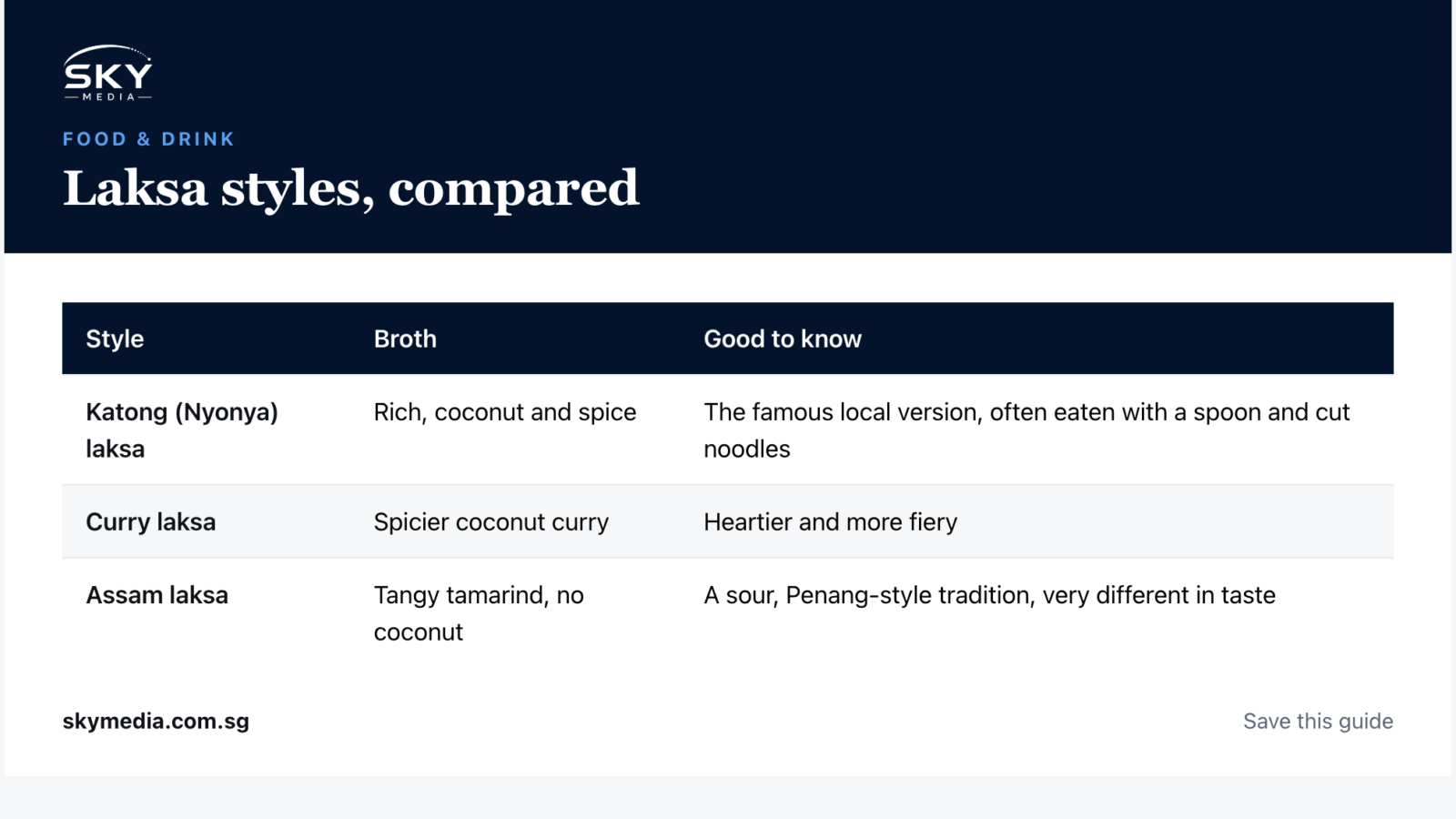
Here is how the main styles compare:
| Style | Broth | Good to know |
|---|---|---|
| Katong (Nyonya) laksa | Rich, coconut and spice | The famous local version, often eaten with a spoon and cut noodles |
| Curry laksa | Spicier coconut curry | Heartier and more fiery |
| Assam laksa | Tangy tamarind, no coconut | A sour, Penang-style tradition, very different in taste |
The Ingredients That Matter
A good bowl is a balance of gravy, noodles and toppings. Here is what goes in a classic curry laksa:
- Laksa gravy: the soul of the dish. A well-made gravy is thick enough to coat the spoon, rich with coconut and dried prawn, and spiced without being harsh. Look for depth rather than just heat.
- Noodles: usually thick round rice vermicelli (thick bee hoon). In Katong laksa these are cut short so the whole bowl can be eaten with a spoon.
- Cockles (hum): small blood cockles, briefly blanched so they stay plump and slightly briny. A classic topping, though you can ask for them to be left out.
- Tau pok: puffed fried tofu that soaks up the gravy like a sponge. Biting into one releases a little burst of broth.
- Fish cake: thin slices of steamed or fried fish cake add a mild, springy bite.
- Laksa leaf (daun kesum): finely shredded and scattered on top. Also called Vietnamese mint or laksa leaf, it gives the dish its distinctive herbal, peppery lift. The name of the dish and the herb are linked for good reason.
Other common additions include prawns, bean sprouts, a boiled egg or slices of it, and a dollop of sambal chilli on the side so you can dial up the heat yourself.
How Laksa Is Eaten
Half the pleasure of laksa is in the ritual. With Katong-style curry laksa, remember the noodles are cut short: you are meant to eat it with a spoon alone, mixing gravy and toppings in every mouthful. Stir the sambal in gradually so you can taste as you go, rather than blitzing the heat all at once.
A squeeze of lime, if it is offered, brightens the richness. Cockles are traditional but optional, so say so when you order if you would rather skip them. And because the gravy is the star, do not rush it: let each spoonful carry a bit of noodle, a piece of tau pok and a little of that fragrant broth.
Variations to Look Out For
Beyond the two main styles, laksa keeps evolving:
- Laksa lemak: essentially another name for the rich, coconut-forward curry laksa; “lemak” describes that creamy quality.
- Seafood or prawn laksa: a heavier hand with prawns, prawn stock or extra seafood for a briny bowl.
- Vegetarian laksa: the coconut gravy rebuilt without shrimp paste or cockles, leaning on tofu, vegetables and mushrooms.
- Fusion takes: you may spot laksa pasta, laksa risotto or even laksa-flavoured snacks. Fun, but a proper bowl is still the benchmark.
How to Spot a Good Bowl
You do not need to be an expert to judge laksa. Use this quick checklist:
- The gravy has body. It should coat the back of a spoon, not run like thin soup. Watery gravy is the first giveaway of a weak bowl.
- Balanced, not just spicy. Good laksa layers coconut sweetness, savoury dried-prawn depth and gentle heat. If all you taste is chilli, something is off.
- Fresh toppings. Plump cockles, tau pok that still holds a little bounce, and laksa leaf that smells herbal and green rather than tired.
- The gravy is not greasy. Rich is good; an oil slick on top is not. A clean richness signals careful cooking.
- It is served hot. Laksa dulls quickly as it cools, so a piping-hot bowl matters.
Where should you go? Rather than chasing one famous stall, explore the areas known for it. The eastern neighbourhood of Katong is the spiritual home of Singapore-style curry laksa, and many hawker centres and coffee shops across the island keep a beloved bowl on the menu. Trust a stall with a steady queue of regulars, and do not be shy about asking how spicy it runs.
A Bowl Worth Seeking Out
Laksa rewards a little curiosity. Once you know the difference between a creamy Katong curry laksa and a tangy assam laksa, and what a proper gravy should feel like, you can walk up to any stall and order with confidence. Start with a classic curry laksa, eat it the local way with a spoon, and let that fragrant, coconut-rich broth do the rest.
Explore more: Must-try hawker food in Singapore · Hawker centre etiquette · The best chicken rice in Singapore