
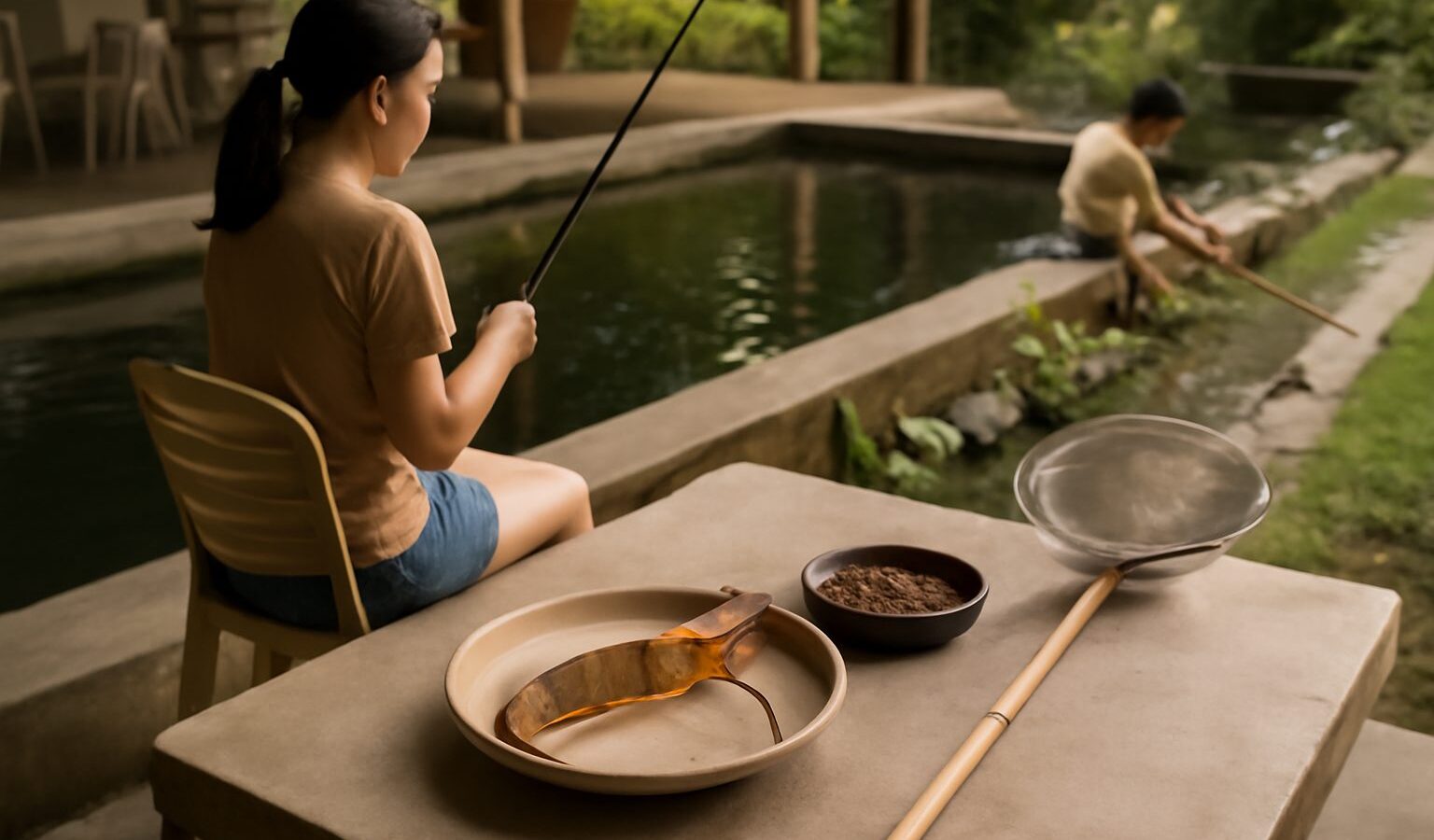
There is something wonderfully unhurried about prawning in Singapore, a pastime that has quietly kept families, groups of friends and first dates entertained for decades. You settle onto a stool at the edge of a covered pond, bait a simple hook, lower your line into the water and wait for that unmistakable tug. Prawning Singapore style asks very little of you beyond patience and a bit of good humour, which is exactly why it has such enduring appeal. Pair it with longkang fishing, the gentle little-stream scooping that delights younger children, and you have a proper local outing that spans the generations.
Both activities lean into a slower, kampong-flavoured kind of fun that feels increasingly rare in a fast-moving city. This guide walks you through how each one works, what to expect on the day, and the handful of safety and hygiene points that keep the experience relaxed and pleasant for everyone.
How prawning works
Prawning takes place at dedicated indoor or sheltered ponds dotted around the island, most of them open long hours so you can drop by in the cool of the evening or on a lazy afternoon. You typically pay for a block of time, and the venue provides a rod, a small container of bait and a net. The ponds are stocked with freshwater prawns, and the appeal lies in the quiet rhythm of the thing: cast, wait, feel for a nibble, and lift gently.
The knack is in the patience. Prawns are cautious feeders, so a light touch beats an eager yank every time. When you feel a steady weight on the line, raise the rod slowly and guide your catch towards the net rather than swinging it through the air. Regulars will tell you the best spots shift through the session and that the corners and shaded edges often reward a patient line. Do not worry if the first half hour is quiet; that is entirely normal, and the conversation is half the point.
Handle the prawns with care once you land them. They have sharp rostrums and spiny bits, so grip them firmly but sensibly, or use the net and a scoop to move them into your bucket. Many ponds run on a catch-and-cook basis, with barbecue pits or hotplates on site so you can season and grill your haul on the spot. That fresh-off-the-line prawn, brushed with a little butter and salt, is a big part of the ritual.
Longkang fishing for little ones
Longkang fishing, named after the Malay word for a drain or little stream, is the pint-sized cousin of prawning and a firm favourite with young children. At managed venues, staff set up shallow, safe channels of flowing water stocked with small fish such as guppies and other hardy species. Children are handed a net and a small tank, and they wade or crouch at the edge scooping up fish, squealing with delight at every catch.
The lovely thing about longkang fishing is that it is almost always run as a gentle catch-and-release activity, or with tiny fish the venue lets little ones take home in a small container. It teaches children to be careful with living things, to move slowly, and to watch the water closely. Because the streams are shallow and managed, it suits toddlers and primary-age children especially well, though an adult should always stay within arm’s reach.
Comparing the two activities
Prawning and longkang fishing share a family, relaxed spirit but suit slightly different groups. This quick comparison helps you decide which to plan, or whether to do both in one outing.
| Feature | Prawning | Longkang fishing |
|---|---|---|
| Best age group | Older children, teens and adults | Toddlers and young children |
| What you catch | Freshwater prawns | Small fish such as guppies |
| Typical outcome | Catch and cook on site | Usually catch and release |
| Skill needed | A patient, gentle hand | Simple scooping with a net |
| Pace | Slow and meditative | Lively and playful |
| Time of day | Evenings are popular and cooler | Daytime, in good light |
Many venues offer both side by side, so a mixed-age group can split up happily: the grown-ups and teens settle in at the prawning pond while the little ones splash about at the longkang. Everyone reconvenes for a barbecue afterwards, which makes for a satisfying, wholesome afternoon.
Safety, hygiene and etiquette
Neither activity is remotely dangerous, but a few sensible habits keep things comfortable. The hooks used in prawning are small but still sharp, so keep them pointed away from faces and mind young children who wander near occupied rods. When you bait a hook or unhook a prawn, work slowly and deliberately. If you are prawning with children, an adult should manage the hook and let the child hold the rod and reel in.
Hygiene matters because you are handling live seafood and, often, cooking it. Wash your hands before you eat, keep raw prawns away from cooked food, and make sure anything you grill is cooked right through before tucking in. Bring hand sanitiser if you like, though most venues have washing facilities. Longkang fishing is cleaner but still involves stream water, so a quick wash of hands afterwards is wise, particularly for children who put fingers near their mouths.
Supervise children closely at all times near water and pond edges, even shallow ones. Keep an eye on footing, as areas around ponds can be damp and slippery. Bring a change of clothes for little ones after longkang fishing, since sleeves and shorts tend to get thoroughly soaked. Beyond that, the etiquette is simply to be considerate: give neighbouring anglers a bit of space, keep noise reasonable, and clear up after your barbecue.
Making a day of it
Part of what makes prawning so beloved is how easy it is to fold into a bigger plan. Book a couple of hours in the early evening, bring some drinks and snacks to supplement your catch, and treat it as a leisurely social occasion rather than a competitive sport. Wear light, comfortable clothes you do not mind getting a little damp or smoky, and slip on covered shoes with decent grip.
Because opening hours, session lengths, bait arrangements and barbecue facilities vary between operators and change over time, it is worth checking current details directly with the venue before you head out. Confirm whether they provide seasoning, tongs and cooking gear, or whether you should bring your own, and ask about their catch-and-cook rules.
Whether you are introducing a child to their first net full of guppies or gathering old friends around a prawning pond as the light fades, this is the kind of simple, screen-free fun that lingers in the memory. It costs little, asks nothing more than patience, and rewards you with a bucket of prawns and an afternoon well spent. Grab a rod, settle in, and enjoy one of Singapore’s most quietly charming traditions.