
Pregnancy brings a long list of new words, and pre-eclampsia is one that understandably worries expecting parents. Learning the basics about pre-eclampsia in Singapore helps you know what your antenatal checkups are looking for and, most importantly, which warning signs mean you should seek help straight away. This article offers general information only. It is not medical advice, and it cannot replace your own obstetrician, gynaecologist, doctor or midwife, who know your history and your baby. If you are worried at any point in your pregnancy, contact your care team without delay.
What Pre-Eclampsia Is
Pre-eclampsia is a serious condition that can develop during pregnancy, usually after 20 weeks, and sometimes in the days after birth. It involves high blood pressure together with signs that some of the body’s organs, often the kidneys, are not working as they should. Because it affects how the placenta supplies the baby, it can also affect the baby’s growth.
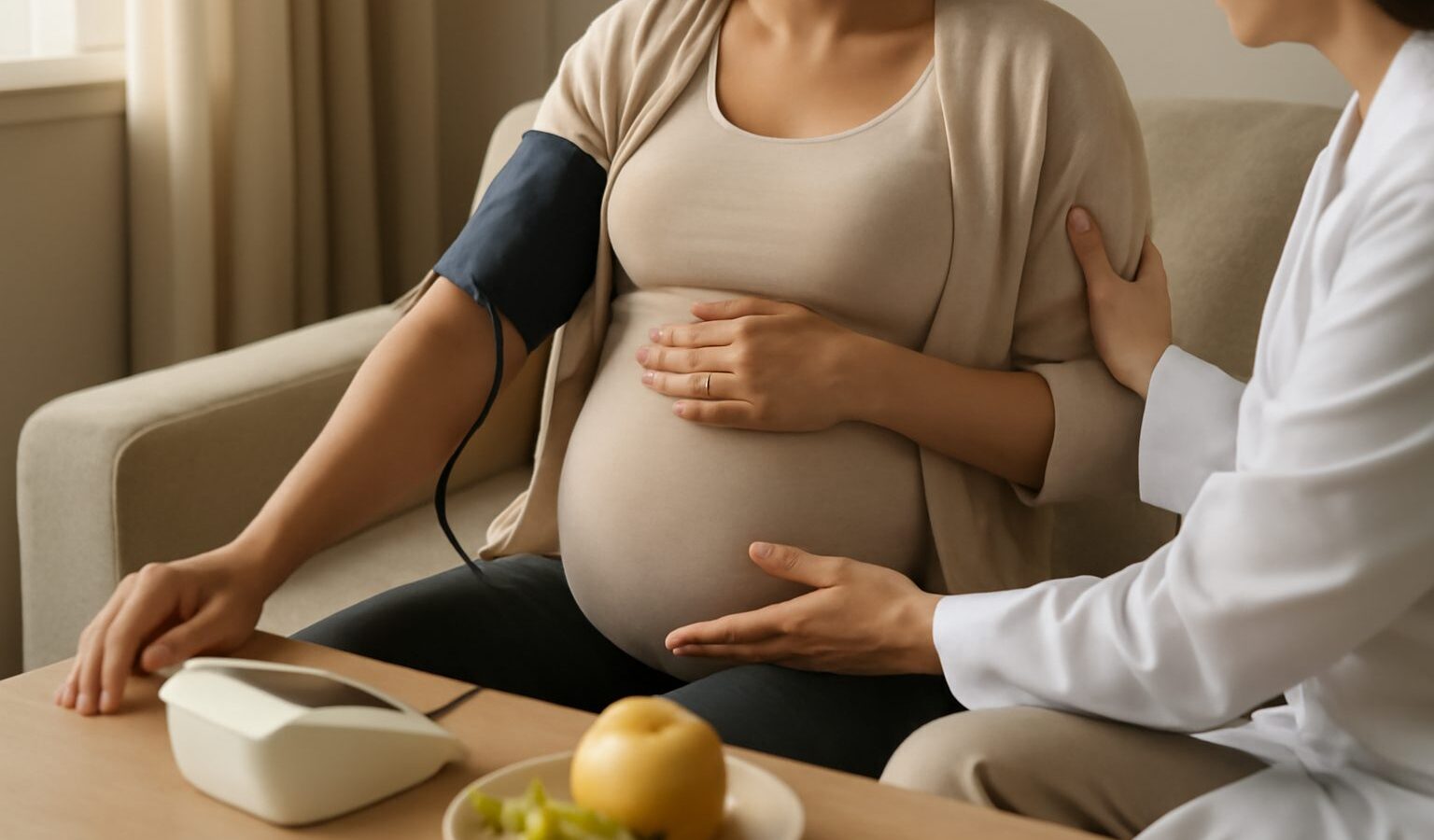
What makes pre-eclampsia tricky is that it can build quietly. In the early stages many women feel completely well, which is exactly why routine antenatal care is so important. At each visit your care team checks your blood pressure and often tests your urine for protein, both of which can pick up early signs before you notice anything yourself. This is one of the reasons not to skip appointments, and it is worth understanding what happens at each visit through prenatal checkups and screening.
Left unmonitored, pre-eclampsia can become dangerous for both mother and baby, which is why doctors take it seriously and watch closely. The reassuring news is that with regular checkups and prompt attention, it is usually detected and managed. The condition sits alongside other pregnancy health matters that need medical oversight, such as gestational diabetes and pregnancy health.
Warning Signs You Must Not Ignore
This is the most important part of this article. Some symptoms of pre-eclampsia can appear suddenly and signal that the condition is worsening. If you experience any of the following, treat it as urgent. Do not wait, do not downplay it, and do not assume it is just a normal part of pregnancy.
Seek urgent medical care or call 995 if you have:
- A severe or persistent headache that does not ease
- Changes to your vision, such as blurring, flashing lights or spots
- Sudden swelling of the face, hands or feet, or swelling that comes on quickly
- Severe pain just below the ribs, usually on the right side
- Sudden weight gain over a day or two
- Feeling very unwell, with nausea or vomiting in later pregnancy
- Reduced or changed baby movements
That last point deserves its own emphasis. If your baby is moving less than usual, or the pattern of movements changes, contact your maternity unit straight away at any hour. It is never a bother, and staff would always rather check. Learning your baby’s normal pattern helps you notice a change, and you can read more in understanding your baby’s movements in pregnancy.
If you are ever unsure whether a symptom counts, err on the side of getting checked. Your instinct that something is not right is worth acting on.
Who Is More at Risk
Pre-eclampsia can happen to anyone, but some factors make it more likely. These include a first pregnancy, a previous pregnancy affected by pre-eclampsia, a family history of it, being pregnant with twins or more, existing high blood pressure, diabetes or kidney conditions, and pregnancy at an older age. Having one or more of these does not mean you will develop pre-eclampsia, and having none does not mean you cannot. It simply means your doctor may watch you a little more closely.
If you have any of these risk factors, talk them through with your obstetrician or gynaecologist early in your pregnancy. They can advise whether any extra monitoring or steps are appropriate for you personally. In Singapore, antenatal care through the public hospitals such as KKH and NUH, and through private obstetricians, is set up to keep an eye on exactly these things, so make full use of your appointments and always check current guidance with your own care team.
Looking After Yourself
While you cannot always prevent pre-eclampsia, you can give yourself the best chance of it being caught early and managed well. The single most powerful thing you can do is attend all your antenatal appointments, because that is where the quiet early signs are picked up. Take any monitoring or medication your doctor recommends seriously, and keep to the schedule they set, which may become more frequent if they want a closer look.
Beyond that, general good pregnancy habits support your overall health: balanced meals, rest, staying hydrated in our hot climate, and gentle activity if your doctor is happy with it. Get to know your own body and your baby’s usual movements so you can spot a change. And keep the maternity unit’s contact details handy, along with a plan for how you would get there quickly if needed.
Above all, trust yourself. If something feels wrong, whether it appears on this list or not, contact your midwife, doctor or maternity unit, or call 995 in an emergency. You know your body best, and prompt action is always the right call. Pre-eclampsia is serious, but with attentive antenatal care and quick responses to warning signs, most mothers and babies come through it safely.