

Some schools and programmes ask applicants to sit an assessment as part of their selection, and that can add a layer of worry to an already big decision. If your child is facing a school admission test singapore schools sometimes use, the good news is that sensible, low-pressure preparation is entirely possible, and it does not need to take over your family’s life. This guide focuses on how to prepare well and keep a healthy perspective, rather than on any specific test content, because formats vary and are set by each school.
Understand what the test is actually for
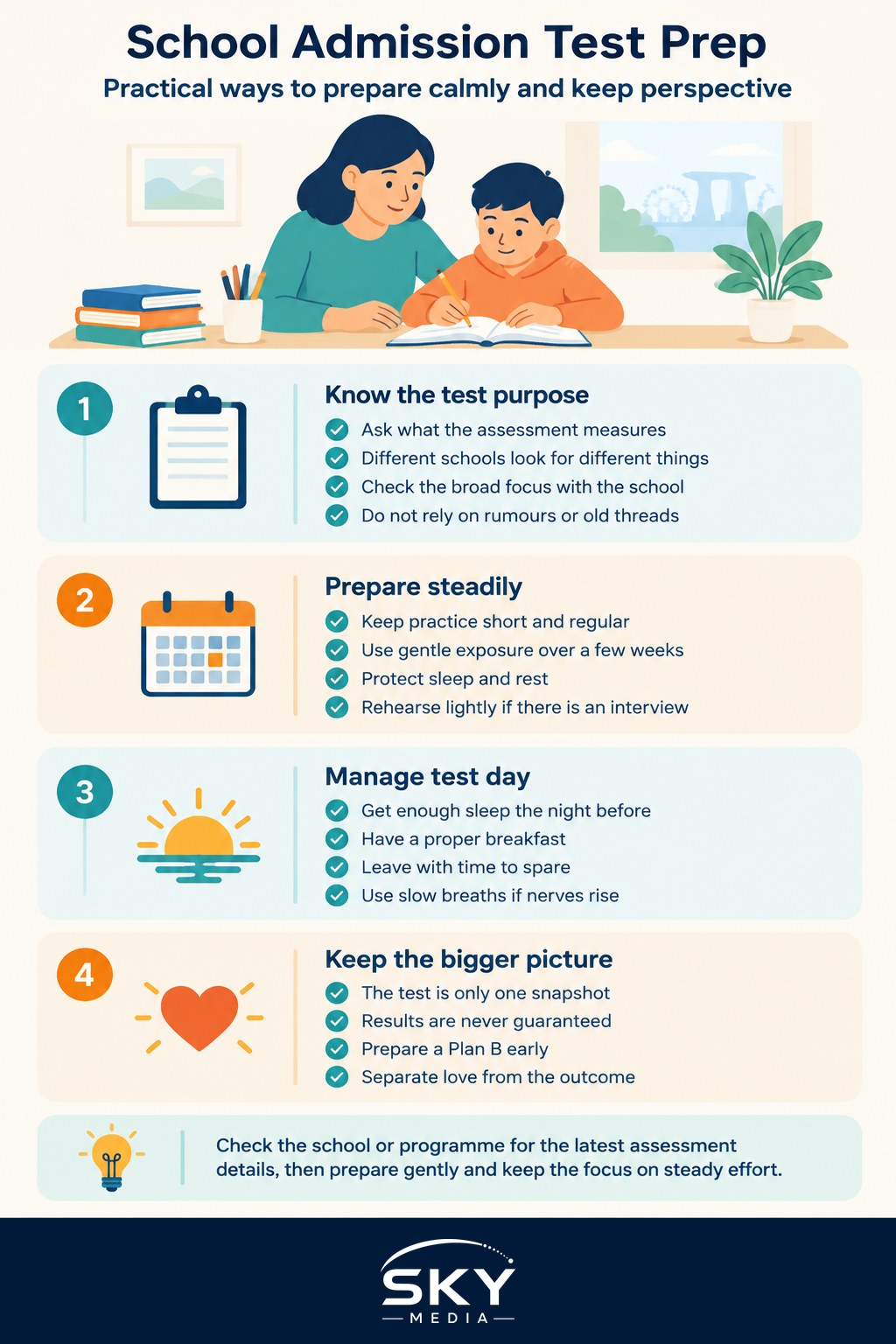
Before diving into practice, find out what the assessment is meant to measure. Different schools and programmes look for different things. Some assessments lean towards reasoning and aptitude, some towards specific subject knowledge, and some towards a talent or interest area for a particular programme. Knowing the general focus helps you prepare sensibly instead of drilling the wrong things.
The most reliable source here is the school or programme itself. Ask what the assessment broadly covers, how long it runs, and what your child should bring. The exact format, content, and criteria are set by the specific school and can change, so do not rely on secondhand accounts from other parents or old online threads. A short, polite email to the school often clears up more than hours of guessing.
It also helps to remember what an assessment is not. It is not a verdict on your child’s worth or intelligence. It is one snapshot, on one day, used alongside other information. Holding that perspective yourself makes it much easier to keep your child relaxed.
Prepare steadily, not frantically
Good preparation is calm and spread out, not a last-minute cram. If the assessment involves reasoning or unfamiliar question types, gentle exposure over a few weeks helps a child feel comfortable with the style, so nothing feels alien on the day. Familiarity reduces nerves far more than sheer volume of practice does.
A few practical habits go a long way. Keep practice sessions short and regular rather than long and exhausting. Build in real breaks. And protect sleep, because a rested child thinks far more clearly than a tired one. Our guide to sleep and learning singapore explains why rest matters so much, and if timing is part of the challenge, managing your time during exams singapore has techniques your child can practise.
If the assessment includes an interview or a spoken component, a little rehearsal helps children answer naturally rather than freezing. You can find friendly, doable pointers in preparing for oral exams and presentations singapore. Keep it light, the aim is comfort and confidence, not a polished performance.
Throughout, resist the urge to pile on tuition or endless worksheets out of anxiety. Over-preparation can backfire, leaving a child jaded before test day. Steady, kind, and consistent beats intense every time.
Managing the day and the outcome
On the day itself, the basics matter most. A good night’s sleep, a proper breakfast, and leaving with time to spare all help your child arrive settled. Remind them that they only need to try their best and that the outcome is not the whole story. If nerves are running high, a few slow breaths and a reassuring word from you can steady the ship. For more ideas on calming pre-test jitters, managing exam day nerves singapore is worth a read together.
Now the honest part. An assessment result is never guaranteed, and places often depend on many applicants and limited spaces. Your child might do well and still not get a place, and that is not a failure on their part. Prepare a plan B before the results come in, so a disappointing outcome does not feel like the end of the road. There are many good paths through the Singapore system, and one assessment rarely closes them off.
Above all, keep your love and encouragement separate from the result. A child who knows they are valued regardless of how a test goes will approach it with more confidence, and will bounce back more easily if it does not go their way. Confirm the current details with the school, prepare gently, and then let your child walk in knowing that whatever happens, they have your full support.
Frequently Asked Questions
How can I find out what a school’s admission test covers? Ask the school or programme directly, since each one sets its own format, content and criteria. A short, polite email asking what it broadly covers, how long it runs and what to bring usually helps more than secondhand accounts from other parents or old online threads.
How early should my child start preparing for an admission test? Start early enough that preparation can be gentle and spread out, rather than a last-minute cram. A few weeks of short, regular sessions is often enough to make the question style feel familiar. Protect sleep and breaks so your child does not burn out.
Is tuition necessary to pass a school admission test? Not necessarily. Piling on tuition or endless worksheets out of anxiety can backfire and leave a child tired before test day. Familiarity with the question style and a calm mindset usually matter more than volume, so start with what the school says about the assessment.
What if my child has an interview as part of the admission process? A little rehearsal helps children answer naturally instead of freezing. Practise chatting about their interests and why they want the school, and keep it light. The aim is comfort and confidence, not a polished performance.
What happens if my child does not get a place after the test? A result is never guaranteed, and places depend on the number of applicants and available spaces, so a child can do well and still miss out. Prepare a plan B beforehand. There are many good paths through the Singapore school system, and one assessment rarely closes them off.
Official sources: Ministry of Education (MOE)
Further reading: School Interview Tips for Primary and Secondary Admissions in Singapore · Preparing for University Interviews and Tests · Preparing for Aptitude and Entrance Tests