

Publishing your first academic paper in Singapore can feel like a huge, mysterious step, especially when everyone around you seems to know the rules already. The good news is that publishing your first academic paper singapore postgraduates often worry about is more learnable than it looks. If you are a postgraduate student, a research assistant, or an early-career academic here, you can break it into clear stages and move through them at a steady pace. This guide walks you through the journey in plain language, so you feel prepared rather than anxious.
Getting Your Work Ready to Submit
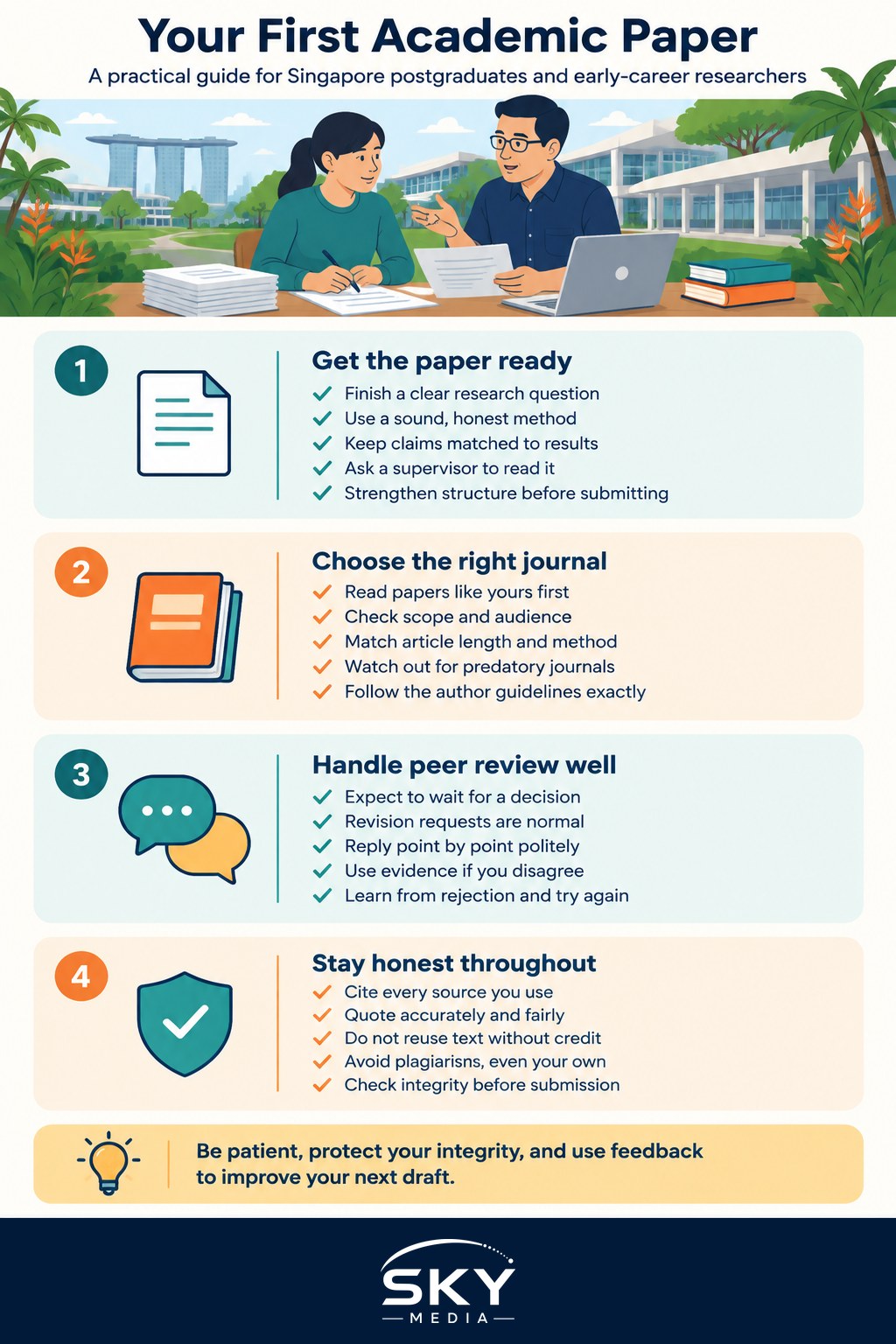
Before you think about journals, make sure you actually have a finished, honest piece of research. Your paper should have a clear question, a sound method, results you can stand behind, and a discussion that does not overclaim. First papers often try to say too much. It is usually better to make one solid point well than to stretch thin findings into grand conclusions.
Ask your supervisor or a trusted senior colleague to read a full draft. Their feedback on framing and structure is often more valuable than line edits at this stage. Learning to take comments well is a skill in itself, and it is worth reading up on how to learn from feedback so criticism feels useful instead of personal. If you have not yet shaped your project properly, going back to strengthen your writing structure through a piece like how to write a thesis or dissertation can help you tighten the underlying argument first.
Pay close attention to academic honesty. Cite every source you draw on, quote accurately, and never reuse text without attribution, including your own earlier work. A quick refresher on academic integrity and avoiding plagiarism is worth your time before you submit anything, because journals take these matters seriously and a slip can follow you.
Choosing the Right Journal
The most common beginner mistake is aiming at the wrong target. Read widely in your field and notice where papers similar to yours appear. Those journals are your natural home. Look at the scope, the typical article length, the audience, and whether the journal publishes the kind of method you used.
Be careful about predatory journals. These are titles that promise fast publication and accept almost anything for a fee, without proper peer review. They can look convincing, with official sounding names and glossy websites. Warning signs include unsolicited emails begging you to submit, vague or hidden charges, promises of acceptance within days, and editorial boards you cannot verify. When in doubt, check with your supervisor, your university library, or your department, since Singapore universities usually have staff who can advise on reputable venues. Do not rush a decision just because an inbox message flatters you.
Read the author guidelines carefully and format your manuscript exactly as asked. Editors notice when you have not bothered, and a messy submission can be desk rejected before anyone reads the science.
Surviving Peer Review
Once you submit, expect to wait. Peer review takes time, sometimes months, and silence does not mean rejection. When the decision arrives, most first papers are not accepted outright. A request for major or minor revisions is a normal and even encouraging outcome, because it means the editor sees potential.
Read reviewer comments slowly, then set them aside for a day. It is natural to feel defensive at first. When you return, respond point by point in a polite, structured reply. Explain what you changed and why, and where you disagree, make your case with evidence rather than emotion. Reviewers are usually trying to help, even when the tone feels blunt.
If your paper is rejected, do not take it as a verdict on your worth. Rejection is part of every researcher’s life, including senior ones. Learn what you can from the feedback, improve the paper, and try a different suitable journal. Persistence, honesty, and steady improvement matter far more than a perfect first attempt. Many people find it helpful to keep growing their broader skills through how to do academic research as they go.
Publishing your first academic paper in Singapore is a marathon, not a sprint. Give yourself grace, lean on mentors, protect your integrity, and treat each round of feedback as a lesson. With patience and care, you will get there, and the second paper will feel far less daunting than the first.
Frequently Asked Questions
How can I tell if a journal is predatory? Warning signs include unsolicited emails begging you to submit, vague or hidden charges, promises of acceptance within days and editorial boards you cannot verify. When in doubt, ask your supervisor, your university library or your department, rather than rushing because a message flatters you.
How long does peer review usually take? It can take months, and silence does not mean rejection, so expect to wait. The journal’s own pages may give an idea of its usual timeline. Use the time to start on your next piece of work.
Is it normal to be asked to revise my paper after submitting? Yes, a request for major or minor revisions is normal and even encouraging, because it means the editor sees potential. Read the comments slowly, set them aside for a day, then respond point by point in a polite, structured reply.
What should I do if my first paper is rejected? Do not treat it as a verdict on your worth, since rejection happens to every researcher, including senior ones. Learn what you can from the feedback, improve the paper and try a different suitable journal. Persistence and steady improvement matter more than a perfect first attempt.
Can I reuse parts of my thesis in my first journal article? Be careful, because reusing text without attribution is a problem even when it is your own earlier work. Cite properly and ask your supervisor and the journal about their policies. Journals take academic integrity seriously, and a slip can follow you.