
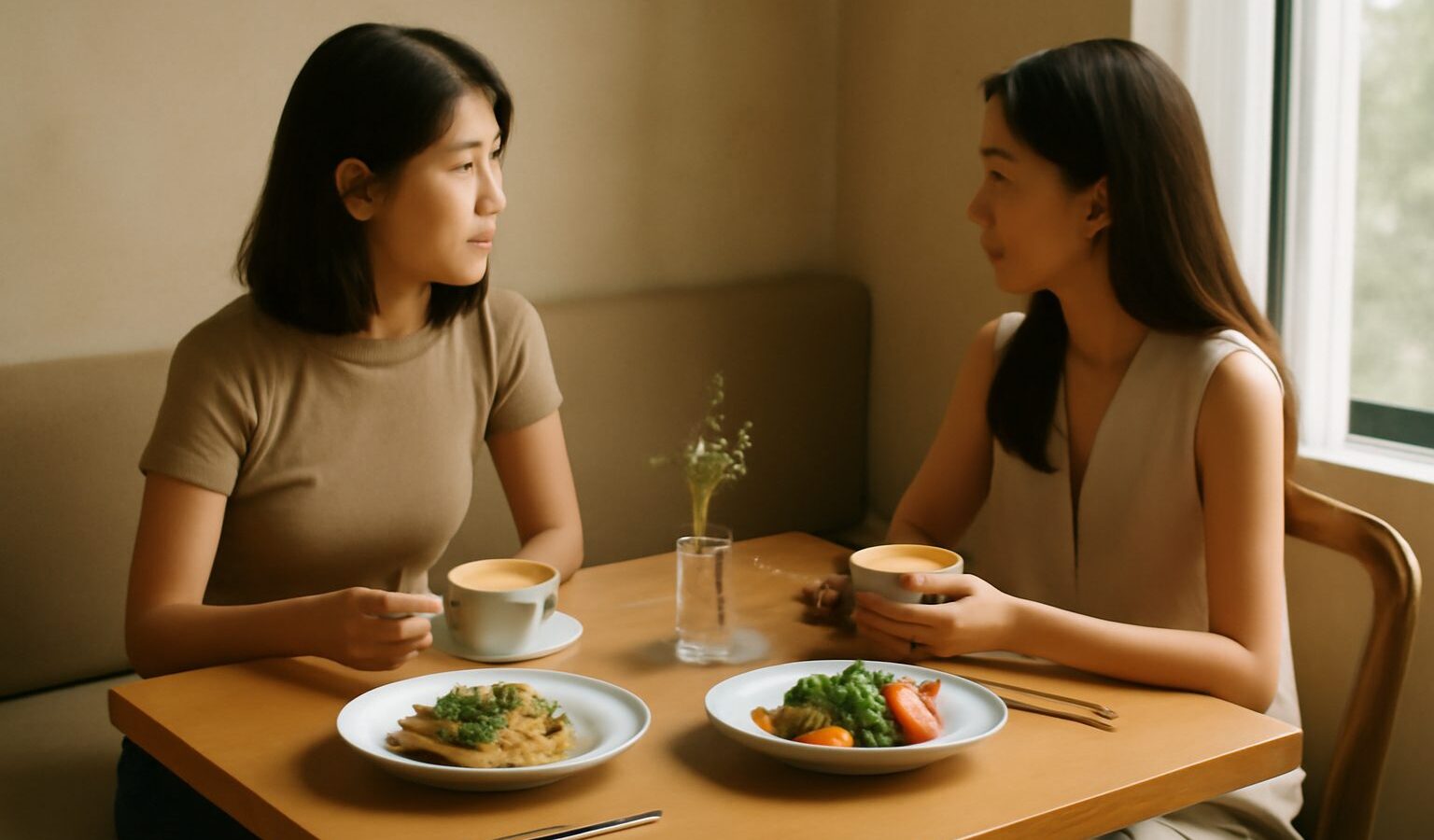
You have not seen your old friend in two years, or you need a proper talk with a parent, a mentor or a colleague. The last thing you want is a restaurant where you have to shout over music, lean in to hear every sentence, and give up the table after an hour. Finding quiet restaurants Singapore diners can actually talk in takes a bit of planning, because many popular spots are designed to feel lively and busy.
This guide does not list specific restaurants, because noise levels change with renovations, new owners and even the day of the week. Instead, it shows you which types of places tend to stay calm, when to go, what to ask for when booking, and the warning signs of a loud room, so you can pick well wherever you are in Singapore.
What Makes a Restaurant Good for Conversation
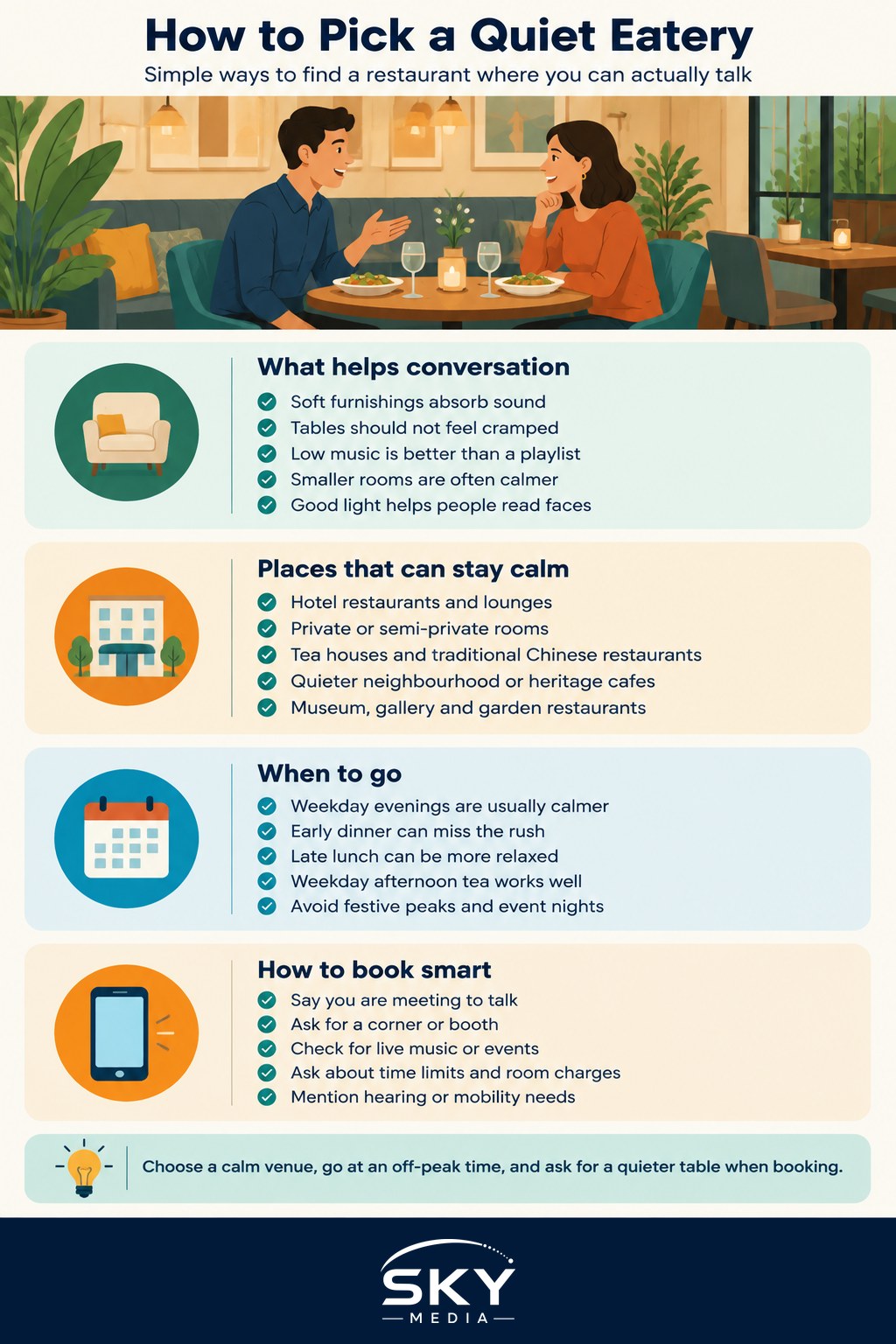
Quiet is about more than the volume of the music. When you are judging a place for a catch-up, look for these qualities:
- Soft surfaces. Carpets, curtains, upholstered chairs, cushions and acoustic panels absorb sound. Bare concrete, glass walls, tiled floors and high industrial ceilings bounce it around.
- Space between tables. Widely spaced tables, booths and partitions keep neighbouring conversations from blending into yours.
- Low or no background music. Restaurants built around a playlist or a DJ are rarely good for talking.
- A smaller dining room. Fewer covers usually means less noise, provided the room is not crammed.
- An unhurried service style. Some places turn tables quickly at peak times. A calm catch-up needs a venue happy to let you linger over dessert and coffee.
- Good lighting. Being able to see each other’s faces makes conversation easier, especially for older relatives.
Types of Places That Tend to Stay Calm
Some kinds of venues are more likely to suit a quiet meal. Use this as a starting point, then check the specific restaurant.
| Type of venue | Why it can work | Watch out for |
|---|---|---|
| Hotel restaurants and lounges | Generous spacing, soft furnishings, staff used to guests lingering | Buffet lines at peak hours, live music nights |
| Restaurants with private or semi-private rooms | A closed door blocks most outside noise | Minimum spend rules, which vary by venue |
| Tea houses and traditional Chinese restaurants outside dim sum rush | Calm atmosphere at off-peak times, easy to linger over tea | Weekend dim sum crowds and large family tables |
| Cafes in quieter neighbourhoods or heritage areas | Smaller rooms, relaxed pace on weekdays | Weekend brunch queues, laptop crowds, coffee grinders |
| Museum, gallery and garden restaurants | Calm settings away from busy malls | Event days and school holiday crowds |
| Omakase or chef’s counter venues | Small number of diners, focused atmosphere | Sitting side by side, which suits some conversations better than others |
A few places to approach with caution: food halls and hawker centres at meal times, restaurants inside busy malls on weekends, bars that turn up the music after dinner, and anywhere known for celebrations, singing or big group bookings.
If the catch-up is a date rather than a reunion with a friend, our list of quiet date ideas in Singapore for introverts has more low-key options beyond restaurants.
Timing Matters as Much as the Venue
The same restaurant can be peaceful at 3pm on a Tuesday and deafening at 8pm on a Friday. To improve your chances:
- Go on a weekday. Monday to Thursday evenings are usually calmer than Friday and Saturday.
- Choose the shoulder hours. An early dinner before the main rush, or a late lunch after office crowds return to work, often means half-empty dining rooms.
- Avoid festive peaks. Chinese New Year, Valentine’s Day, Mother’s Day, Christmas and public holiday eves bring set menus, big groups and quick table turns.
- Consider a long lunch or afternoon tea. Weekday afternoon tea at a hotel or tea house is one of the most reliable ways to get a quiet, unhurried catch-up.
- Check for events. Live music nights, wine dinners and private functions can transform an otherwise calm space.
How to Book for a Quiet Table
When you make a reservation, a few small requests make a big difference. Most restaurants are glad to help if you ask ahead.
- Say why you are coming. Mention that you are meeting someone to talk and would prefer a quieter table.
- Ask for the right spot. Corners, booths, tables by a wall and spots away from the kitchen pass, bar, entrance and toilets are usually calmer.
- Ask about music and events. A simple question such as “Is there live music that evening?” can save you from a loud surprise.
- Check time limits. Some restaurants give tables a fixed slot at peak times. Ask whether you can stay longer, or book a quieter time with no limit.
- For a private room, ask about the minimum spend and any room charge, and confirm the details in writing.
- Mention special needs. If someone uses a hearing aid or a wheelchair, tell the restaurant so they can seat you somewhere suitable.
Red Flags in Reviews and Photos
Before booking, spend a few minutes on photos and recent reviews. Look out for:
- Words like “buzzing”, “vibrant”, “party”, “DJ” or “loud” in reviews.
- Photos showing long communal tables, high ceilings with exposed beams and ducts, and lots of glass and concrete.
- An open kitchen right next to the dining area, which brings clatter and calls.
- Mentions of birthday songs, large group celebrations or quick table turns.
Positive signs include reviewers mentioning that they “could hear each other”, stayed for hours, or found the place good for business meals or elderly parents.
Alternatives When You Cannot Find a Quiet Table
Sometimes every restaurant nearby is busy. You can still have a good conversation:
- Eat first, talk later. Have a quick meal, then move to a calm spot for dessert, tea or a walk. Our guide to quiet places in Singapore to read, sketch or unwind suggests parks, libraries and gardens that work well for a follow-up chat.
- Bring your own bottle to a smaller place. Some quieter neighbourhood restaurants allow corkage, which can make for a relaxed, long evening. See our guide to BYOB restaurants in Singapore for how corkage usually works.
- Host at home. For very personal conversations, a simple meal at home or takeaway in a quiet room beats any restaurant.
The Short Version
A quiet catch-up depends on three things: the right type of venue, the right time, and the right table. Choose places with soft furnishings and space between tables, go on a weekday or at an off-peak hour, and tell the restaurant when you book that you want somewhere calm. Do that, and you will spend the evening listening to each other instead of the room.
Frequently Asked Questions
How early should I book a quiet restaurant for a weekend catch-up? Book as early as you reasonably can, since calmer tables fill first, especially on Fridays and Saturdays. A few days ahead is often enough on weekdays, but festive periods need more notice. When you reserve, ask for a corner or booth.
Are private dining rooms worth it for a long conversation? They can be, if you really need privacy or have many people to seat. A closed door cuts most outside noise and removes the pressure to leave, but many venues set a minimum spend or room charge, so confirm the terms before you commit.
Is afternoon tea a good alternative to dinner for talking? Yes, weekday afternoon tea is one of the most dependable choices. The room is usually calmer than at dinner, nobody expects you to rush, and you can linger over a pot of tea. Check that there is no live music that day.
Can I ask a restaurant to turn the music down? You can, and it costs nothing to ask politely, ideally when booking rather than once seated. Some restaurants will lower the volume or seat you away from the speakers, though they cannot always change the playlist if the room is busy.
How do I find a quiet table with an elderly parent who is hard of hearing? Choose a small, softly furnished room, go at an off-peak time and ask for a booth or wall table away from the kitchen. Tell the restaurant about the hearing need when you book, and sit your parent facing you in good light.
Further reading: Hidden Gem Eateries in Singapore