
If your family has moved across borders and your child is growing up somewhere different from where you or they were born, you are raising what many call a third culture kid. A third culture kid in Singapore might carry a home culture from their parents, absorb Singapore’s own rich mix of traditions, and blend the two into something uniquely their own. It is a beautiful, sometimes complicated way to grow up. These children often become wonderfully adaptable, open-minded and multilingual. They can also wrestle with big questions about where they truly belong. As a parent, your warmth and steadiness help your child feel rooted, seen and proud of every part of who they are.
Understanding the Third Culture Kid Experience
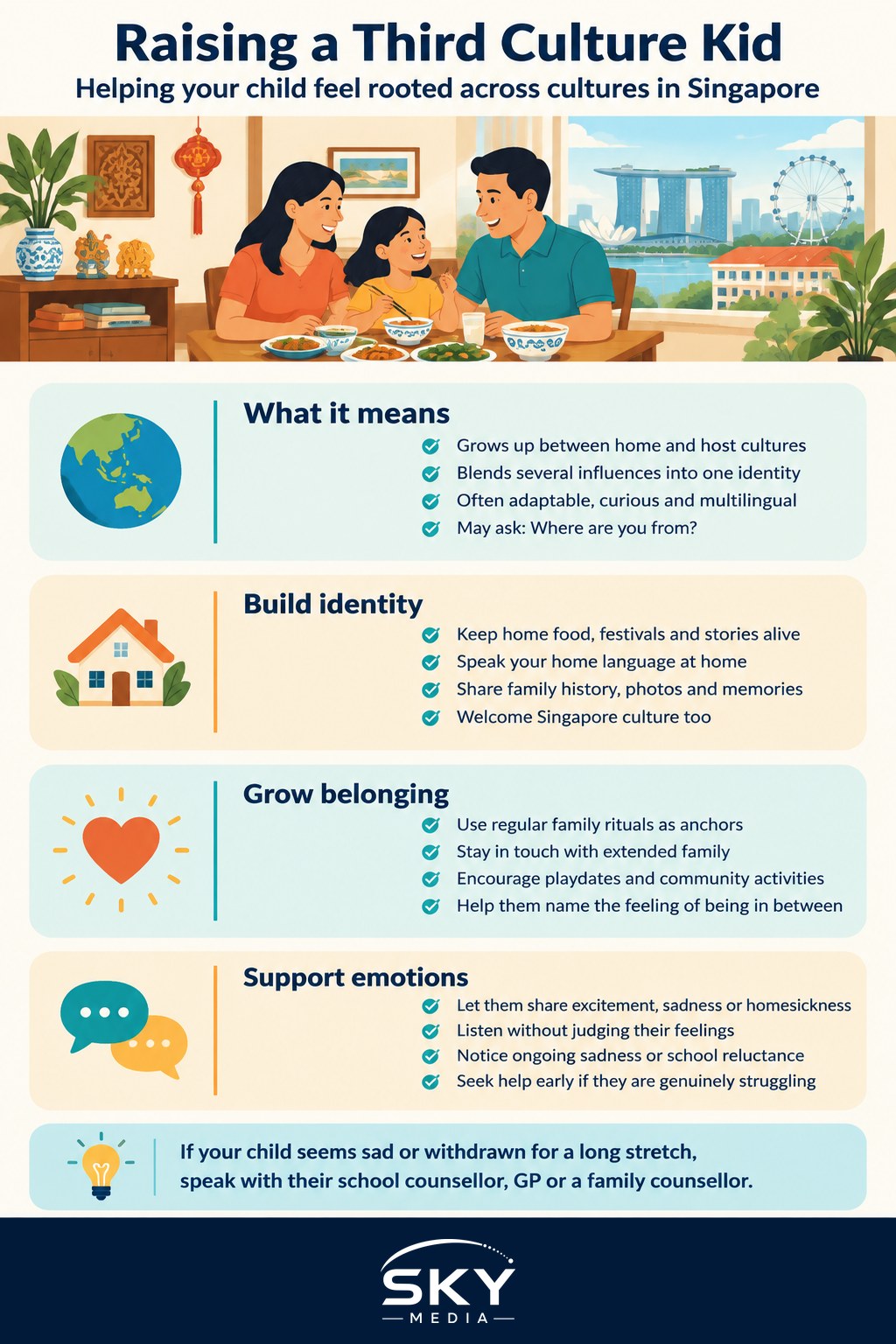
The term describes children who spend important years growing up outside their parents’ home culture, weaving together several influences into a “third” culture that is neither fully one nor the other. Singapore, with its diverse communities and international families, is home to many such children.
The strengths are real and worth celebrating. Third culture kids often grow up flexible, curious and comfortable moving between languages and social settings. They tend to make friends across backgrounds and see the world through more than one lens. These are gifts that serve them well throughout life.
At the same time, some children feel caught between worlds. They may struggle to answer “Where are you from?” or feel they do not fully belong anywhere. Friendships can feel fragile if classmates come and go, and they may quietly grieve places or people left behind. None of this means anything is wrong. It simply means your child is navigating a layered identity, and your understanding makes all the difference. Helping them adjust to a new environment is explored further in helping your child through culture shock in Singapore.
Nurturing a Strong Sense of Identity
The heart of raising a happy third culture kid is helping them feel that every part of their identity is welcome. Your child does not have to choose between cultures. They can hold all of them at once, and your job is to make that feel natural and safe.
Small, everyday actions build a strong foundation:
- Keep your home culture alive through food, festivals, stories and family traditions.
- Speak your home language at home so your child stays connected to their roots, which pairs well with the ideas in raising bilingual children.
- Share family history, photos and memories so your child knows where they come from.
- Embrace Singapore’s culture too, from local food to public holidays and neighbourhood life.
Let your child see that being multicultural is a strength, not a problem to solve. When they ask hard questions about identity, listen without rushing to fix things. Sometimes children simply need to feel heard as they work out who they are. Affirm that they belong in your family and in your love, no matter where in the world you happen to live.
Helping Your Child Build Belonging
Belonging grows from stable relationships and a sense of home that travels with your child. Because a third culture kid’s world can shift, focus on the anchors that stay constant.
Family is the most important anchor of all. Regular rituals, like a weekly meal together, bedtime stories or a Sunday outing, give your child a reliable rhythm. Staying connected with extended family, even across time zones through video calls, reminds them they are part of something bigger than one city.
Friendships matter deeply too. Help your child build local roots by encouraging playdates, joining community activities and settling into school life. If your child finds it hard to make friends across cultures, gentle support goes a long way, and you may find helping your child navigate friendship problems useful. Encourage them to stay in touch with friends who move away, while also investing in the friendships right in front of them.
Give your child language for their experience. Let them know that feeling a bit “in between” is normal for children who grow up across cultures, and that many others share it. Naming the feeling helps them feel less alone and more understood.
Caring for Their Emotional Wellbeing
Moving between cultures can stir up real emotions, including excitement, confusion, and sometimes sadness or homesickness. Make space for all of it. Let your child talk about what they miss and what they love, without judging their feelings as good or bad.
Watch gently for signs that your child is finding things especially hard, such as ongoing sadness, withdrawing from friends, trouble sleeping, or reluctance to go to school over a longer stretch. Most children move through the ups and downs with time, patience and your reassurance. But if you feel your child is genuinely struggling, there is no harm in reaching out for support. A chat with their school counsellor, your GP, or a family counsellor can help, and seeking help early is a sign of good parenting, not failure. This is general guidance, and every child and family is different.
Above all, keep coming back to unconditional love. Your child needs to know that whoever they become, and wherever they feel they belong, home is with you.
Raising a Confident Global Child
Raising a third culture kid in Singapore is a gift you give your child, even on the harder days. You are helping them grow into someone adaptable, open-hearted and comfortable in a diverse world. Honour their roots, embrace their new home, and keep your family bonds strong and steady. With your love as their anchor, your child can hold many cultures at once and carry a deep, quiet confidence in exactly who they are. That sense of belonging, built patiently over childhood, becomes one of the greatest strengths they will ever have.
Frequently Asked Questions
What can my child say when asked “Where are you from”? Help them prepare a short, comfortable answer in their own words, such as where their family comes from and where they live now. Let them know they can answer differently on different days, and that it is fine to feel unsure.
Will moving schools often affect my third culture kid’s friendships? It can make friendships feel less certain, but children can still form close bonds. Help them keep in touch through messages and video calls, and encourage them to invest in the friends nearby too.
Should my third culture kid learn Mandarin or another local language? It can help your child connect with the community, though it is a family choice and depends on your plans and your child’s load. Start playfully and without pressure, and check what language options their school offers.
What changes when my family returns to our home country? Children who have grown up abroad may feel like outsiders at “home” and miss Singapore. Talk about the move early, keep familiar routines, and expect an adjustment period of ups and downs.
How do I help my child say goodbye when their friends move away? Allow sad feelings, and say goodbye properly with a small party, card or keepsake. Plan ways to stay in touch, and encourage them to make new friends, without pushing them to “get over it” too quickly.
Further reading: Raising an Adaptable and Flexible Child