
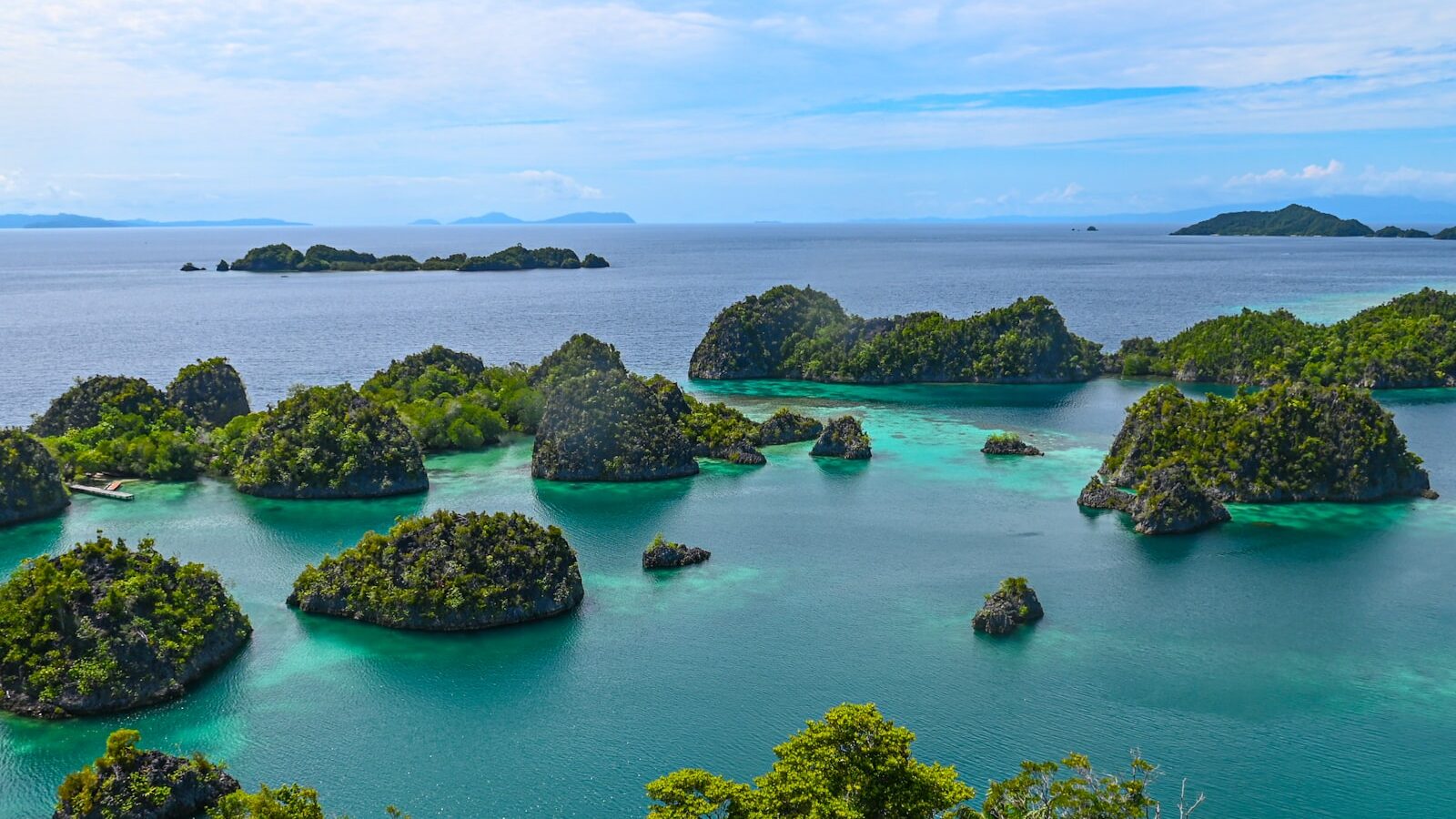
Raja Ampat from Singapore is a bucket-list journey to one of the planet’s richest marine regions, an archipelago of hundreds of jungle-cloaked islands scattered across the seas off West Papua in eastern Indonesia. This guide covers how to get there, when to go, and what makes the diving and scenery so special. Please treat it as a general overview only, and always confirm current visa rules, flight options, permits and prices yourself before booking, as these details change.
Getting there from Singapore
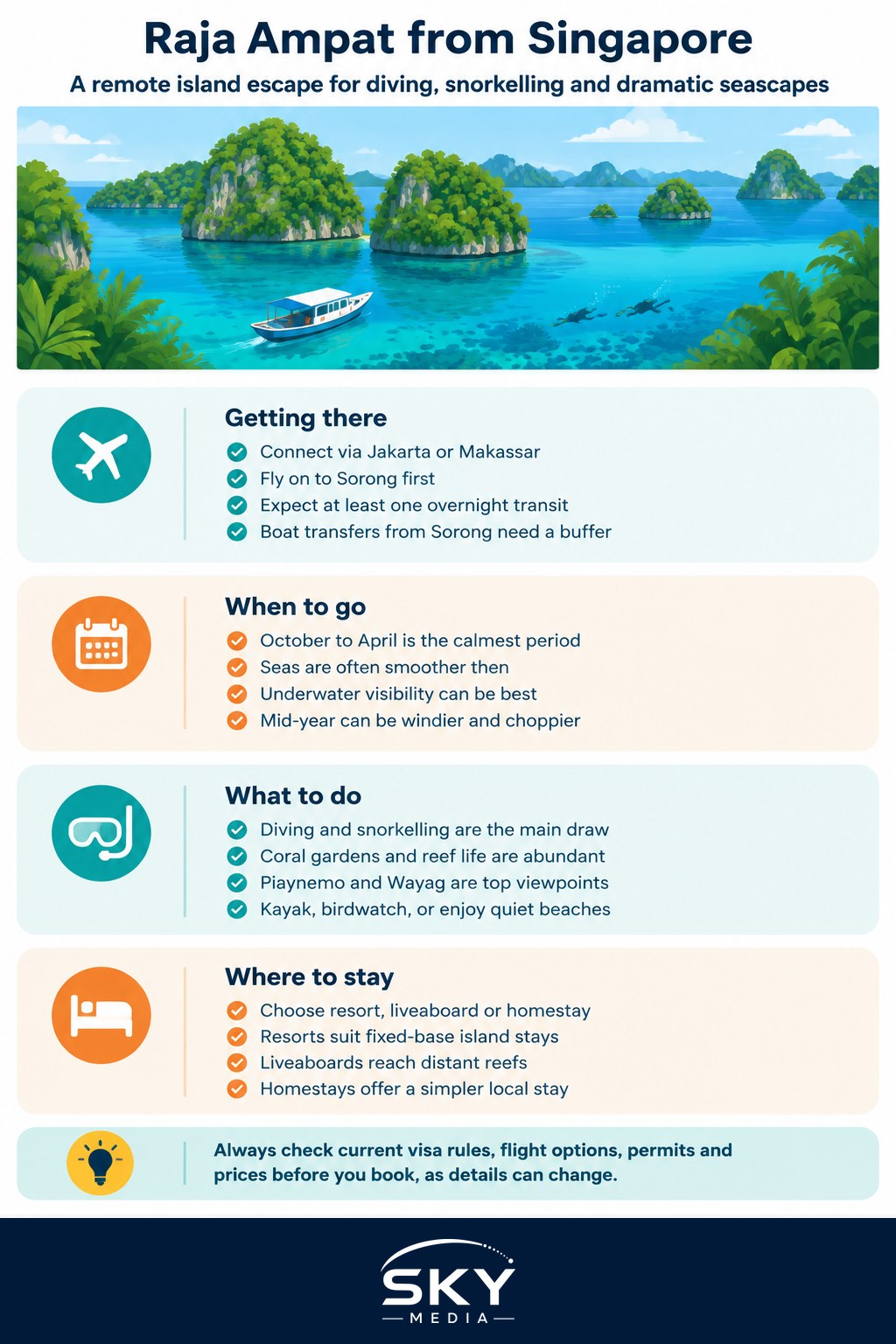
Raja Ampat is remote, and reaching it takes commitment. The gateway is the city of Sorong on the Papuan mainland, served by its Domine Eduard Osok Airport (SOQ). From Singapore you will connect through an Indonesian hub, most commonly Jakarta or Makassar, before catching a domestic flight onward to Sorong. Expect an overnight in a transit city on at least one leg, depending on schedules.
From Sorong you transfer to the port and board a public passenger ferry or a private speedboat across to Waisai, the small capital on Waigeo island, or directly to your resort or liveaboard. Sea crossings depend on weather and departure times, so plan a buffer and avoid tight same-day connections. Because so many legs are involved, book internal flights and boat transfers well ahead and keep your itinerary flexible.
Best time to visit
Raja Ampat can be visited across much of the year, but the most settled and popular window runs roughly from October to April, when seas are generally calmer and visibility underwater is often at its best. This is the prime stretch for diving and island hopping.
The middle months of the year can bring stronger winds and choppier crossings, which makes small-boat travel less comfortable and can affect visibility, though some operators still run and crowds are thinner. Manta ray sightings and other marine encounters vary by season and site, so ask your operator what to expect during your dates. Whenever you go, check regional forecasts close to departure, as conditions in this part of Indonesia can shift quickly.
Top things to see and do
Diving and snorkelling are the headline acts. Raja Ampat sits at the heart of the Coral Triangle and is famed for extraordinary biodiversity, from vast coral gardens to schooling fish, reef sharks and, in the right seasons, manta rays. Dive only within your certification and experience, use a licensed and reputable operator, and respect strong currents, which are a real feature of many sites and demand proper briefings and buddy discipline.
Above the water, the viewpoints are unforgettable. Piaynemo is the classic panorama, a boardwalk climb to a lookout over a maze of mushroom-shaped karst islets in turquoise water. Wayag, further north and harder to reach, offers the even more dramatic lagoon-and-peak scenery that features on so many postcards. Between dives you can kayak through hidden lagoons, visit local villages, look for the endemic birds of paradise on Waigeo, and simply soak up beaches with barely another soul in sight. Snorkellers who do not dive still see a great deal, as many of the best reefs sit in shallow, sheltered water close to shore. Sunrise birdwatching walks, quiet paddles at dawn and evenings under some of the clearest night skies in Asia make the non-diving hours just as memorable.
How to structure your trip
| Trip style | How you travel | Best suited to |
|---|---|---|
| Land-based resort | Fly to Sorong, boat to an island stay | Divers and non-divers wanting a fixed base |
| Liveaboard boat | Fly to Sorong, board a dive vessel | Certified divers chasing remote sites |
| Homestay hopping | Ferry to Waisai, local homestays | Budget travellers and independent explorers |
Where to stay
Options fall into a few broad camps. Comfortable dive resorts cluster on and around the islands near Waisai and the central archipelago, offering full board and organised dive trips, and suit those who want everything arranged. Simpler, locally run homestays are dotted across the islands and give a closer connection to Papuan village life at a lower cost, though facilities are basic and you should manage expectations on power and hot water.
Liveaboard vessels are effectively floating accommodation, ideal for reaching the most distant reefs around Wayag and the south without daily long crossings. Waisai itself has a handful of basic places if you need a night near the ferry. Whichever you choose, book far ahead, as capacity is limited and the best-regarded operators fill early.
Practical tips
Singapore passport holders should confirm the latest Indonesian entry requirements before travelling. Check ICA advisories and the Indonesian embassy for current visa rules and permitted stay. Separately, Raja Ampat requires a marine park entry permit that helps fund conservation, so confirm the current process and carry the receipt, as it may be checked.
The currency is the Indonesian rupiah. Cash is vital here, as card facilities and ATMs are scarce once you leave Sorong, so withdraw enough on the mainland and bring small notes. Getting around within the archipelago means boats, which are weather-dependent, so allow slack in your plans. Budgets range widely, from frugal homestay trips to premium resort and liveaboard packages, so decide your style before pricing legs.
On safety, diving here is world-class but demanding: never exceed your training, insist on thorough current briefings, and consider dive insurance that covers evacuation, given how remote you are. Medical facilities are limited, so travel prepared. Respect local customs and the fragile reefs by not touching coral, and support conservation fees, which keep this place pristine.
A final word
Raja Ampat asks a lot of effort to reach, and gives back scenery and marine life few destinations can match. Plan your connections patiently, choose the season and trip style that fit your diving level, and you will find a corner of Indonesia that stays with you long after you return.
Explore more: Diving destinations from Singapore · Nature and adventure travel from Singapore · Palawan from Singapore