

A “free” trial is rarely as free as it looks. Many services in Singapore hook you with a no-cost week or a discounted first month, then quietly bill your card once the clock runs out. Understanding subscription traps in Singapore helps you enjoy the genuine deals while avoiding the ones designed to make cancelling as painful as possible. The goal here is not to make you paranoid about every app, but to help you read the fine print, notice the warning signs, and keep control of your own money.
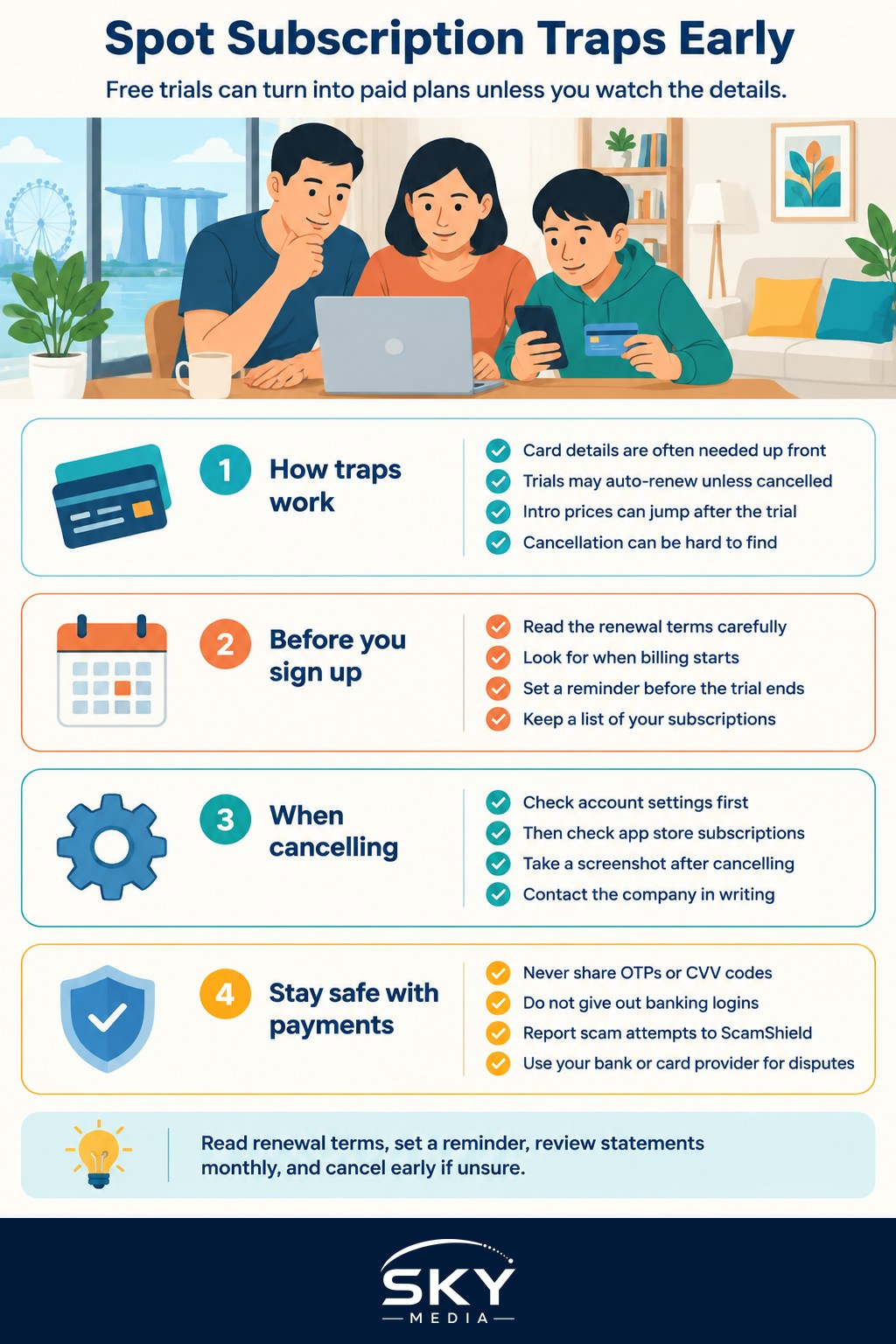
How Free-Trial Traps Actually Work
Most trials ask for your card up front. That is the first clue. If a company genuinely wanted you to test the product with no strings, it would not need your payment details on day one. The card is there so billing can start automatically the moment the trial ends, often without a reminder.
The common tactics are worth learning to spot:
- Auto-renewal by default. The trial rolls straight into a paid plan unless you actively cancel. The burden is placed on you to remember and act.
- Short or vague trial windows. A “7-day trial” that actually starts from the moment you sign up, not when you first use the service, so the days slip away faster than you expect.
- Introductory pricing that jumps. The first month is 99 cents, then it silently becomes a much higher monthly fee. The low number is what you remember, the real number is buried.
- Hard-to-find cancellation. Signing up takes two taps, but cancelling is hidden behind menus, requires an email, or is only possible during office hours.
- Bundled add-ons. You sign up for one thing and a second paid service is quietly ticked on as well.
None of this is necessarily a scam in the criminal sense. Much of it is legal and common. But the effect on your wallet is the same, so treating these traps with the same caution you would give a suspicious message is sensible.
Protecting Yourself Before You Sign Up
The best defence is a habit you apply every single time, before you enter your card details.
First, read the renewal terms, not just the headline price. Look specifically for the words “renews”, “then”, “per month after”, and the actual date billing starts. If you cannot find these terms easily, that itself is a red flag.
Second, set a reminder for two days before the trial ends. Put it in your phone calendar the moment you sign up. This one small step defeats most free-trial traps because the whole model relies on you forgetting.
Third, keep a simple list of what you are subscribed to. It is surprisingly easy to lose track across app stores, streaming services, and websites. A quick monthly review of your bank or card statement will catch charges you no longer recognise. Our guide on managing your subscriptions and free trials walks through this in more detail.
Fourth, cancel early if you are unsure. With most services you keep access until the end of the paid period anyway, so cancelling on day one of a monthly plan does not cut you off immediately. There is rarely a reason to wait until the last minute.
Cancelling and Getting Your Money Back
When a service makes cancellation difficult, stay calm and methodical. Look in the account settings first, then the app store subscriptions page (both Apple and Google let you manage and cancel subscriptions centrally, which many people do not realise). Take a screenshot when you cancel, as proof of the date.
If you are billed after you believed you had cancelled, contact the company in writing and keep the record. If they are unresponsive and the charge was clearly unauthorised, you can raise the matter with your bank about a disputed transaction. Your bank and PayNow or card provider are the right official channels here, so check their current dispute process rather than relying on anything a third party tells you.
A word on payment hygiene: never share one-time passwords, card CVV codes, or banking logins with anyone who calls or messages claiming to help you cancel or refund a subscription. Banks and government agencies never ask for these. If someone pressures you to “verify” a refund by installing an app or reading out an OTP, it is a scam. Report scam attempts to ScamShield and the Police, and see avoiding scams for the wider picture.
A Practical Wrap-Up
Subscription and free-trial traps rely on two things: your card being on file and your attention drifting. Take both away and the trap loses its power. Read the renewal terms, set a reminder the moment you sign up, review your statements monthly, and cancel early when in doubt. If you want to tighten your accounts further, securing your social media accounts covers habits that carry over neatly to any online service. A few minutes of care up front saves you months of quiet charges later.
Frequently Asked Questions
Can I cancel a free trial on day one and still use it? With many services, yes, since access usually continues until the trial or paid period ends even after you cancel. Terms differ between providers, so read the cancellation wording before you rely on it, and screenshot the confirmation as proof of the date.
Is it better to use a virtual card or prepaid card for trials? It can help, because a card with limited funds or a capped limit makes surprise charges harder to go through. It does not cancel the subscription, though, and unpaid bills may still follow. Ask your bank what virtual or card-control options it offers.
Where do I find all my app store subscriptions? Both Apple and Google keep a central subscriptions page in your account settings, listing everything billed through the app store along with renewal dates. Check there first, then look at services you pay directly by card, which will only appear on your statement.
What if a company keeps billing me after I cancelled? Write to the company with your cancellation proof and ask for a refund. If they do not respond and the charge was clearly unauthorised, contact your bank or card provider about a disputed transaction, and check their current process as steps and timelines vary.
Are subscription traps illegal in Singapore? Many are legal if the terms were disclosed, which is why reading the fine print matters. Clearly deceptive practices may be treated differently, so a complaint to the company, and if needed a consumer body such as CASE, is a reasonable step if you feel misled.
Further reading: Comparing AI Subscription Plans