
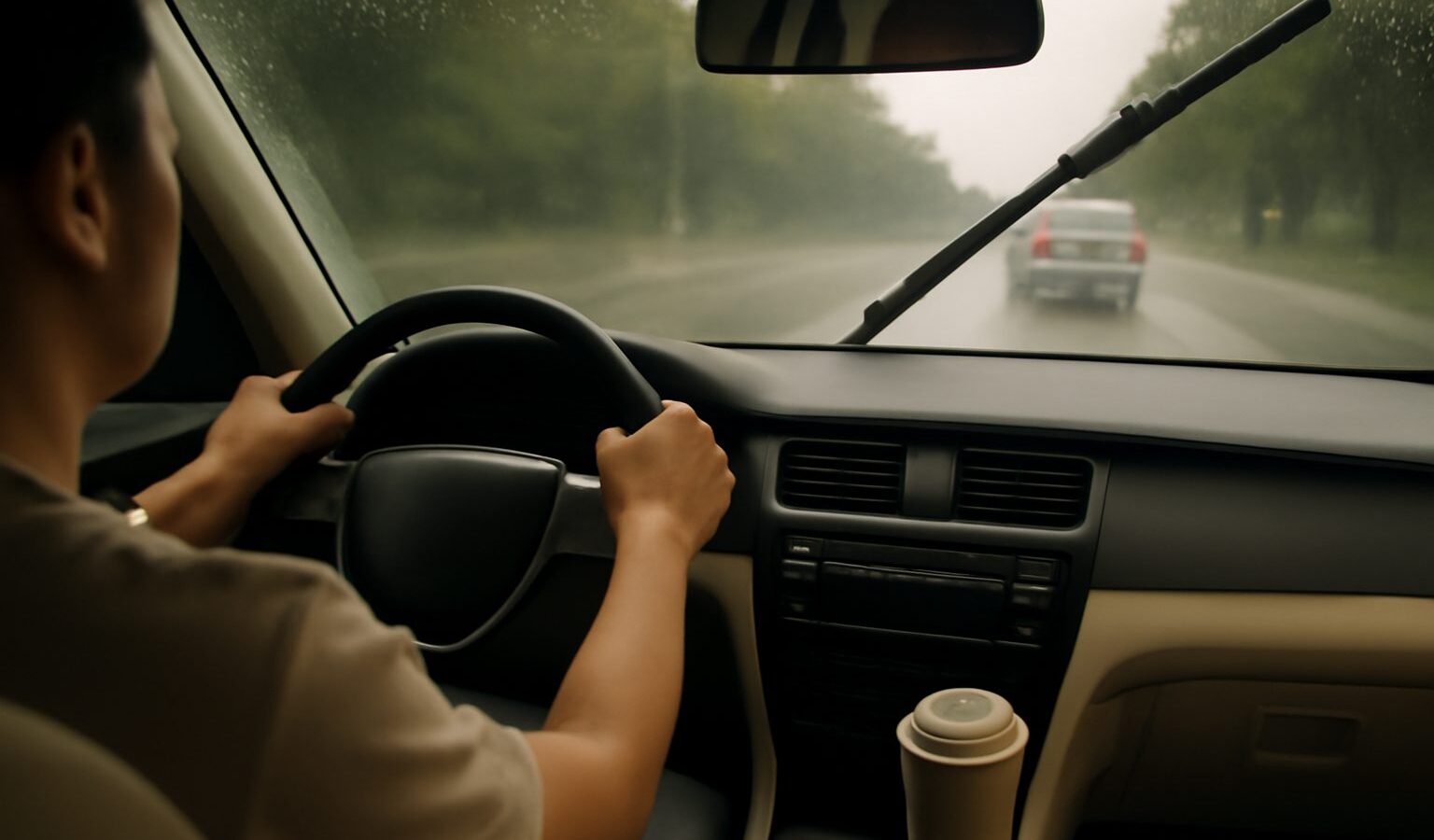
A sudden loss of grip is one of the most unsettling things that can happen behind the wheel, and in Singapore’s frequent heavy rain it is a real risk on any expressway or wet junction. One moment the car is tracking straight, the next the steering feels light and vague, or the back end starts to slide. Recovering from a skid is far easier when you understand why it happens and practise the calm, gentle inputs that bring the car back under control. This is general information to help you drive more confidently in the wet, not professional driving instruction, and you should always follow the Highway Code, the Traffic Police and LTA.
The golden rule underneath everything below is this. Smooth, gentle and gradual wins. Sudden inputs, whether that is a stamp on the brakes, a yank of the wheel or a jab of the accelerator, are what turn a small slide into a spin.
Why Cars Skid and Aquaplane in the Wet
A skid happens when one or more tyres lose their grip on the road and start to slide instead of roll. Aquaplaning, sometimes called hydroplaning, is a specific kind of grip loss where a film of water builds up between your tyres and the road so the tyre rides up on the water rather than gripping the surface.
Several things make this more likely on our roads:
- Heavy tropical downpours. Water can accumulate faster than it drains, especially in dips and worn wheel ruts on the expressway.
- Speed. The faster you go, the harder the tyre has to work to clear water, and the sooner it floats. Aquaplaning risk rises sharply with speed.
- Worn or under-inflated tyres. Tread grooves exist to channel water away. Shallow tread or the wrong pressure leaves the tyre nowhere to push the water.
- The first rain after a dry spell. Oil and rubber that build up on the road surface lift with the first water, making things unusually slippery.
- Sudden inputs. Braking hard, accelerating sharply or steering abruptly can each break traction, even on a road that felt fine a second earlier.
Understanding these causes is half the battle, because most skids are prevented long before they start by slowing down and reading the conditions.
Reading the Warning Signs Early
Grip rarely vanishes without warning. Learning to feel the early signs gives you time to ease off before a slide develops.
- Light, vague steering. If the wheel suddenly feels disconnected and the car does not respond, your front tyres may be starting to aquaplane.
- A rising engine note without acceleration. If the revs climb but the car does not speed up, a driven wheel may be spinning on water.
- Standing water and spray. Sheets of water, heavy spray off other cars and puddles pooling in the lane are all cues to back off.
- A floaty or drifting feeling. A sense that the car is gliding rather than gripping means you are already near the limit.
When you notice any of these, the answer is always the same. Ease off the accelerator smoothly and let the car slow itself, keeping the wheel steady.
How to Recover From a Skid, Step by Step
If a skid does begin, your reactions in the first second or two matter most. The aim is to restore grip and point the car where you want to go, without any violent movements. Keep both hands on the wheel and follow these steps.
- Ease off the accelerator. Lift off smoothly. Do not stamp on the brake and do not floor it. Reducing power is often enough to let the tyres grip again.
- Keep your eyes where you want to go. Look towards the clear road ahead, not at the kerb or the object you fear hitting. Your hands tend to follow your eyes.
- Steer gently in the direction you want the front to go. If the back of the car slides one way, steer smoothly the same way to line the car up, then straighten as grip returns. Small corrections, not big ones.
- Do not slam the brakes. Hard braking can lock the wheels or upset the balance. If you must slow, brake gently and progressively once the car is settled.
- Wait for grip, then continue calmly. As the tyres bite again the steering will firm up. Straighten the wheel, gather your composure and carry on at a slower, safer speed.
The whole recovery is about being gentle and progressive. Panic inputs are what escalate a skid, so a calm, light touch is your best tool.
Skid Versus Aquaplaning: What to Do
The instinct to brake hard is strong, but it is usually the wrong one. This comparison shows the safer response for common wet-weather situations.
| Situation | What NOT to do | What to do instead |
|---|---|---|
| Aquaplaning, steering goes light | Do not brake hard or steer sharply | Ease off the accelerator, hold the wheel straight, wait for grip |
| Rear of the car slides out | Do not brake suddenly or over-correct | Steer smoothly the same way the rear is going, then straighten |
| Front pushes wide in a bend | Do not add more steering or throttle | Ease off the accelerator, gently reduce steering, let grip return |
| Wheels spin on a wet pull-away | Do not floor the accelerator | Lift off, apply power gently and smoothly |
The pattern is consistent across all of them. Reduce inputs, stay smooth and give the tyres a chance to grip before you ask more of the car.
Preventing Skids Before They Happen
The best recovery is the one you never need. Most wet-weather grip problems are avoidable with a few sensible habits, and prevention is far easier than correction.
- Slow down in the rain. Lower speed gives your tyres more time to clear water and gives you more time to react. Leave a much bigger gap to the car in front.
- Look after your tyres. Tread channels water away, so check your tread depth and condition regularly and replace tyres before they wear out. Keep them inflated to the pressure in your handbook or door pillar, and have a professional check anything you are unsure about.
- Be smooth with every input. Brake, steer and accelerate gently and early, particularly on wet roads and around bends.
- Respect the first rain. Treat the start of a downpour after dry weather as especially slippery.
- Avoid standing water where you can. Steer around puddles and pooling water when it is safe to do so, and ease off before you reach them rather than braking in them.
- Keep both hands on the wheel. A balanced grip lets you make the small, quick corrections that recovery needs.
Well-maintained tyres and a gentle driving style will prevent the large majority of skids. If your car pulls to one side, the steering feels odd or the tyres wear unevenly, have it checked by a qualified workshop, because a mechanical fault can undermine grip no matter how carefully you drive.
Staying Calm Keeps You Safe
Recovering from a skid or aquaplaning comes down to a mindset as much as a technique. Slow down when the roads are wet, keep your tyres in good shape, and when grip does slip away, resist the urge to brake hard or wrench the wheel. Ease off, steer gently, look where you want to go and let the tyres find the road again. On Singapore’s rain-soaked expressways, the driver who stays smooth and unhurried is the one who stays in control, and that calm is the real skill worth practising every wet day of the year.