
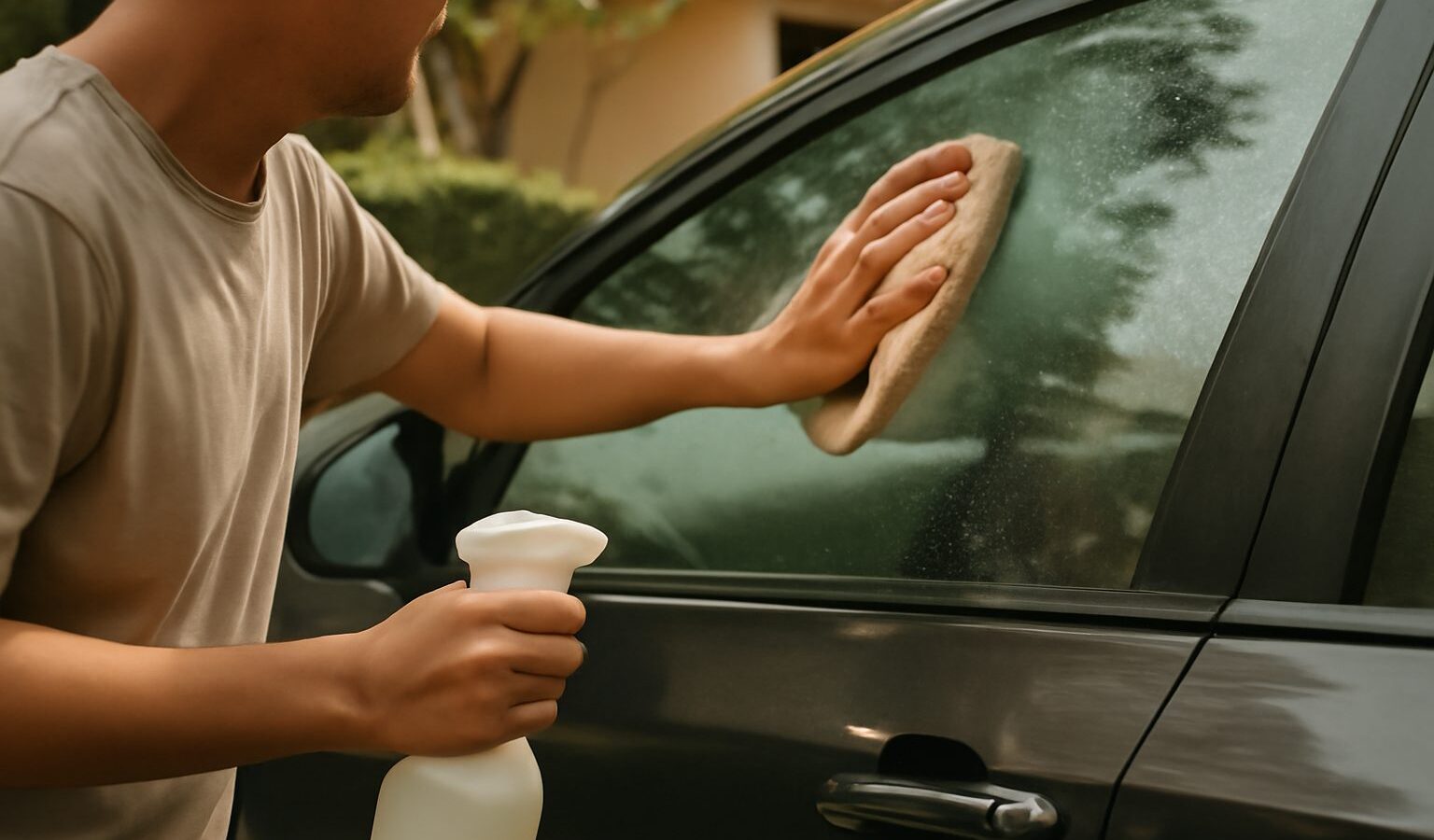
Hard water marks on car glass are one of the most common cosmetic complaints among Singapore drivers. You wash the car, it rains on the way home, or a condo sprinkler catches the windscreen, and a few days later the glass is covered in faint white rings that do not wipe off. This guide explains what those water marks on car glass actually are, why our parking and washing conditions make them so common, and how to remove them in a sensible order, starting with the gentlest method.
It focuses only on glass. Paintwork, trims and full detailing are a separate topic, and the techniques below are not meant for painted surfaces.
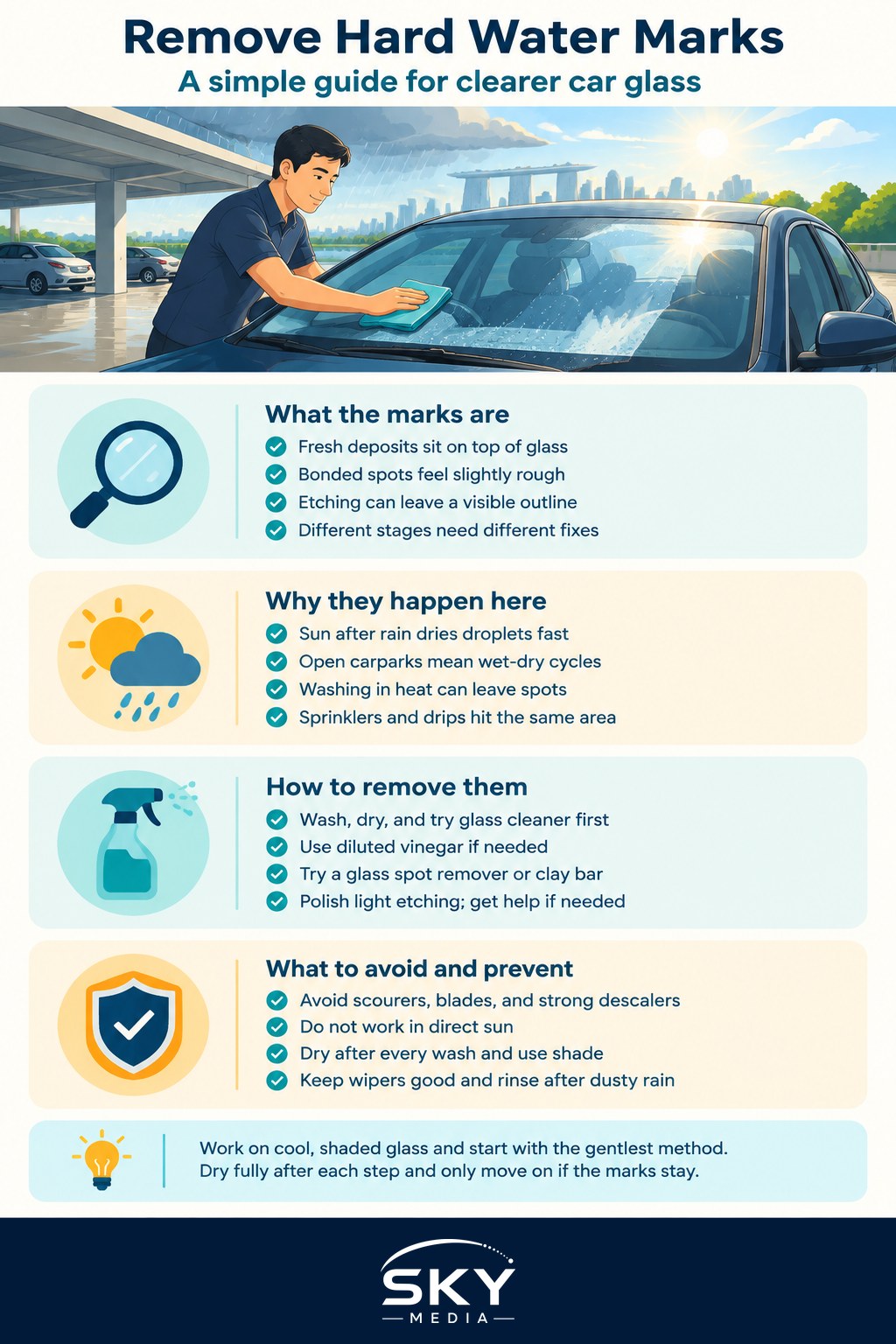
What Hard Water Marks on Glass Actually Are
When water dries on glass, the water itself evaporates but whatever was dissolved in it stays behind. Tap water carries minerals such as calcium and magnesium, and rain picks up dust, pollen and pollution on the way down. What remains is a thin ring or spot of residue, which is why the marks are often circular and whitest at the edge.
There are roughly three stages:
- Fresh surface deposits. Light, chalky spots that sit on top of the glass. These usually come off with a proper wash and a dedicated glass cleaner.
- Bonded mineral spots. Deposits that have been baked onto the glass by repeated sun exposure. They feel slightly rough when you run a clean fingertip across them and resist ordinary cleaners.
- Etching. If mineral spots are left for a long time, they can slightly eat into the glass surface. You will see the outline even after the glass is clean and dry. Etching cannot be “cleaned” away; it needs polishing or, in severe cases, professional attention.
Knowing which stage you are dealing with saves you from using a harsh method on a mild problem.
Why Singapore Conditions Make Water Marks Worse
Several everyday local factors combine to make water spotting a frequent issue:
- Strong sun after rain. Afternoon showers are often followed by bright sunshine. Droplets dry quickly on hot glass, which is exactly when spots form.
- Open-air carparks. Many HDB and shopping centre carparks have uncovered top decks. Cars parked there go through repeated wet and dry cycles.
- Washing in the heat. Washing a car in direct sun, or leaving it to air dry, lets water evaporate before you can wipe it off.
- Sprinklers and drips. Landscape sprinklers in condos and drips from aircon units or ledges above a parking lot leave concentrated spots in the same place every day.
- Hard tap water at some wash points. Mineral content in water varies, so marks can appear even after a wash if the car is not dried.
If you have also noticed limescale at home, the chemistry is the same. Our guide to removing hard water stains and limescale at home explains the mineral side in more detail.
Step-by-Step: Removing Water Marks From Car Glass
Always work in the shade on cool glass. Products applied to a hot windscreen dry too fast, streak, and can leave new marks. Start with step one and only move to the next step if the marks remain.
- Wash the glass properly. Use car shampoo, plenty of water and a clean wash mitt to remove grit. Dry immediately with a clean microfibre towel. Many “water marks” turn out to be dirt film that disappears at this stage.
- Use a dedicated automotive glass cleaner. Spray onto the towel rather than the glass to avoid overspray onto paint, wipe in straight lines, then buff with a second dry towel.
- Try a mild acidic solution. A diluted white vinegar solution can soften mineral deposits. Apply with a microfibre cloth, leave for a short time without letting it dry, then rinse thoroughly with clean water and dry. Keep it off paint, rubber seals and trim, and rinse any drips straight away. Check your car manufacturer’s guidance if you are unsure.
- Use a commercial water spot remover for glass. These are formulated for automotive glass. Follow the label exactly, including dwell time, and test on a small corner first.
- Clay the glass. A clay bar with plenty of lubricant can lift bonded contaminants. Glide it gently; never use it dry.
- Polish for light etching. Glass polish applied by hand or with a suitable machine pad can reduce etching. Go slowly, keep the area cool, and stop if you see haze or distortion.
If marks remain after all this, or you see distortion in the driver’s line of sight, consult a professional glass or detailing workshop. Deep etching or scratches may affect visibility, and a windscreen that impairs your view is a safety matter, not just a cosmetic one.
Which Method Suits Which Problem
| Type of mark | How it looks and feels | Method to try | Effort level |
|---|---|---|---|
| Fresh deposits | Chalky white spots, smooth to the touch | Wash, dry, automotive glass cleaner | Low |
| Bonded mineral spots | Spots remain after cleaning, slightly rough | Diluted vinegar or glass water spot remover, then clay | Medium |
| Light etching | Outline visible on clean, dry glass | Glass polish by hand or machine | Medium to high |
| Deep etching or scratches | Visible distortion, catches a fingernail | Professional assessment | Specialist |
What to Avoid When Cleaning Car Glass
Some popular shortcuts do more harm than good:
- Abrasive household scourers or steel wool. They can scratch glass and are especially risky on tinted or coated surfaces.
- Strong household descalers. Products meant for toilets or kettles may damage rubber seals, wiper blades, trim and paint.
- Scraping with blades on tinted glass. Most window tint film sits on the inside of side and rear windows, and blades or ammonia-based cleaners can damage it. Treat inside surfaces gently.
- Working in direct sun. It creates fresh spots while you are trying to remove old ones.
- Using the same towel for paint and glass. Wax or polish residue on a towel leaves smears on glass.
How to Stop Water Marks Coming Back
Prevention is far easier than removal:
- Dry the car after every wash. A large, clean microfibre drying towel or a gentle air blower removes water before it evaporates.
- Wash in the shade or at cooler times of day, such as early morning or evening.
- Apply a glass sealant or water repellent. These make water bead and run off, so fewer droplets dry in place. Reapply as the product label suggests, and note that some are for exterior glass only.
- Choose your parking spot. Where you can, avoid bays under sprinklers, dripping ledges or trees that shed sap.
- Keep wipers in good condition. Worn blades spread grime in arcs that hold water. Replace them when they start to streak.
- Rinse after a heavy rain on a dusty day. A quick rinse and dry stops grime-laden droplets drying into spots.
A short routine every week or two is usually enough to keep the glass clear and your view of the road sharp, which matters on dark, wet evenings when glare from spotted glass can be distracting.
Quick Checklist Before You Start
- Car parked in shade, glass cool to the touch
- Two or three clean microfibre towels, one reserved for glass
- Automotive glass cleaner and, if needed, a glass water spot remover
- Clay bar and lubricant for stubborn spots
- Masking or a cloth to protect paint and seals when using acidic products
- Clean water to rinse every product off fully
For general cleaning of marks around the house, see our guide on how to clean walls and remove marks.
Further reading: How to Clean Tree Sap and Bird Droppings Off Your Car